

Practical Sales Training™ > How To Keep Your Clients Happy > The Reminder Effect
The Reminder Effect
What Is It
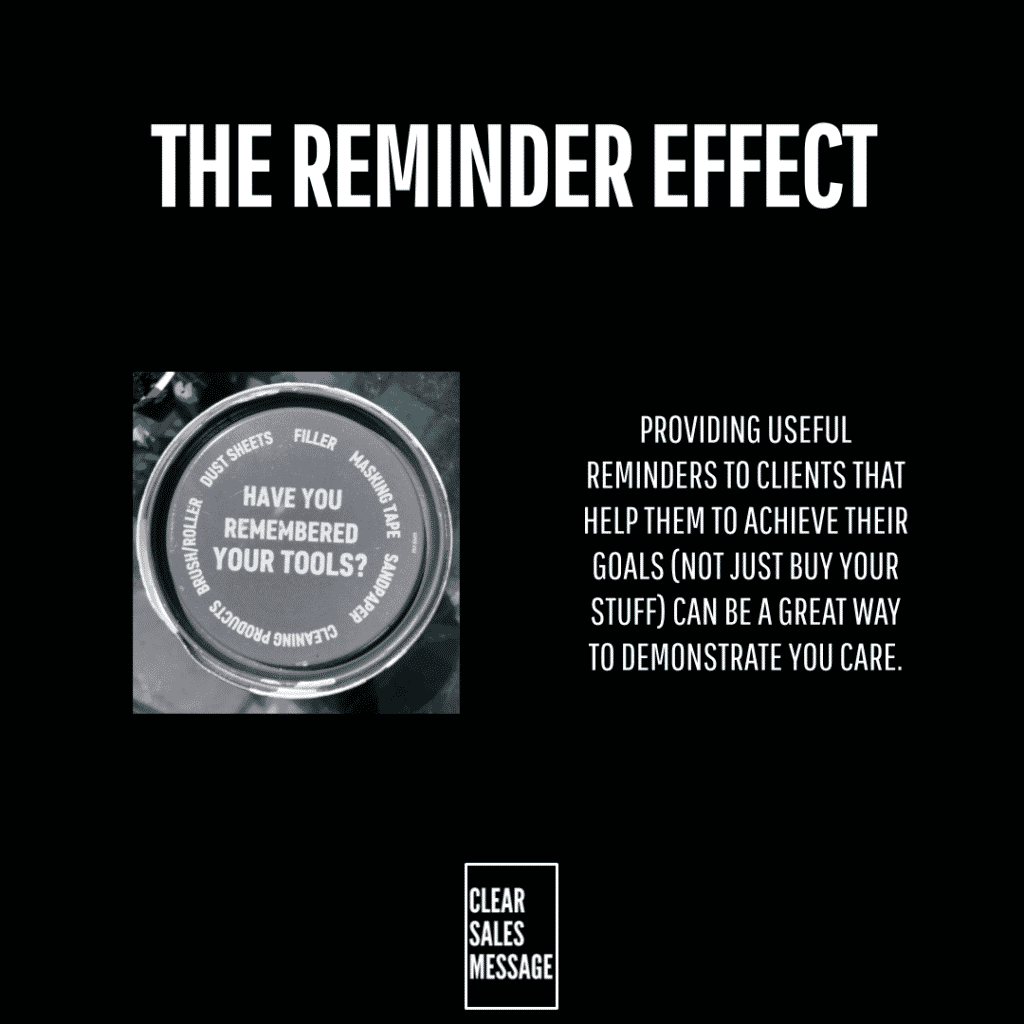
The Reminder Effect is about providing useful reminders and prompts to your buyers that help them achieve their goals. Not reminders to buy again, reminders that actually help.
The distinction matters. A reorder nudge serves you. A genuine reminder serves them, even when it happens to lead back to your product anyway.
Done well, it stops feeling like marketing at all. It starts feeling like someone paying attention.
Why Does It Work
It works because it demonstrates that you care about the client, and understand their needs. Suggesting and reminding about things that aren’t just your offering shows a level of care that goes beyond being a pushy salesperson.
It provides the information and opportunity buyers need to make the best decisions for themselves. That’s a very different relationship than one built purely on reorder prompts.
There’s a trust dividend too. A buyer who feels genuinely helped assumes you’ll keep helping them later, even in moments where you’re not selling anything at all.
How Can You Use It
Remind them about related items
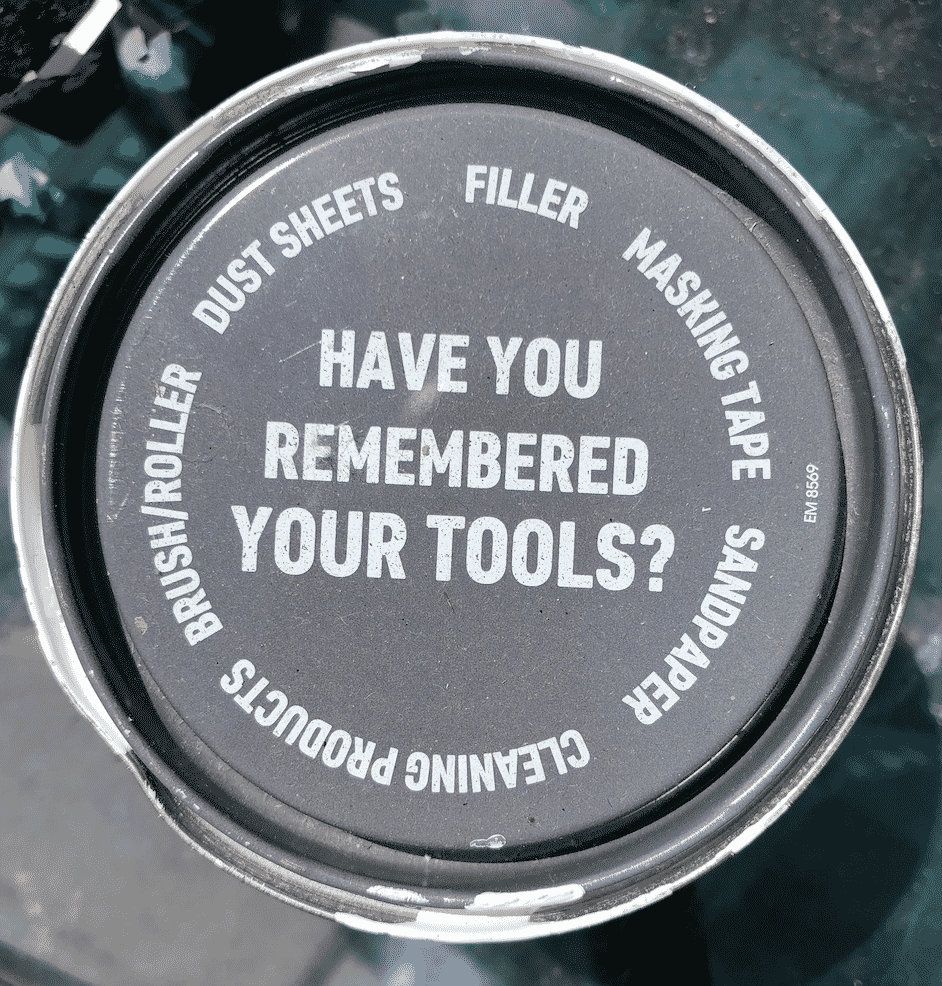
In the example photo, this tin of paint reminds you that you might need filler and dust sheets to finish the job. So ask yourself what your buyer would need alongside your own offering, and remind them before they realise it themselves.
Remind them based on usage
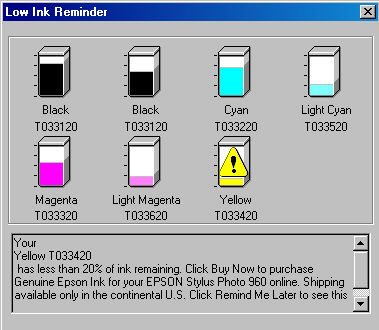
Could you have a physical reminder on your product or service, seen contextually once a client has used a certain amount of your offering, like this? Or could you estimate usage and guess when they might need to buy more or top up?
Remind them around milestones and dates
What significant life milestones or dates matter to your buyer? Which dates matter to their use of your offering? What triggers them to buy? You could build a simple calendar as a lead magnet to offer them.
However you choose to do it, ask what matters to your buyer, and what they’d genuinely appreciate you reminding them of. This isn’t about reminding them to buy again from you. It’s about reminding them of what they need to reach their own end result, with or without you.
When It Works Best
This works best in ongoing relationships, subscriptions, consumables, or anything with a natural usage cycle a buyer might lose track of.
It also works best when the reminder ties to a genuine outcome the buyer cares about, not just to your next sale. The more real the goal, the more useful the reminder feels.
When It Becomes Dangerous
It backfires the moment the reminder is obviously just a reorder pitch wearing a helpful costume. Buyers spot that instantly, and it damages the trust this whole effect is meant to build.
It also becomes risky if you send too many reminders. What feels thoughtful once a month feels intrusive once a week, and the buyer starts tuning out everything you send.
Getting the timing wrong causes its own problem too. A reminder that arrives too early feels premature. One that arrives too late feels like you weren’t really paying attention at all.
Common Mistakes
Making every reminder about reordering
If every single reminder ends in “buy more,” buyers stop seeing them as helpful and start seeing them as marketing. Mix genuinely useful content in, not just prompts to spend.
Guessing at usage instead of tracking it
A reminder based on a rough average, rather than the buyer’s actual usage, can land wildly wrong. Use real data where you have it, and keep the estimate humble where you don’t.
Treating the reminder as a one size fits all script
The same generic reminder sent to every buyer misses the specific milestone or trigger that actually matters to each one. Personalise where you genuinely can.
The Reminder Effect – An Example
A Skincare Brand
You sell a 30 day supply of moisturiser. Instead of only pushing reorders, you email customers on day 25 with this message:
“Just a heads up – if you’ve been using your moisturiser daily, you might be running low soon. Don’t forget to also hydrate from the inside, especially in warmer weather.”
At the bottom, there’s an optional reorder link and a short blog article titled “5 Signs Your Skin Needs More Hydration.”
Why this works: It shows thoughtfulness, since you’re not just reminding them to buy, you’re helping them manage their skincare routine. You embed yourself into their success, meaning great skin. And the upsell stays gentle, not pushy, since it supports their goal rather than just pushing a product.
This same approach works in industries like fitness, finance, tech, health, and home services. Think about what your buyer is trying to achieve, and what useful, caring reminders can help them stay on track.
See also