

Practical Sales Training™ > How To Get Attention > The Context Effect
The Context Effect
Most messaging ignores where it’s actually seen. A poster on a wall, an ad on a van, a sign by a road, all saying the same thing they’d say anywhere else.
The Context Effect breaks that pattern. So your message reacts to its surroundings, instead of sitting blind to them.
And that small bit of awareness is often enough to make people stop and notice.
What Is The Context Effect?
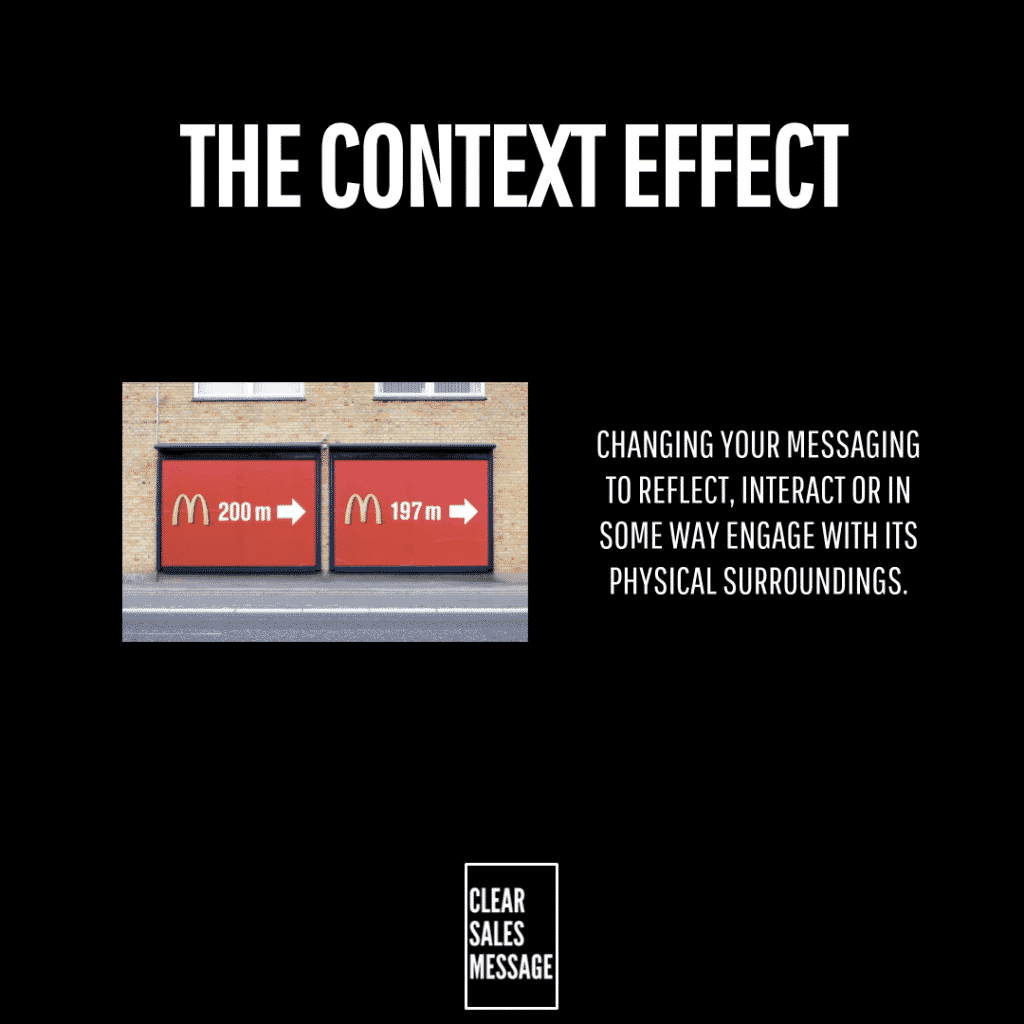
The Context Effect is when your messaging changes to reflect, interact, or engage with its physical surroundings. So the location itself becomes part of the message, rather than just the backdrop it’s placed against.
It’s a small shift with a big impact. The same line, in the right place, suddenly feels intentional rather than generic.
Why Does The Context Effect Work?
It works because we notice and appreciate the novelty. By actively referencing the location where the messaging will be read, you can portray empathy and forethought.
It also captures attention simply for being a little bizarre. So context-aware messaging stands out precisely because most messaging never bothers to look around it.
How Can You Use The Context Effect In Sales?
Reference what’s nearby
Depending on your offering and where your messaging appears, how could you reference the reader’s surroundings in a positive and playful way? Could you comment on something next to or near the message itself?
Reference timing or events
You could reference the time of day your product or service gets used, or the events that lead someone to use it in the first place.
Keep it upbeat and playful
The more relevant and upbeat the reference, the better it lands. So aim for playful and clever, rather than forced or overly clever for its own sake.
When The Context Effect Works Best
It works best in physical, real-world placements, since context only matters when there’s an actual surrounding to play off.
It also works well for brands with a confident, playful tone, because a context-based joke or reference needs the right voice to land properly.
When The Context Effect Becomes Dangerous
It becomes dangerous if the reference feels forced or confusing, since a context-based message that doesn’t quite land just looks like a missed attempt at cleverness.
It can also fall flat if the placement changes and the message no longer makes sense, so consider how long the context-specific version will actually stay relevant.
Common Context Effect Mistakes
Forcing a reference that doesn’t fit
A clumsy attempt at context awareness can feel more confusing than clever. So only use it when the connection genuinely makes sense.
Ignoring how long the placement will last
A context joke tied to something temporary can quickly become outdated. So think about the lifespan of the placement before committing to it.
Overcomplicating the idea
If the reference takes too long to understand, the moment is lost. So keep it simple enough to land in a second or two.
The Context Effect – An Example
Chanel’s “NO. 5” numberplate
The famous brand Chanel have their perfume name “NO. 5” on the numberplate of their London delivery van. A very clever, and expensive, example.
[PLACEHOLDER: Chanel “NO 5” numberplate van example image – awaiting WordPress upload URL for the-context-effect-example-optimized.webp. Please upload and provide the resulting src and wp-image-ID, then I’ll insert: ]
It’s a tiny detail most people would walk straight past. But for those who notice, it turns a delivery van into a piece of branding nobody else would have thought to create.
See also