

Practical Sales Training™ > How to connect with your buyer > The Verb Effect
The Verb Effect
What Is It
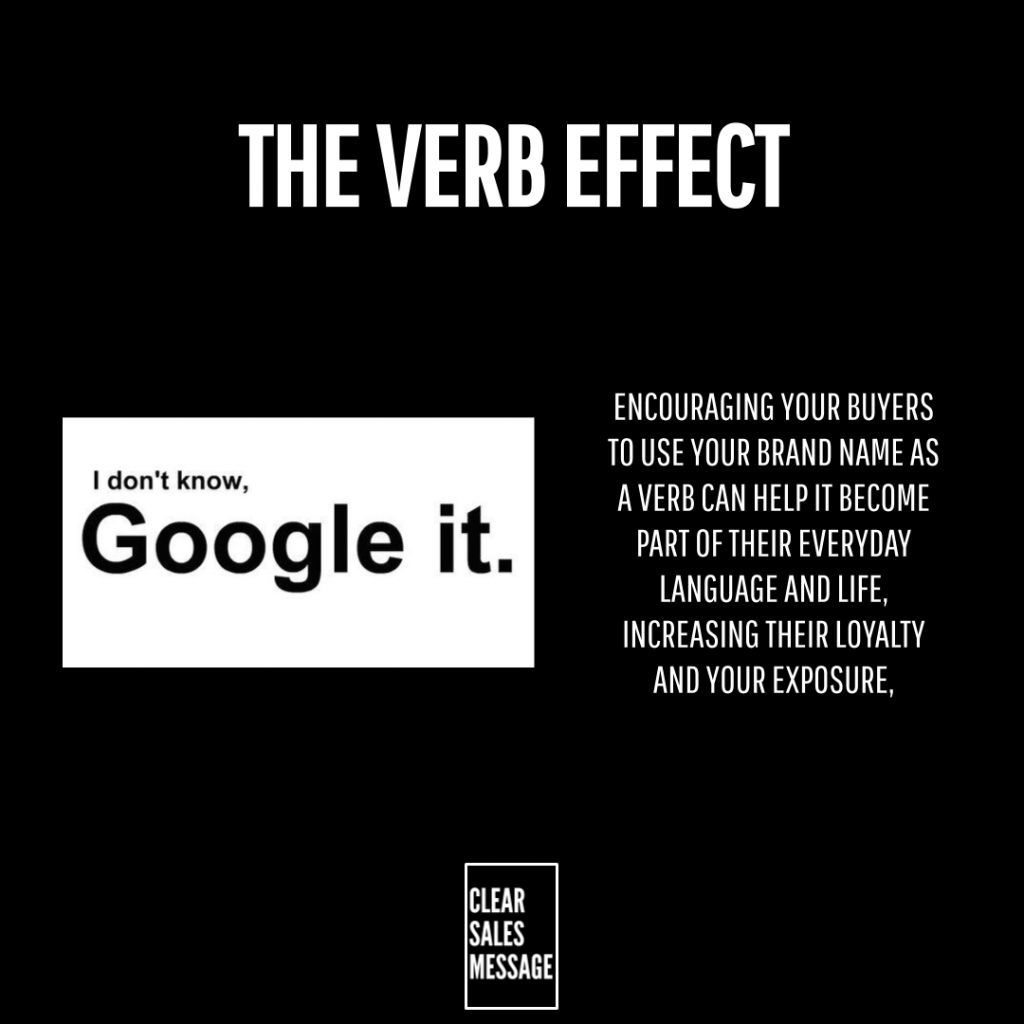
The Verb Effect is all about using your brand name as an action, a verb. Not just a noun sitting on a shelf, a word people use without even thinking about it.
It’s the highest form of familiarity a brand can reach. The name stops being a label and becomes part of everyday language.
Once that happens, competitors have to fight against your name just to describe their own product.
Why Does It Work
It works because it means your buyers and potential buyers will reference your offering by name, and have a deeper connection to it than a simple brand name provides.
We don’t search, we Google. We don’t Dyson, we Hoover. We don’t photocopy, we Xerox. You’re already using brand names as verbs in your own life, and these companies benefit greatly from the resulting familiarity and Propinquity.
Every time someone uses that word, they’re advertising you, without even meaning to.
How Can You Use It
Achieving brand name verb status is possible in one of two ways:
- You are the first mover in a space, and as such, define the “thing” that you do.
- You are the market leader in a space, through sheer volume of clients and your profile.
Aim for eponymous status if verb status isn’t realistic
It comes down to being eponymous. If your brand name doesn’t become a verb, it can always become eponymous, “the thing,” for example Clear Sales Message has become “the name” for having a commercially viable sales message that anyone can understand.
Remember the burden sits with you
Remember, the burden of proof is on you to educate the market to use your brand name as a verb. It won’t happen by accident.
When It Works Best
This works best when you’re genuinely first to a category, or so dominant within it that your name becomes the obvious shorthand for the whole action.
It also works best with a short, easy to say name, since a clumsy or complex name rarely gets adopted as a verb naturally.
When It Becomes Dangerous
It backfires if your name becomes generic to the point of losing trademark protection, since some brands have genuinely lost legal rights this way.
It also becomes risky if a competitor’s name gets adopted as the verb instead, leaving your own brand permanently in second place in the public’s language.
Forcing the effect too hard causes its own damage, since verb status has to emerge naturally rather than being manufactured through marketing alone.
Common Mistakes
Choosing a name too complex to become a verb
A long or awkward brand name rarely gets adopted into everyday speech. Short, simple, and easy to say gives you a real chance.
Waiting passively for it to happen
Verb status rarely arrives by accident. Actively use your own name as a verb in your own marketing, and the habit can spread from there.
Ignoring trademark risk once it happens
Genericisation can weaken your legal protection over time. Some brands actively defend against becoming a generic term for exactly this reason.
The Verb Effect – An Example
Ninja’s Christmas Advert
In this Christmas advert, David Beckham is advertising Ninja food processing products, and the brand name “Ninja” is used as a verb, to imply that if you “Ninja” the holidays, you’re beating them, mastering them, and not overwhelmed by them.
Clever stuff. The whole campaign hinges entirely on that single verb doing the persuading.

See also