Practical Sales Training™ > How To Convert > Comparison Score

Comparison Score
What Is It
A Comparison Score takes several different factors, price, spec, condition, whatever actually matters for the decision, and rolls them into one single number.
Instead of a buyer weighing five different things at once, they see one score that tells them how good the deal actually is, before they’ve read a single detail.
Why Does It Work
Comparing options properly is hard work. Weighing price against spec against condition against a dozen other things drains a buyer fast, and most people give up halfway through and pick something almost at random.
A single score removes that effort entirely. It works the same way a credit score or a star rating does, one number people already know how to trust, standing in for a pile of detail they’d rather not calculate themselves.
It also makes comparing across many options genuinely fast. Instead of reading ten listings in full, a buyer can scan ten scores and know exactly where to look first.
How Can You Use It
Base It On Real Weighted Factors, Not A Guess
A score only works if it’s genuinely calculated from something real. Decide exactly which factors feed into it and how much each one counts, and keep that formula consistent. A score that looks made up the moment someone questions it does more harm than having no score at all.
Show The Score Before The Details
Put the number front and centre, above the description and the small print. The whole point is letting someone judge an option in a glance, so the score needs to be the first thing they see, not something they find after reading everything else.
Use It To Rank, Not Just Label
Don’t just stick a score on each item and leave it there. Actually sort your results by that score, so the highest scoring options rise to the top automatically. A score that doesn’t affect the order is just decoration.
When It Works Best
This works best anywhere there are many similar options and several variables to weigh at once, comparison sites, marketplaces, and any catalogue where price alone doesn’t tell the whole story. The more choices on the page, the more a single score earns its keep.
When It Becomes Dangerous
It becomes risky the moment buyers can’t see what’s behind the number. A score with no visible logic starts to feel manipulative, especially if it always seems to favour certain listings over others.
It’s also dangerous if every option ends up with a suspiciously high score. Once nothing ever scores badly, buyers stop trusting the number altogether, and it stops doing any useful work at all.
Common Mistakes
Giving Everything A High Score
If nine out of ten listings score in the high nineties, the score has stopped meaning anything. A useful score needs genuine range, including some options that score poorly, or buyers will simply learn to ignore it.
Hiding What The Score Actually Measures
A number with no explanation invites suspicion. Give buyers an easy way to see what feeds into the score, even a simple breakdown, so it reads as genuine analysis rather than a black box.
Using One Score For Fundamentally Different Products
A score built for comparing similar items falls apart the moment it’s stretched across products that aren’t really comparable. Keep the score inside categories where the underlying factors genuinely mean the same thing.
Comparison Score – An Example
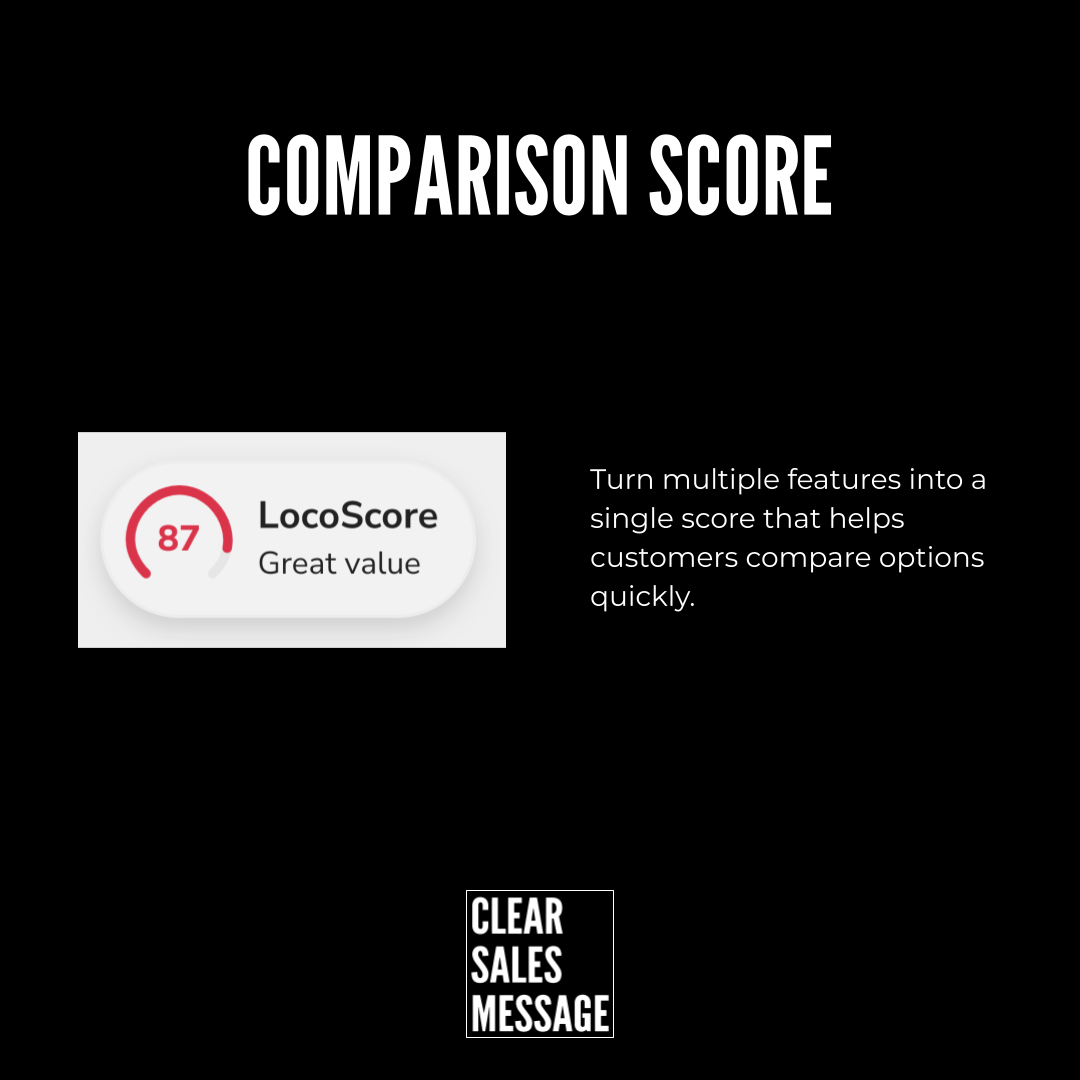
This car leasing comparison site uses a Comparison Score as a simple way for clients to decide on the “best” deals. Every listing gets a score out of a hundred, with a short label like “Great Value” or “Amazing Value” attached, so a buyer scanning dozens of leases can spot the strongest options in seconds without comparing every spec sheet line by line.

See also:
- 180+ ways to improve conversion
- The Defensive Model
- Buyer Guide
- The Checklist Effect
- The Comparison Effect