
Practical Sales Training™ > How To Convert > The Defensive Model

The Defensive Model
What Is It?
Buyers weighing you against a competitor face a genuinely hard decision. A defensive model makes that decision simple.
It highlights the handful of factors that actually matter. Everything else falls away, and the choice suddenly feels obvious.
Why Does It Work?
It works because decisions are hard and regret is painful. Buyers compare solutions presented in different formats and orders. The language rarely matches either.
That makes line by line comparison genuinely difficult. So most buyers give up and default to price instead.
Picking around four elements that matter removes that burden entirely. You’ve already done the hard thinking, so your buyer doesn’t have to.
How Can You Use It?
Pick roughly four elements from the list below, or others specific to your buyer. Arrange them in a simple matrix. Mark weak factors amber or red. Colour strong ones green.
Performance And Proof
Cover performance and proof first. Think speed of delivery and how long the result lasts. Genuine proof through reviews or social proof matters too. So does complexity of use, alongside compatibility with what your buyer already has. Whether the solution stays future proof counts here as well.
Ongoing Value
Cover the ongoing value next. Free or paid updates and support both belong here. So do extras and loyalty bonuses. Weigh the upfront cost too, next to the real cost to maintain or run. Don’t forget the actual time your buyer needs to invest.
Trust And Track Record
Cover trust and track record too. A strong track record with notable clients reassures a nervous buyer. So do solid guarantees and warranties behind the offer.
What Makes You Different
Cover what makes you different last. Your approach, your specialism and the scope of what you actually offer often matter more than any single feature above.
When It Works Best
This works best in crowded, competitive markets. Similar options need a simple visual to help buyers decide.
It also works well for complex purchases with many moving parts. So reducing nineteen possible factors down to four genuinely lowers the mental load.
When It Becomes Dangerous
The Defensive Model becomes dangerous the moment it looks rigged. Pick criteria that only ever favour you, and a sharp buyer notices instantly.
It’s also risky if you include too many factors. More than four or five, and the matrix stops simplifying anything at all.
Common Mistakes
Choosing Criteria That Favour You Too Obviously
Choosing criteria that favour you too obviously is the most common mistake. A model that never shows a single amber or red box reads as biased, not honest.
Choosing Too Many Factors
Choosing too many factors is another trap. So the whole point is reducing complexity, not recreating it in table form.
Skipping The Visual Matrix
Skipping the visual matrix is the last one to avoid. A list of comparisons in a paragraph rarely lands as hard. The same comparison laid out visually always works better.
The Defensive Model – An Example
British Airways vs A Budget Carrier
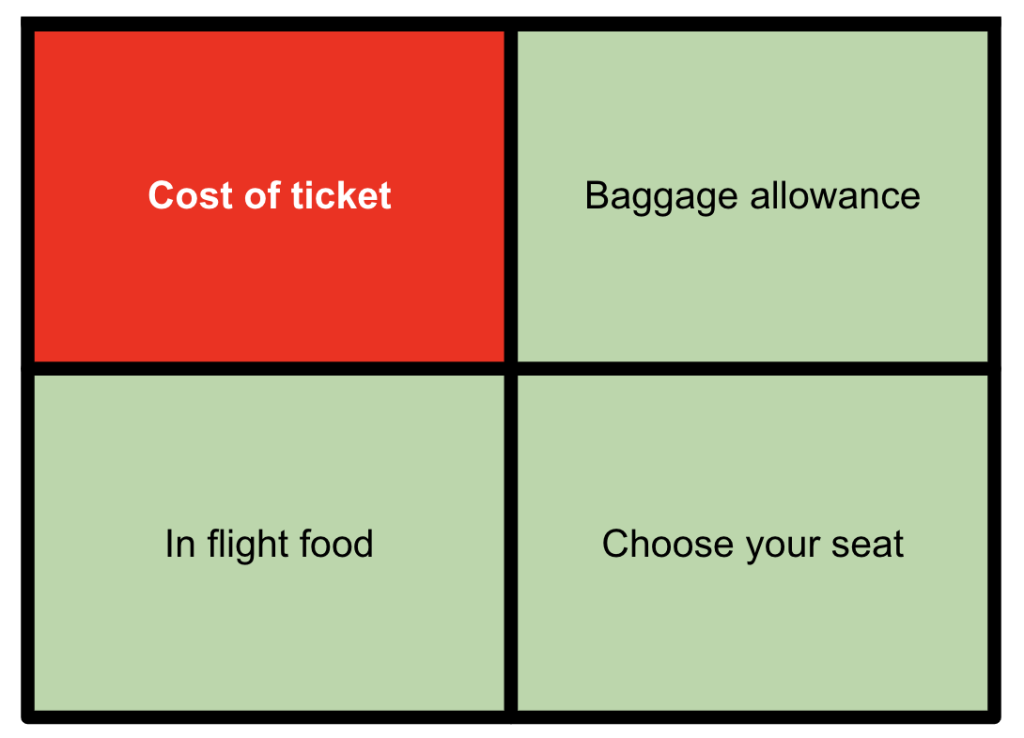
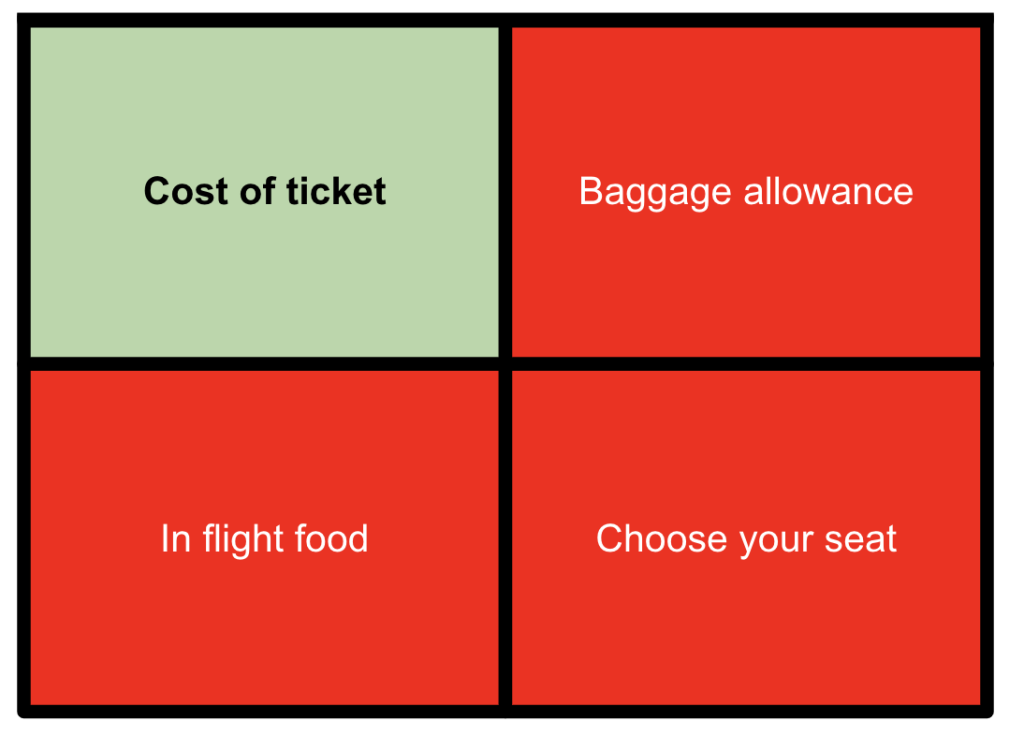
In this hypothetical example, compare an airline like British Airways against a budget carrier. British Airways charges more, but includes far more as standard. So the budget option costs less, but strips away everything beyond the seat itself.
See Also
- Buyer Guide
- The Checklist Effect
- The Comparison Effect
- The DIY Effect
- 180+ ways to improve conversion
- 100+ ways to differentiate


