Practical Sales Training™ > How People Work > Confirmation Bias
Confirmation Bias
People don’t approach decisions with a blank mind. They already have views, hunches, and half-formed beliefs about what’s true. And when they go looking for information, they tend to find what supports what they already think.
This is Confirmation Bias. It’s not a flaw. It’s simply how the human brain works. So instead of trying to change a buyer’s mind from scratch, the smarter move is to meet them where they already are.
When your message confirms what a buyer already suspects, they don’t feel sold to. They feel understood. And that feeling is one of the most powerful forces in any sale.
What Is Confirmation Bias?
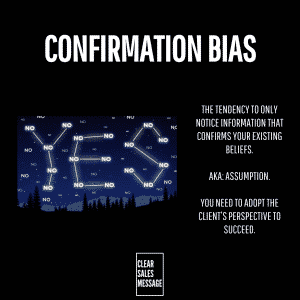
Confirmation Bias is the natural tendency to seek out information that supports your existing thinking, rather than information that challenges it. In other words, we look for proof that we’re already right.
For example, if someone believes that eating less sugar is the key to good health, they’ll notice every article that backs that up. The ones that don’t tend to get skipped past. It’s not deliberate. It’s just how the brain filters the world.
In sales, this means your buyers arrive with beliefs already in place. They have views about what good looks like, what problems they face, and what kind of solution they need. So your job is not always to educate. Sometimes it’s simply to confirm.
Why Does Confirmation Bias Work In Sales?
When a buyer hears something that matches what they already believe, they feel validated. That feeling builds trust quickly. Because you’re not pushing a new idea on them. Instead, you’re showing them that you see the world the same way they do.
This also reduces friction. A buyer who already thinks your type of solution is the right one just needs reassurance. By confirming their thinking first, you remove doubt and make the next step feel natural.
There’s also a confidence factor here. Buyers who feel confirmed in their thinking are more decisive. They second-guess less and move faster. As a result, they commit with more conviction. That’s good for them and good for you.
How Can You Use Confirmation Bias In Sales?
Start by asking what your buyer already believes. What do they think about the problem they have? What do they suspect about the best way to solve it? The answers to those questions are your starting point.
Mirror Their Language
Use the same words and phrases your buyers use to describe their problem. When they hear their own language back, they feel instantly understood. For example, if your buyers say they’re “wasting time on admin,” use that exact phrase in your messaging. Don’t replace it with a cleaner version. Their words carry their meaning.
Start With What They Already Know
Instead of leading with new information, open by confirming something they already believe. “You already know that X is a problem” or “Most businesses in your position have already figured out that Y matters.” This signals alignment before you’ve even made your pitch. As a result, the buyer is already nodding before you get to the ask.
Back It Up With Proof
Confirming a belief is powerful. But confirming it with data or evidence is even stronger. Stats, case studies, and third-party research all reinforce what the buyer already thinks. So when you say “you were right to think this matters” and then show them proof, their confidence in the decision goes up sharply.
Use It in Your Content
Confirmation Bias also plays out in the content buyers consume before they speak to you. Blog posts, social media, and emails that echo your buyer’s worldview attract the right audience. They also warm prospects up before the first conversation, because by then the buyer has already seen you confirm their thinking multiple times.
When Confirmation Bias Works Best
This approach works best when you know your buyer well. The more clearly you understand their existing beliefs, the more precisely you can confirm them. So invest time in research, client conversations, and reviews. The language buyers use in those places is gold.
It also works well for buyers who are already warm. Someone who’s done research and is close to a decision just needs a final push. In fact, a well-placed confirmation at that stage can close the sale faster than any new argument would.
Similarly, it works well in competitive markets. When several suppliers offer similar things, the one whose message feels most aligned with the buyer’s thinking tends to win. The buyer feels like that supplier already gets them. And that feeling is hard to compete with.
When Confirmation Bias Becomes Dangerous
The risk is in confirming beliefs that aren’t accurate. If a buyer holds a mistaken view and you simply agree with it to win the sale, you set yourself up for problems later. So only confirm what you can genuinely stand behind.
Also watch out for over-reliance on this approach. Confirmation Bias works well as a trust-builder. But buyers also need to feel challenged and respected. If every message just tells them what they want to hear, it can start to feel hollow.
And don’t ignore buyers who hold different beliefs. Not every prospect thinks the same way. Therefore, use this technique with the audience it fits rather than applying it as a blanket approach to everyone.
Common Confirmation Bias Mistakes
Assuming You Know What They Believe
However well you know your market, individual buyers can differ. Don’t assume every prospect holds the same view. Instead, ask questions early to find out what they actually think. Then confirm the beliefs that are genuinely there, not the ones you assumed would be.
Confirming Without Proof
Saying “you’re right” is a start. But it’s not enough on its own. Without proof, the confirmation feels empty. So add data, a client story, or a third-party source. That’s what turns a nod of agreement into a genuine conviction.
Only Confirming and Never Adding
Confirmation opens the door. But you also need to walk through it. Once you’ve confirmed what the buyer already thinks, add something new. A fresh angle, a result they hadn’t considered, or a specific reason why you are the right fit. Therefore, use Confirmation Bias to connect, then build on it to convert.
Confirmation Bias – An Example
A company selling electric cars knows that many potential buyers already believe EVs are better for the environment. So instead of trying to educate them from scratch, they lean into that belief directly:
“You already know that switching to electric is the best way to reduce your carbon footprint. That’s why over 90% of our drivers say they feel proud every time they drive.”
The message confirms what the buyer already thinks. But it also adds social proof to back it up. As a result, the decision feels less like a leap and more like the obvious next step. The sale feels natural, because the buyer’s own belief led them there.
Consider also a 0% fat yoghurt brand. It doesn’t need to convince buyers that low fat is healthy. Buyers already believe that. So the brand simply confirms it on the label. That small act of confirmation is enough to make the purchase feel like the right call.
See Also