Practical Sales Training™ > How People Work > Decision Tree

Decision Tree
One of the biggest reasons buyers hesitate is not always price or risk. Sometimes the real problem is too much to think about at once.
The buyer tries to weigh up too many options, too many details, too many outcomes. And because it all feels too much, they do nothing. They delay.
A decision tree fixes that. So instead of one big overwhelming decision, the buyer faces a series of smaller, easier steps.
What Is a Decision Tree?
A decision tree guides someone through a decision one step at a time. Instead of looking at everything at once, each question narrows things down. The buyer only needs to think about one thing at a time.
For example, a simple flow might ask: Do you need speed or lower cost? Is this for one person or a team? Do you need help with setup? Each answer makes the next step clearer and easier.
Good decision trees reduce friction because the buyer never has to solve the whole problem in one go. As a result, the process feels simple rather than stressful.
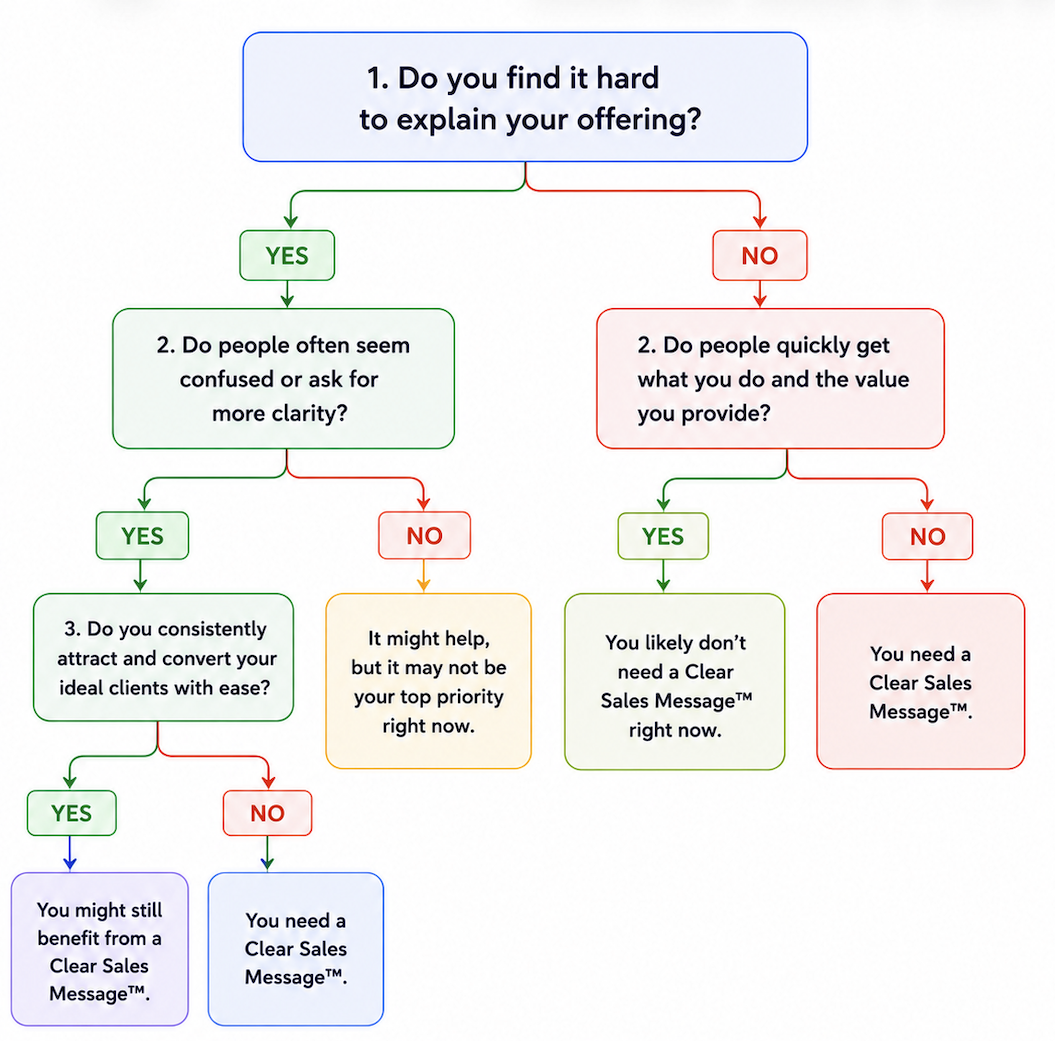
How Do Decision Trees Help Buyers?
People find small, clear decisions easier than big, vague ones. So when a complex choice breaks down into simple steps, buyers feel more confident and more in control.
That matters because confused buyers rarely buy. And most of the time, they do not say they are confused. Instead, they just go quiet. They stop replying. They disengage.
A good decision tree removes that barrier before the buyer even notices it was there.
How Can You Use Decision Trees In Sales?
Decision trees work because they match the way buyers naturally think. So instead of hitting people with everything at once, you guide them through it step by step. The conversation gets clearer as it goes.
Reduce information overload
Many businesses share too much too soon. They think more information helps buyers decide. However, it often does the opposite. The buyer feels swamped and puts the decision off. A decision tree fixes this by breaking things into smaller steps – so the buyer always knows what to think about next.
Build momentum
Every small decision makes the next one easier. That matters because buyers grow more confident as they feel things moving forward. So small steps lead to bigger steps. And bigger steps lead to a sale.
Guide without pushing
Most buyers want to be guided. But they do not want to feel pushed. A well-built decision tree gives them structure without pressure. Instead of feeling sold to, they feel helped. And buyers who feel helped are far more likely to buy.
When Decision Trees Work Best
Decision trees work best when the buying decision is complex. For example, technical products, multiple options, high stakes, or lots of uncertainty. They are also useful in B2B sales, software buying, consulting, and financial services – anywhere buyers struggle to process a lot of information at once.
When Decision Trees Become Dangerous
When they get too complicated. Some businesses build decision flows that are so long and detailed they create more confusion, not less. That defeats the whole point. So if your decision tree needs explaining, it has already failed. The goal is clarity, not complexity.
Common Decision Tree Mistakes
Most businesses either give buyers too many choices at once, or build flows where the logic is hard to follow. Both kill the confidence a good decision tree should create.
Too many options too soon
Showing every feature, package, and option all at once tends to cause paralysis rather than action. More choice does not always help. In fact, it often just creates more hesitation. So start narrow and let the buyer open things up from there.
Unclear logic
If the buyer cannot see why they are being guided a certain way, trust breaks down fast. A good decision tree feels logical and helpful. However, if the steps feel random or pushy, the buyer walks away. So make the reason behind each step clear and obvious.
Decision Tree – An Example
A software company helps buyers pick the right package through a simple guided flow. Instead of showing every price and feature up front, the flow starts with a few basic questions. Team size. Main problem. Integrations needed. Level of support required.
Each answer narrows things down. As a result, the buyer reaches a clear recommendation without feeling lost. The complexity is still there. The buyer just does not have to deal with all of it at once.
See also
- 50+ ways that people work & make decisions
- 180+ ways to improve conversion
- 100+ ways to get buyers to take action
- Decision Made for you
- Payback time