
Practical Sales Training™ > How To Convert > Long Return Period

Long Return Period
What Is It?
Offering a long return period reassures a nervous buyer. It works like a bigger safety net underneath the purchase. The longer that net, the more comfortable buying suddenly feels.
Why Does It Work?
Things sometimes go wrong after 7, 14, or 30 days. Your buyer may already know that from experience. A longer window, say 90 days or more, reassures them your offering actually works. It also signals you’re genuinely on their side, not just protecting yourself.
How Can You Use It?
This mostly suits physical products rather than services. If you can commercially support a longer window, it’s worth offering. It gives people a real reason to buy. This also sets you apart from competitors who won’t go there.
When It Works Best
This works best when returns are genuinely rare in practice. The promise then costs you very little. It also helps in categories where buyers already worry about the wrong choice.
When It Becomes Dangerous
This becomes risky if your actual return rate is high. A long window then becomes an expensive commitment. It also backfires if buyers exploit it. They start treating your product as a free trial, not a purchase.
Common Mistakes
Offering More Than You Can Sustain
Don’t offer a long return period you can’t commercially sustain. Calculate your actual return rate first, not just the reassurance value of the offer.
Hiding It In Small Print
Never bury the return period in small print. The whole point is reassurance, so it needs to stay visible.
Long Return Period – An Example
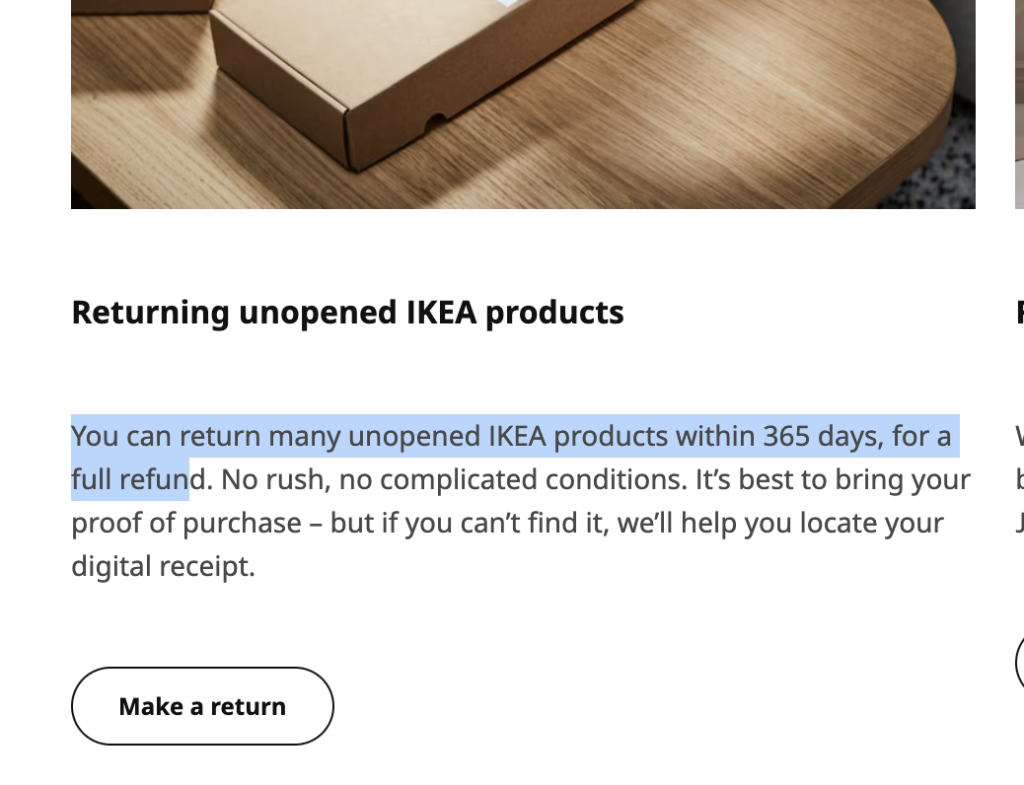
IKEA offers a 365 day return policy. That’s remarkably generous compared to the average 30 days most retailers give.
See also