
Practical Sales Training™ > How To Convert > Extended Warranty

Extended Warranty
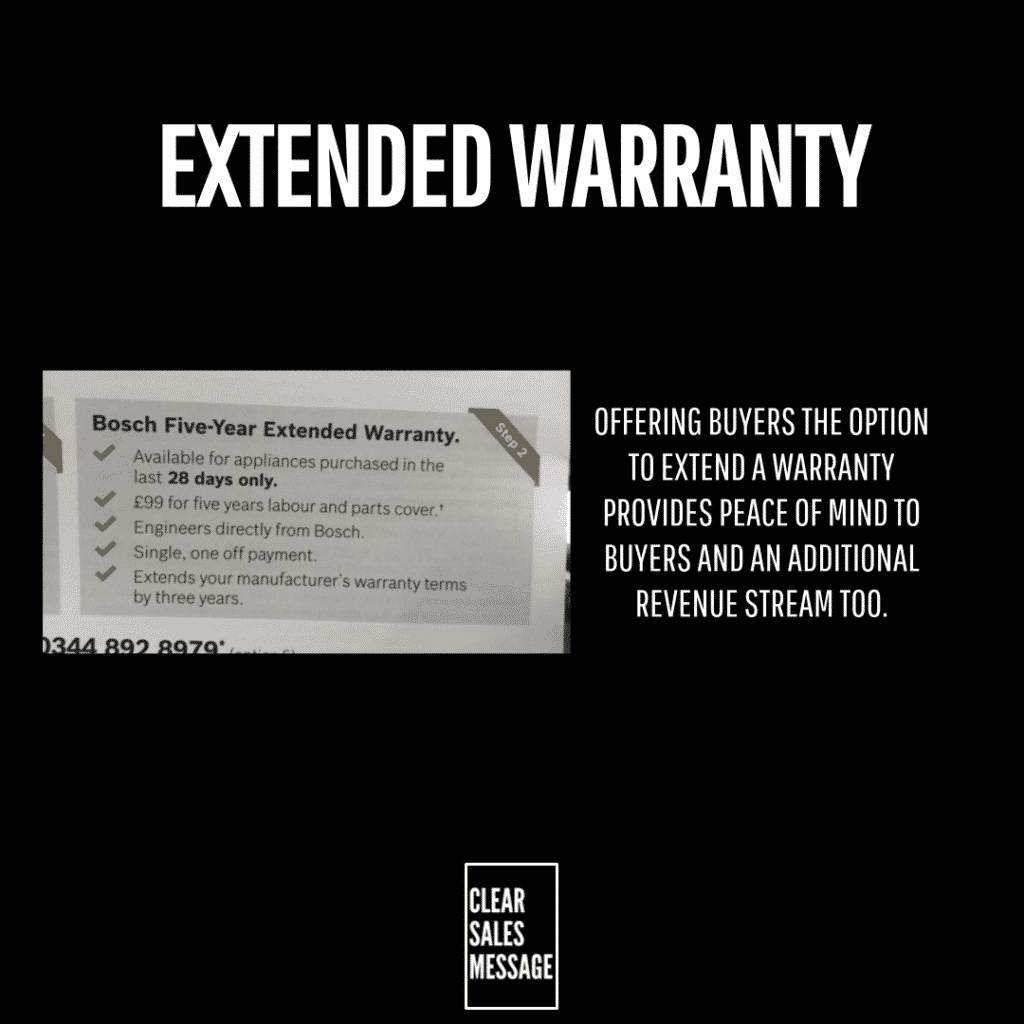
When someone buys something they care about, they want it to last. And when things go wrong after a standard warranty runs out, the frustration falls entirely on the buyer. An Extended Warranty changes that equation. It gives buyers a way to protect their purchase for longer, and gives you a simple source of extra revenue.
It is one of the easiest upsells in sales. No complex pitch required. The buyer has already decided to buy. You are simply offering more of the thing they already want: confidence that the purchase is safe.
Done well, it also strengthens the relationship. A buyer who takes an Extended Warranty is more committed to the product and more likely to return to you next time.
What Is an Extended Warranty?
An Extended Warranty is an offer to extend the standard guarantee on a product or service for an additional fee. Where a standard warranty lasts one or two years, an Extended Warranty lets the buyer cover it for longer.
It is common in electronics, appliances, vehicles, and furniture. But it applies anywhere a buyer might worry about the long-term reliability of what they are buying. The principle is the same across all of them: pay a little more now to protect the purchase for longer.
For the seller, it is also a revenue stream that can be highly profitable. Claims on Extended Warranties are often low relative to the fees collected. So the income can be meaningful without the cost being significant.
Why Does an Extended Warranty Work?
It works because buyers want to feel secure and prepared for what comes next. After spending on something they value, the idea of it failing with no cover is a real concern. An Extended Warranty removes that concern for a defined additional cost.
It also works because the moment of purchase is the right moment to sell it. The buyer’s emotional investment in the product is at its peak. They are thinking about how much they want it to last. That is exactly when the idea of extended cover resonates most.
And it works because the price is almost always modest relative to the product. Paying £50 to protect a £500 coffee machine for an extra three years feels like a sensible trade. The buyer is not comparing the cost to the warranty. They are comparing it to the cost of something going wrong.
How Can You Use an Extended Warranty In Sales?
Offer it at the point of purchase
Present an Extended Warranty during checkout or at the close of the sale. At that point, the buyer is already committed. Their emotional investment is high. A simple, clear offer at that moment will convert far better than a follow-up email a week later. Make it easy to say yes: one price, clear cover, no jargon.
Partner with a warranty provider if you cannot run it yourself
You do not have to underwrite the warranty yourself. Several specialist companies offer bespoke warranty packages that you can brand and sell as your own. This keeps the risk off your books while still giving your buyers the option and giving you the revenue. Look for a provider whose terms are genuinely fair to the buyer.
Frame it around peace of mind, not risk
How you position the Extended Warranty matters. The buyer wants to feel good about the purchase, not worried. So lead with the positive: “Protect your investment for three more years.” Keep the framing confident and reassuring throughout.
Make the cover specific and clear
Vague warranty terms create doubt rather than confidence. So spell out exactly what the cover includes: accidental damage, mechanical failure, parts and labour, or whatever applies. The more specific the offer, the more credible and valuable it feels. A buyer who knows exactly what they are getting is far more likely to take the upgrade.
When an Extended Warranty Works Best
It works best for products with a long expected lifespan where buyers have a genuine emotional attachment. Electronics, appliances, vehicles, and furniture are the obvious examples. The more a buyer loves a product and uses it daily, the more failing with no cover concerns them.
It also works well for higher-value purchases where the cost of repair or replacement would be painful. A buyer who has spent several hundred pounds on something will find a £50 warranty extension easy to justify. The ratio of protection to cost makes it a straightforward yes.
And it works particularly well when the buyer is already thinking long-term. A buyer choosing a sofa for a family home is already thinking about how long it will last. The Extended Warranty meets that mindset exactly.
When an Extended Warranty Becomes Dangerous
The main risk is selling a warranty that does not deliver on its promise. If the claims process is difficult or the cover falls short of expectations, the trust damage is severe. So choose your warranty terms carefully and make sure they are genuinely fair.
There is also a risk of overselling. Pushing an Extended Warranty on every sale regardless of fit starts to feel like a money grab. Apply some judgment. Not every product needs extended cover. A recommendation that fits converts far better than one that feels pushed.
Finally, the price needs to feel proportionate. If the Extended Warranty costs almost as much as the product, buyers will question the value of the product itself. Keep the pricing sensible and transparent so it adds to the experience rather than creating doubt.
Common Extended Warranty Mistakes
Presenting it too late
Offering an Extended Warranty a week after the purchase misses the moment. The buyer’s emotional investment has cooled and the product is no longer new. Conversion rates on late offers are far lower. Build it into the sale itself rather than sending a follow-up email when the excitement has already gone.
Using terms the buyer cannot follow
Long warranty documents full of exclusions and small print create distrust rather than confidence. If a buyer cannot work out what is actually covered in thirty seconds, the offer fails. Lead with a plain-English summary: what the cover includes, how long it lasts, and how to claim. Clarity converts.
Treating it as an optional extra rather than a feature
A warranty extension that feels like a throwaway add-on gets ignored. Present it as something genuinely valuable, because it is. Frame it as a way to get the most from the product over the long term. When it is part of the conversation rather than a tick-box, take-up rises and buyers feel better about saying yes.
Extended Warranty – An Example
The coffee machine that came with peace of mind included
A high-end electronics retailer sells premium coffee machines with a two-year standard warranty. At checkout, they offer an extended three-year warranty for an extra £50. Many buyers take it because the machine is something they use every day and want to last. The retailer earns clean extra revenue, and the buyer feels more confident about the purchase they just made.
The furniture store that made durability part of the deal
A furniture store runs an extended warranty offer on sofas. “5 years to 10 years for £99.” The price is simple. The cover is easy to follow. Buyers who are already thinking about how long the sofa will last find it an easy yes. Average order value goes up, and the brand signals it stands behind its products for the long term.
See Also