
Practical Sales Training™ > How To Convert > The Freedom Effect

The Freedom Effect
Most buyers do not hesitate because your price is too high. They hesitate because they feel trapped. Long contracts, cancellation fees, rigid terms – these all send one message: we do not trust you to stay unless we lock you in.
The Freedom Effect flips that. When you tell a buyer they can leave any time, upgrade or downgrade freely, with no penalty – it signals something important. It says you believe in what you sell. And buyers pick up on that confidence fast.
So instead of friction at the point of sale, you get trust. Instead of doubt, you get a faster yes. It is one of the simplest shifts you can make, but the impact on conversion can be significant.What Is The Freedom Effect?
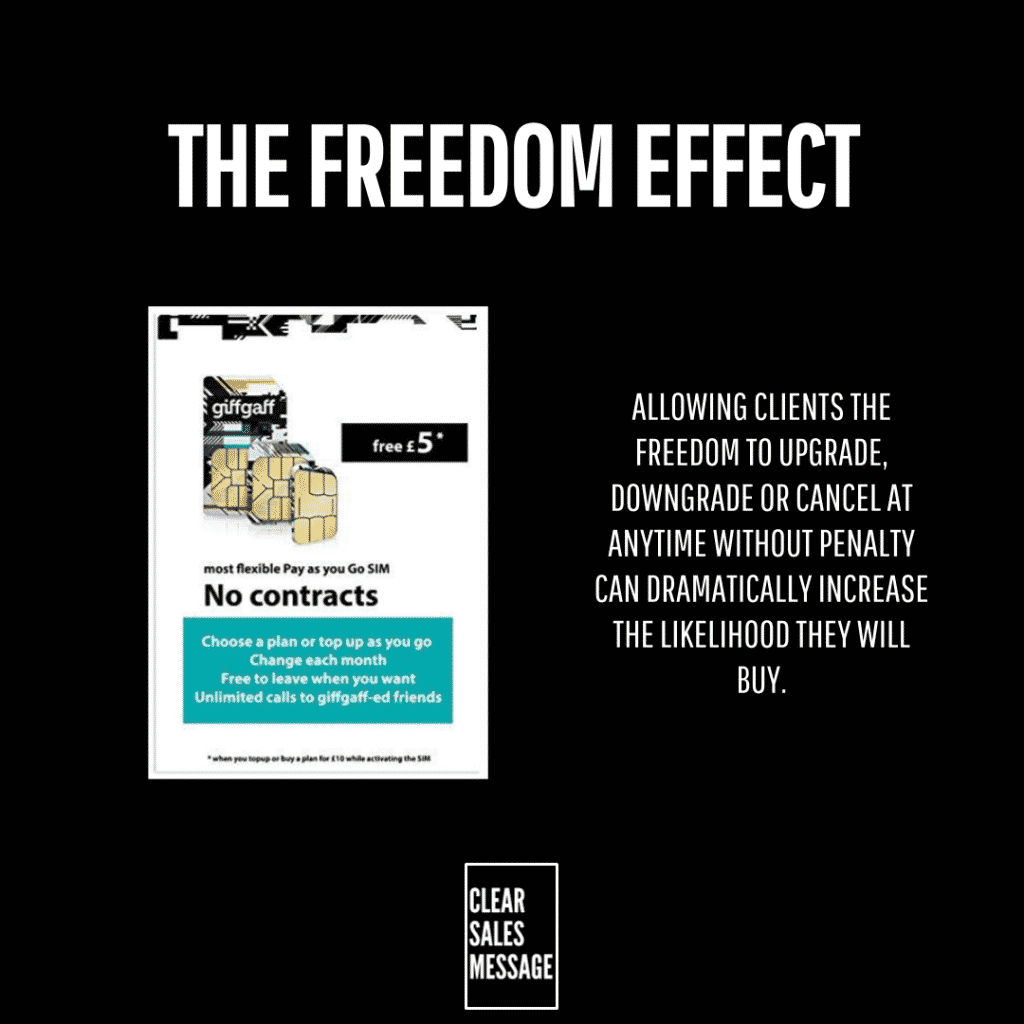
The Freedom Effect is when you give clients full control over how and when they buy from you, with no penalties for changing their mind. Some phone networks and SaaS companies do this well. They let you upgrade or downgrade at any time, cancel without fees, and pause when life gets in the way.
On the surface, it looks like a commercial risk. But in fact it builds trust quickly. It signals that your product or service is strong enough to stand on its own. You are not using contracts to keep people in. You are using quality.
This connects directly to zero risk bias – buyers instinctively avoid options that feel risky. So when you remove the risk of being trapped, you remove one of the biggest reasons people delay or walk away.
Why Does The Freedom Effect Work?
Buyers want to feel in control. It is one of the most basic things that drives purchasing decisions. When they feel locked in, they slow down. Questions pile up. Doubt creeps in. They may even walk away from something they actually want.
But when you tell them they can cancel at any time, something shifts. The risk feels smaller. The decision feels easier. And as a result, they move faster.
There is also a confidence signal at work. If you are happy for someone to leave whenever they want, it sends a clear message – you believe in what you are selling. That belief is hard to fake. Buyers sense it, even if they cannot explain why.
Similarly, removing penalties creates goodwill from day one. The relationship starts with trust rather than suspicion. That matters for retention just as much as it does for conversion.
How Can You Use The Freedom Effect In Sales?
Offer cancel-any-time terms
If you have a recurring billing model, allow clients to cancel at any time and pay only for what they have used. This removes the fear of a bad long-term commitment. For many buyers, it is the single thing that tips them over the line.
Allow upgrades and downgrades without penalty
Let clients move between tiers freely. If their needs change, they should not feel punished for adjusting. This keeps them inside your world rather than pushing them to leave entirely. It also makes the first decision easier, because the stakes feel lower.
Add a pause option
Pausing is far better than losing a client. It shows you understand that circumstances change. And because you gave them that option, they are more likely to return – and to refer others too.
Use a guarantee for one-off purchases
The Freedom Effect suits recurring billing best, but it works for one-time sales too. A clear, simple guarantee creates the same sense of safety. The buyer knows they have a way out if things go wrong, so they feel more at ease saying yes.
When The Freedom Effect Works Best
This works best when you have a strong product or service – because you are essentially inviting buyers to leave, and betting they will not want to.
It suits subscription businesses, retainer models, and SaaS products very well. However, it also works for any business where trust is the main barrier to purchase. If buyers hesitate because they fear commitment, removing that commitment is a direct and effective fix.
It also works well in crowded markets. If your rivals lock clients in and you do not, that contrast alone can win deals. Buyers notice when one option feels open and another feels like a trap.
When The Freedom Effect Becomes Dangerous
If your product is not strong enough to keep clients without a contract, this approach will expose that fast. You will see high churn, and you will have no penalty to slow it down.
Also, watch how and when you bring it up. If you lead with “you can cancel any time” too early in the conversation, it can plant doubt rather than ease it. The buyer starts thinking – why are they already telling me how to leave?
Use it as a reassurance tool, not a sign of desperation. Timing and framing make a real difference here.
Common Freedom Effect Mistakes
Hiding the freedom in small print
If your no-penalty terms exist but nobody can find them, they do no work for you. State them clearly on your pricing page, in proposals, and in sales conversations. Make the freedom visible, because that is where it earns its keep.
Using it to paper over a weak offer
The Freedom Effect is a trust signal, not a substitute for a good product. If you offer total flexibility because you have nothing else to sell on, buyers will sense that. It works best when it supports a strong offer, not when it tries to replace one.
Saying it without meaning it
Promising freedom and then making cancellation hard is worse than never offering it. Buyers talk. A bad exit experience can undo all the goodwill you built on the way in. So if you say it, make it real and make it easy.
The Freedom Effect – An Example
A business owner is looking at two sales training platforms. Both cost the same. One requires a 12-month contract. On the other, you can cancel any time, no penalty, pause if you need to.
The content is similar, and the price is identical. But option two feels safer. There is less to lose, so the buyer goes with it – not because it is better, but because it feels like less of a risk.
That is the Freedom Effect in action. The offer did not change. The terms did. And the terms won the sale.
See also