

Practical Sales Training™ > How To Connect With Your Buyer > The In House Effect
The In House Effect
What Is It?
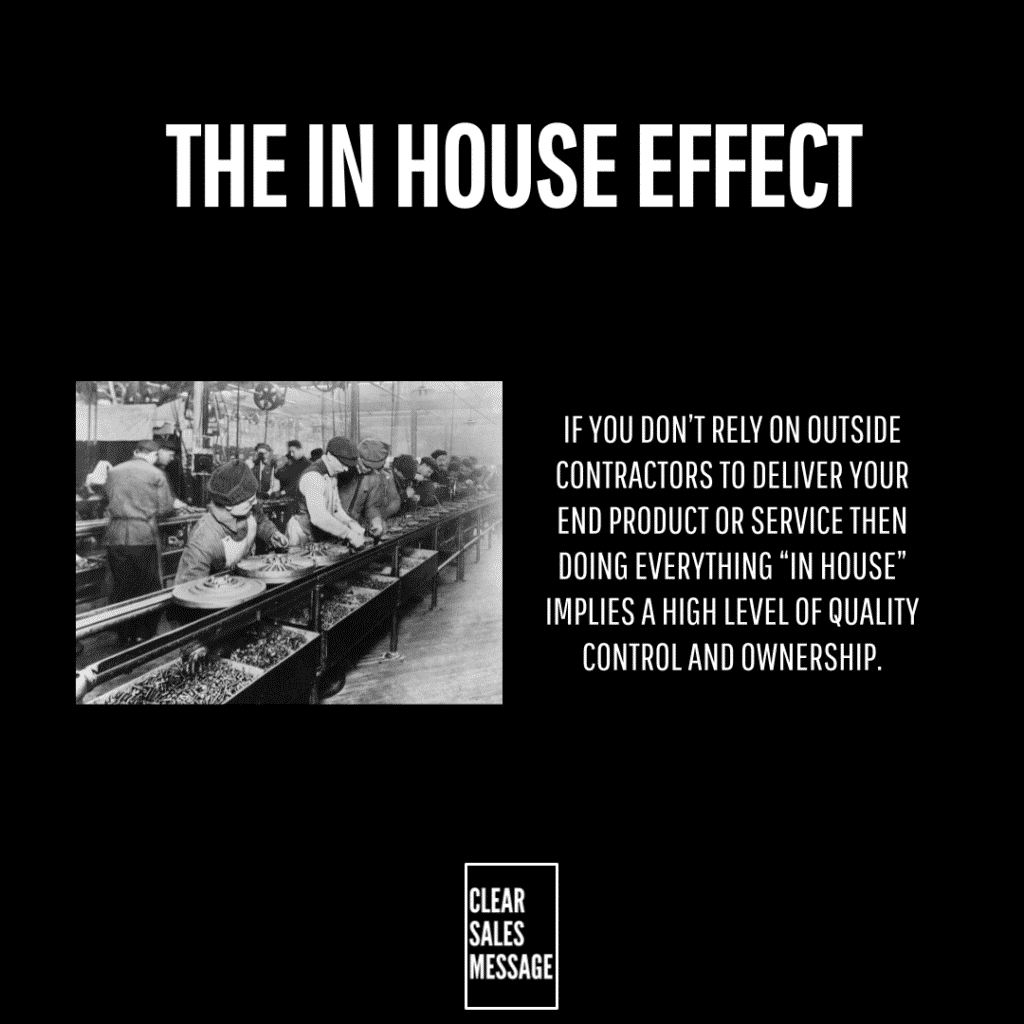
Design it, build it and finish it all in one place. So that’s the In House Effect in a sentence.
Do this, and you own the whole supply chain. As a result, buyers read that as quality, even before they see the product.
Why Does It Work?
Control changes everything. Because when you handle every stage yourself, you control the quality and the timeline too.
Outsourcing breaks that control. So once someone else touches part of the process, you can’t fully guarantee the result. That’s why doing it all in house removes the gap completely.
This also gives buyers confidence. So they know one team stands behind the whole thing, instead of three suppliers passing blame between each other.
How Can You Use It?
Map Your Real Process
List out how your product or service actually gets made. Then check which parts you handle yourself, and which parts rely on outside contractors.
Know What Actually Counts
Outside help with marketing or accounts doesn’t break this, since that’s not the part buyers care about. In house simply means you don’t rely on outside help to deliver the end result itself. So it’s not about every part of running the business.
Say It Plainly
Once you know it’s true, say it clearly in your messaging. Because “designed and built in house” works harder than people expect. That’s largely because most buyers assume the opposite by default.
When It Works Best
This works best for physical products, especially where craftsmanship matters. So furniture, manufacturing and anything handmade all benefit here.
It also works for services built around a small, dedicated team. So if one group handles strategy, design and delivery, that consistency becomes a real selling point too.
When It Becomes Dangerous
The risk is claiming in house when it isn’t fully true. So if a buyer discovers you outsource a key part, the claim backfires hard.
Instead, be specific about what “in house” actually covers. A vague claim invites doubt, while a precise one builds real trust.
Used honestly, this earns confidence fast. But used loosely, it just sets you up to get caught out later.
Common Mistakes
Overstating What’s In House
If part of your process is outsourced, don’t call the whole thing in house. Because buyers check, and gaps get noticed fast.
Staying Too Vague
“We do it all ourselves” says very little on its own. So name the actual stages you control instead.
Burying The Claim
A strong in house claim hidden on an about page gets missed. So put it where buyers actually decide to buy.
The In House Effect – An Example
The Furniture Workshop
A luxury furniture maker uses this line: “Designed, handcrafted, and finished in our own UK workshop.”
So buyers read full control into that sentence. Materials, craftsmanship and timelines all sit under one roof. Because nothing gets outsourced, nothing gets diluted along the way either.
As a result, this reassures the buyer completely. The business stands behind every part of what it makes, not just the finished piece.
Service businesses can use the same idea too. One studio puts it this way: “All strategy, design, and delivery is done by our in-house team. No outsourcing.” So that line builds trust and sets clear expectations from the start.
See also
- The Made By Effect
- The Made Of Effect
- The Handmade Effect
- 150+ ways to connect with your buyer
- 100+ ways to differentiate