
Practical Sales Training™ > How To Convert > The Made By Effect

The Made By Effect
What Is It?
The Made By Effect uses the actual maker to help convert buyers. Naming that person turns an anonymous product into something personal. And personal always sells better than anonymous.
Why Does It Work?
It works because buyers connect handmade quality with real craftsmanship. Naming the actual maker takes that connection even further. It signals genuine pride in the work, not just a claim about quality.
How Can You Use It?
Name The Maker Clearly
This suits products far more than services. Name whoever makes what you sell, and communicate that fact actively rather than quietly. A sticker, a plaque, or even a signature on the item works well.
Add A Face To The Name
Add a photo of the actual maker wherever it feels appropriate. A face attached to a name makes the connection even stronger.
When It Works Best
This works best for products where craftsmanship genuinely matters. A real person’s skill should shape the outcome. It also helps when your buyer already values quality over speed or price.
When It Becomes Dangerous
This becomes risky if the maker’s name feels like decoration rather than truth. Buyers who sense a fabricated story lose trust fast. That damage spreads to everything else you claim.
Common Mistakes
Inventing A Maker
Don’t invent a maker’s name just for effect. If a buyer ever finds out, trust collapses fast. It undoes far more than the tactic ever built.
Hiding A Real Maker
Never bury the maker’s name somewhere buyers won’t notice it. The whole point is visibility, so make it impossible to miss.
The Made By Effect – An Example
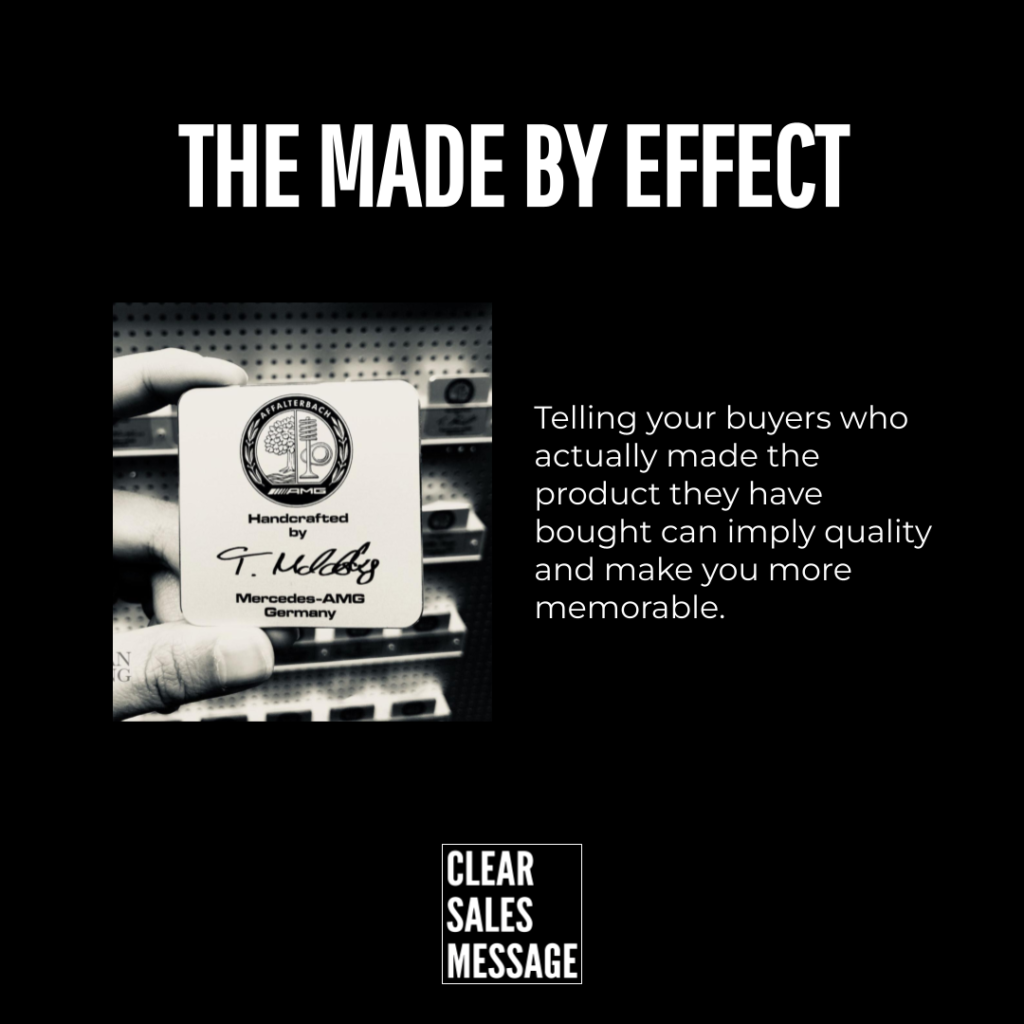
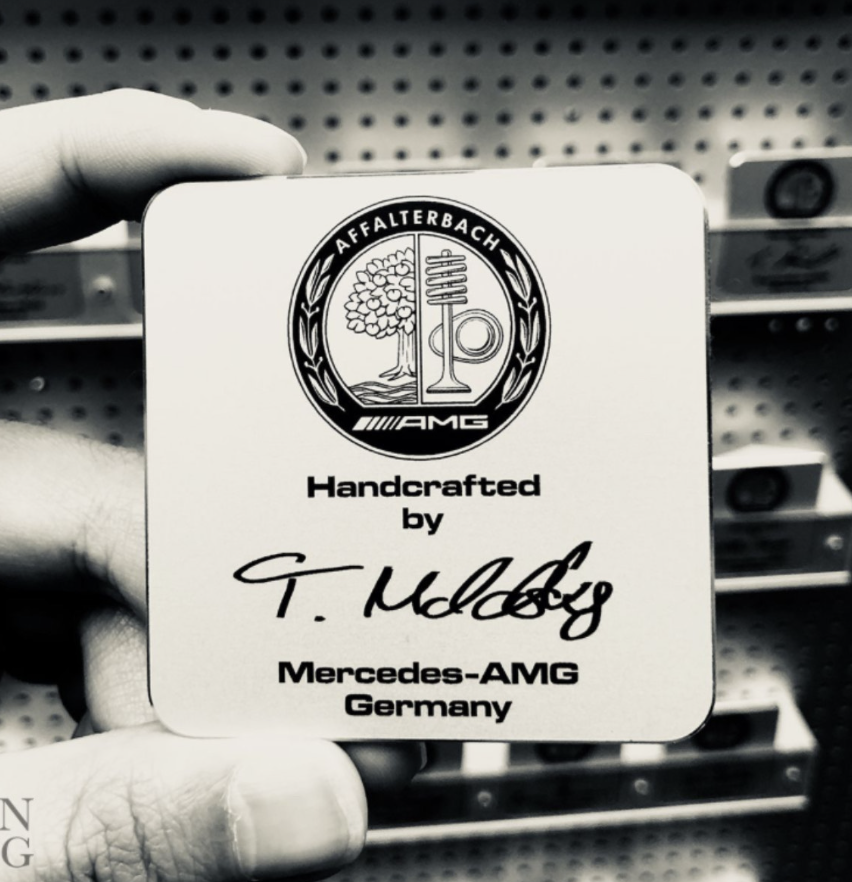
Mercedes-AMG runs a one man, one engine concept. You can actually know the name of the person who built your engine. It’s stamped directly onto the block itself.
See also
- The Made Of Effect
- The Handmade Effect
- The In House Effect
- 180+ ways to improve conversion
- 100+ ways to be more memorable