
Practical Sales Training™ > How To Lose The Sale > The Too Good To Be True Effect

The Too Good To Be True Effect
What Is It
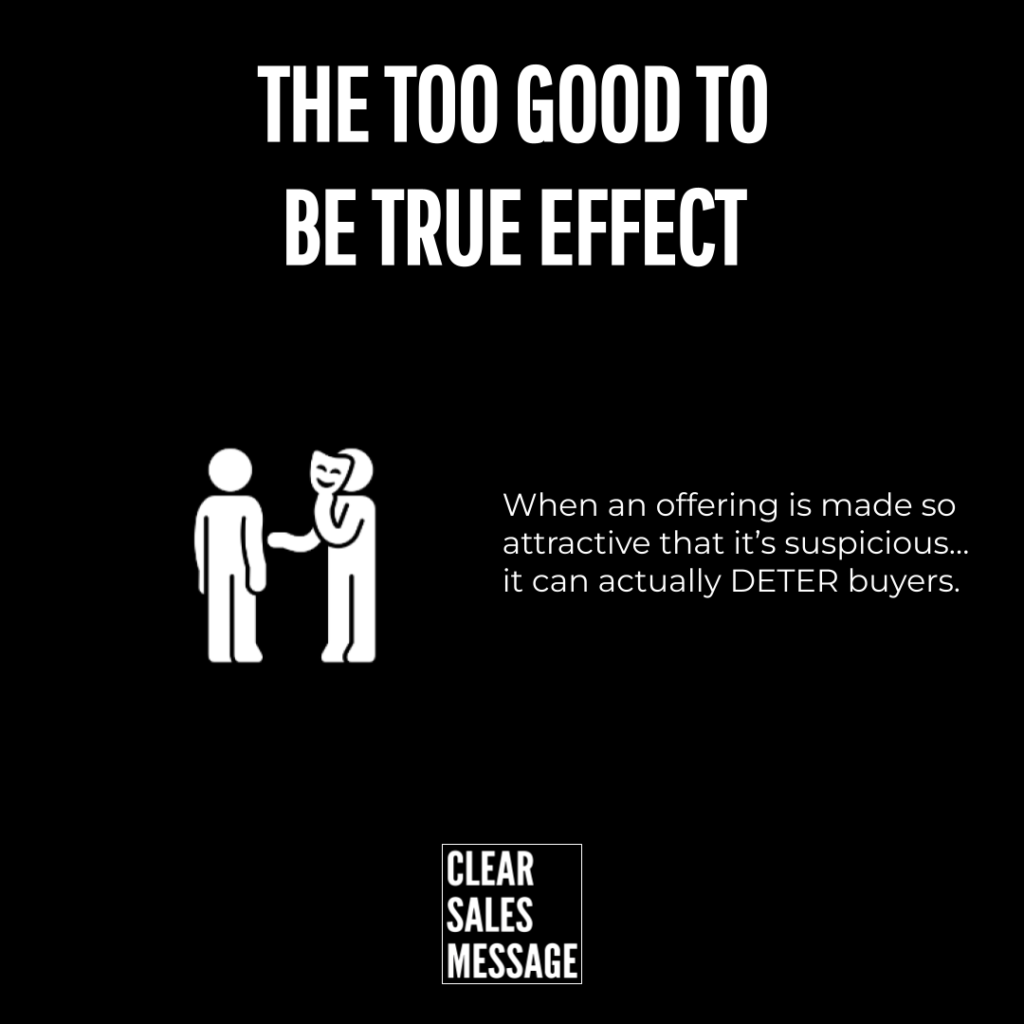
Ironically, you can make your offering too attractive. Buyers grow suspicious, wondering where the real catch might be hiding.
A deal that sounds perfect on paper can quietly work against you. Instead of excitement, it triggers doubt before a buyer even reads the details properly.
Why Does It Work
It works because most people are naturally skeptical of good deals, and anything that appears free. We’re always quietly looking for the catch, or wondering where we might get taken advantage of.
The tricky part is that buyers rarely voice this concern out loud. That doubt sits there silently, working against you the entire time.
How Can You Use It
Address The Time Concern
Explain why something is so quick, and how that’s genuinely possible. Perhaps it’s faster because you’ve removed something that usually slows the process down.
Address The Money Concern
Explain why your offer is genuinely free, ideally by showing it’s cost neutral. Or explain plainly how you actually get paid, if not directly by the buyer.
Address The Effort Concern
Explain how little time your buyer needs to commit, and why that’s genuinely the case. A clear reason beats a vague reassurance every time.
When It Works Best
It works best for genuinely strong offers, where the honest explanation actually holds up under scrutiny. Skepticism only becomes a problem when buyers actually doubt real substance.
It’s also useful anywhere a hidden catch elsewhere has already burned buyers before. A little upfront honesty repairs trust that competitors may have already damaged.
When It Becomes Dangerous
This becomes genuinely dangerous if the explanation itself sounds evasive or thin. A weak justification can make buyers more suspicious, not less.
It’s also risky if there actually is a catch you’re hoping nobody notices. Honesty only works as a strategy when there’s genuinely nothing to hide.
Common Mistakes
Staying Silent On The Obvious Question
Leaving buyers to wonder how something is possible invites exactly the suspicion you were hoping to avoid. Answer the question before it’s asked.
Overselling The Explanation
Piling on extra reassurance can backfire, making a genuine offer sound like it’s protesting too much. State the reason plainly, then stop.
Explaining Only Once
A single mention buried in the small print rarely reaches the buyers who need it most. Repeat the explanation wherever the offer itself appears.
The Too Good To Be True Effect – An Example
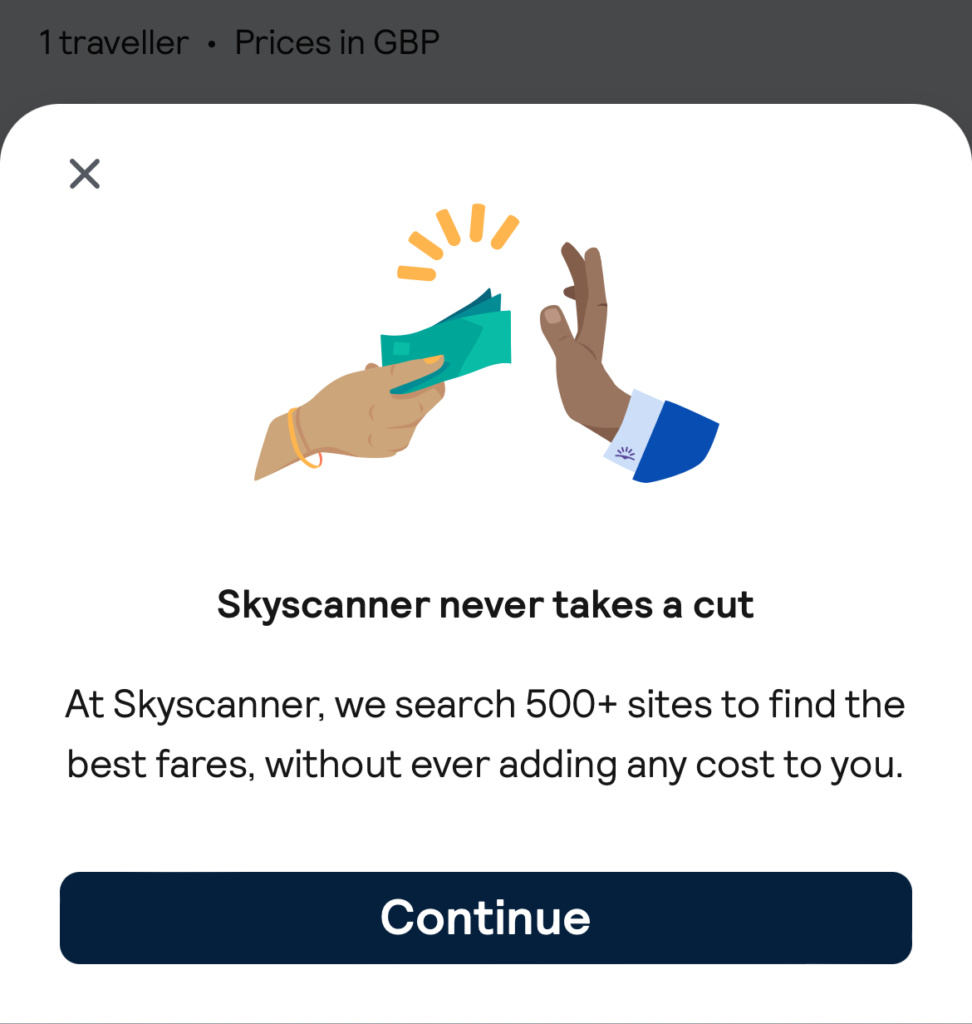
SkyScanner’s Free Service
SkyScanner makes it clear that their service is genuinely free to use. There are no additional costs or fees anywhere in the process. That clarity implies the airlines pay them commission on each deal instead.
By stating this plainly, SkyScanner removes the exact question a suspicious buyer would otherwise be left asking themselves.
See also