Practical Sales Training™ > How to connect with your buyer > The Unique Needs Effect

The Unique Needs Effect
What Is It
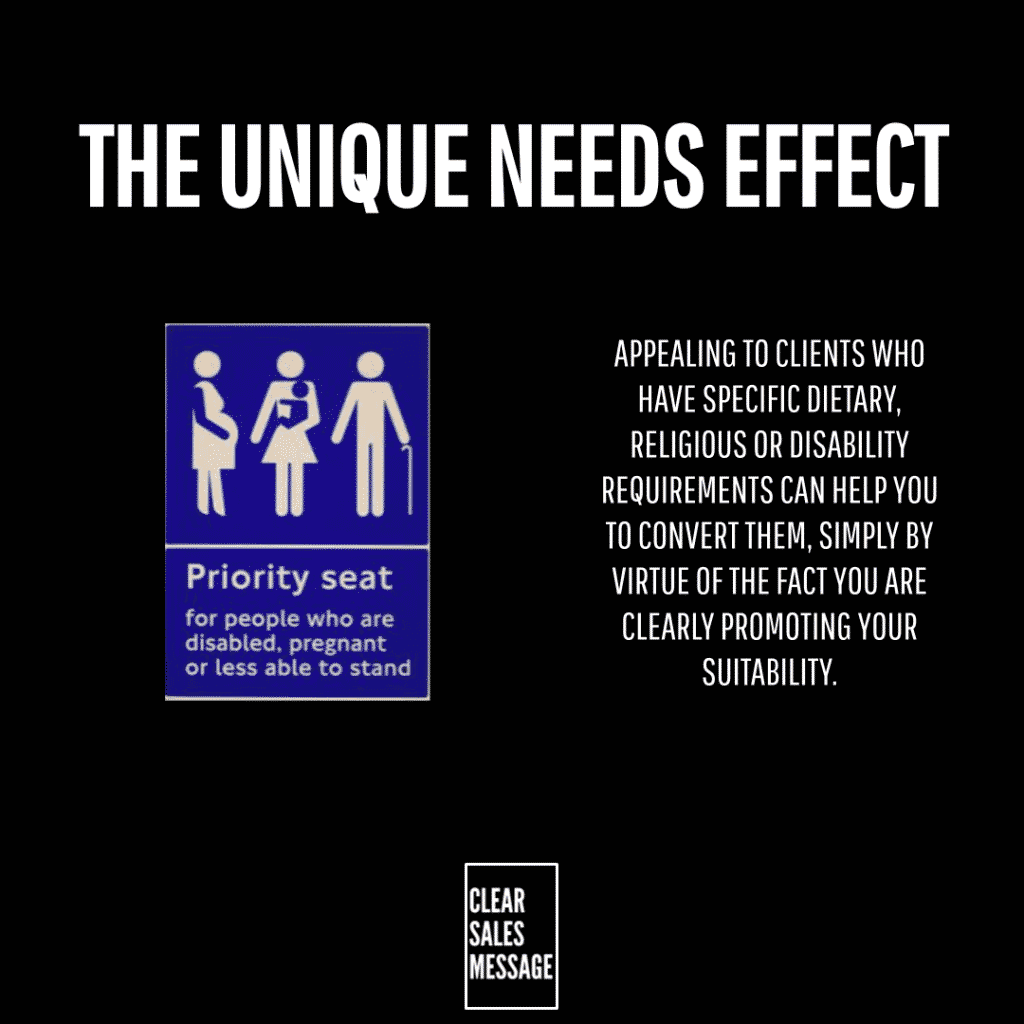
The Unique Needs Effect is all about appealing to clients with specific needs, whether that’s a disability, dietary requirement, or otherwise. Not a generic promise, a direct signal that says “this fits you.”
Most products stay silent on who they’re not suitable for, let alone who they’re specifically built for. That silence leaves buyers unsure.
A clear, specific signal removes that uncertainty in an instant.
Why Does It Work
It works because clients with any kind of specific need will be seeking the most relevant solution to their problem. If you have a dietary requirement, you’re more likely to buy a product that makes it very clear it’s suitable for you, rather than one that doesn’t.
A buyer with a specific need isn’t comparing every option equally. They’re scanning for the one that clearly removes their particular worry.
Being that clear, obvious choice earns loyalty too, since buyers with genuine needs remember who made things easy for them.
How Can You Use It
Identify who your offering already suits
Depending on your offering, is there a segment of buyers with a specific need that your offering services? Whether it’s a disability, dietary, or religious need, if you’re suitable for those with unique needs, promote it as boldly and clearly as you can using imagery.
Say it plainly, don’t leave it implied
A buyer with a specific need shouldn’t have to guess or dig through small print. State it clearly, ideally in the name, image, or headline itself.
Show the benefit, not just the feature
Naming the specific problem you solve does more than listing a technical feature. “No laces needed” speaks directly to someone with mobility concerns in a way a spec sheet never could.
When It Works Best
This works best when there’s a genuinely distinct group with a real, specific need your offering solves, rather than a vague general audience.
It also works best when the signal is impossible to miss, in the name, the image, or the very first line a buyer sees.
When It Becomes Dangerous
It backfires if the claim isn’t genuinely accurate. Marketing something as suitable for a specific need it doesn’t actually meet damages trust badly, and quickly.
It also becomes risky if the messaging feels tokenistic rather than genuinely considered. Buyers with real needs can tell the difference between real thought and a marketing afterthought.
Overgeneralising the claim causes its own problem too, since claiming to suit everyone often ends up convincing nobody in particular.
Common Mistakes
Burying the signal in small print
A suitability note tucked away in the details gets missed by exactly the buyer who needed to see it. Put it front and centre instead.
Making the claim without real substance behind it
Claiming suitability without genuinely designing for that need reads as opportunistic the moment a buyer tests it themselves.
Trying to appeal to too many needs at once
A product claiming to suit every possible need often ends up feeling generic. Speak clearly to the specific need you genuinely solve.
The Unique Needs Effect – An Example
Laceless “Slip In” Shoes
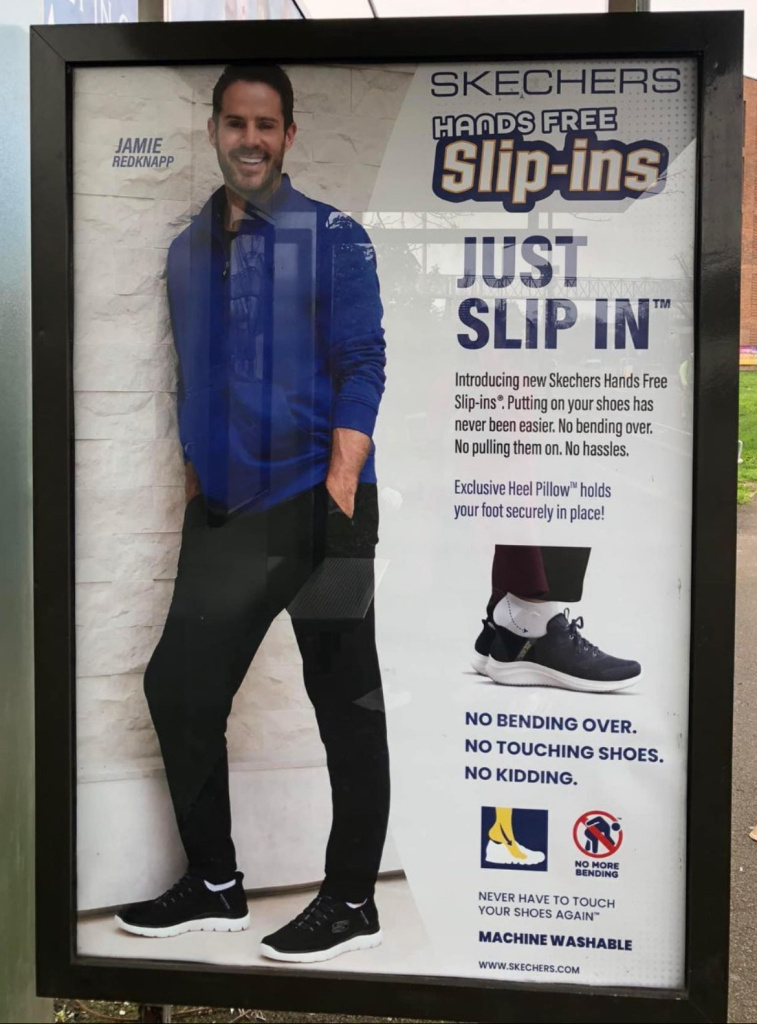
In this example, we’re talking about making shoes easier and more convenient by having no laces. You don’t even need to touch them, apparently. You can just slip them on. This will make them an appealing option for those with mobility issues.
Notice how the name and tagline focus on “Slip In,” which explains in just 2 words what the offering is about.
See also