Practical Sales Training™ > How to connect with your buyer > The Rename Effect
The Rename Effect
What Is It
The Rename Effect is renaming people, places, and things so they match your branding and messaging. A staff member becomes something else. A customer becomes something else too.
It sounds small on paper. In practice, a new name changes how people think and talk about something, not just what it’s called.
Once a name sticks, it carries your brand into conversations you were never part of.
Why Does It Work
It works because it lets you dictate the vernacular your buyers use, and it can even make you eponymous in the space you operate in.
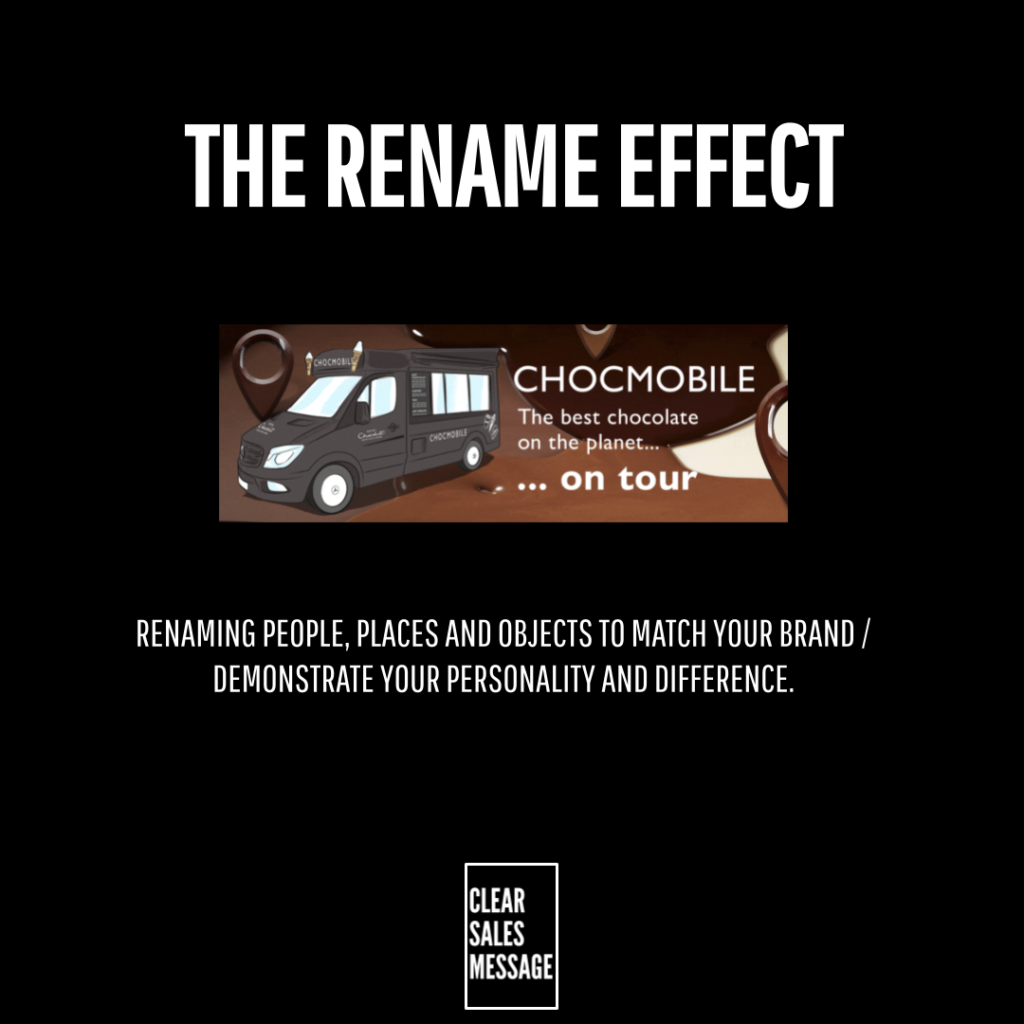
In the same way we Hoover, even with a Dyson, renaming things, like a hot chocolate vending van called a ChocMobile, can become the standard. That means even your competitors get referred to with your names and your messaging, which is a genuinely powerful commercial tool.
There’s a deeper effect too. A name people repeat unprompted spreads for free, in a way no advert ever could.
How Can You Use It
Look for what’s worth renaming in your business
This isn’t for every business or every offering. But consider the people, places, and things you use in the course of your business, and how you could rename them to match your branding and messaging.
Choose what to rename from a wide range of options
You can name things like:
- A feeling, situation, or behaviour
- Equipment or tools
- Your staff, fans, or followers
- The problem you solve
- A unit of measurement (Hunk of Pizza anyone?)
- A family of names where everything follows a similar style
Back it up with a named process too
It’s also worth having a named process for articulating how you do what you do. If naming genuinely interests you, we have a book dedicated to naming things that goes further into it.
When It Works Best
This works best when the new name is genuinely easy to say and remember. A clumsy invented word gets dropped fast, no matter how clever it seemed on a whiteboard.
It also works best when you’re consistent about it. A rename used once in marketing and never again in real interactions never gets the chance to stick.
When It Becomes Dangerous
It backfires if the new name feels forced or confusing rather than natural. A name nobody understands just adds friction where there wasn’t any before.
It also becomes risky if it distances you from your customers rather than pulling them closer. A rename should feel like an invitation into your world, not corporate jargon dressed up as culture.
Overdoing it across too many things at once dilutes the effect too. A handful of names people actually use beats a dozen nobody bothers to learn.
Common Mistakes
Renaming things nobody needed renamed
Not every role or object benefits from a new name. Rename where it genuinely adds identity, not just for the sake of sounding different.
Picking a name that’s hard to say or spell
A clever name that nobody can pronounce confidently won’t get repeated out loud, and repetition is the entire point of this effect.
Using the new name inconsistently
If your team only uses the new name in marketing copy, and reverts to the old one in real conversations, the name never has a chance to become the standard.
The Rename Effect – An Example
Lush Cosmetics
Instead of calling employees “staff” or “sales assistants,” they call them “Lushies.” This builds internal culture and external identity, since customers start using the term too.
Disney
Disney doesn’t call visitors “customers.” They call them “guests.” Staff? They’re “cast members.” Every role, and every place, “on stage” versus “backstage,” matches the magic of the brand.
See also
- The Made Up Word Effect
- Family of names
- Named Behaviour
- 150+ ways to connect with your buyer
- 100+ ways to be more memorable