

Practical Sales Training™ > How To Get Attention > Colour Psychology
Colour Psychology
Colour communicates before your words do. When a buyer lands on your website or picks up your brochure, their brain is already forming opinions. The colours you’ve chosen are doing a job, whether you planned it that way or not.
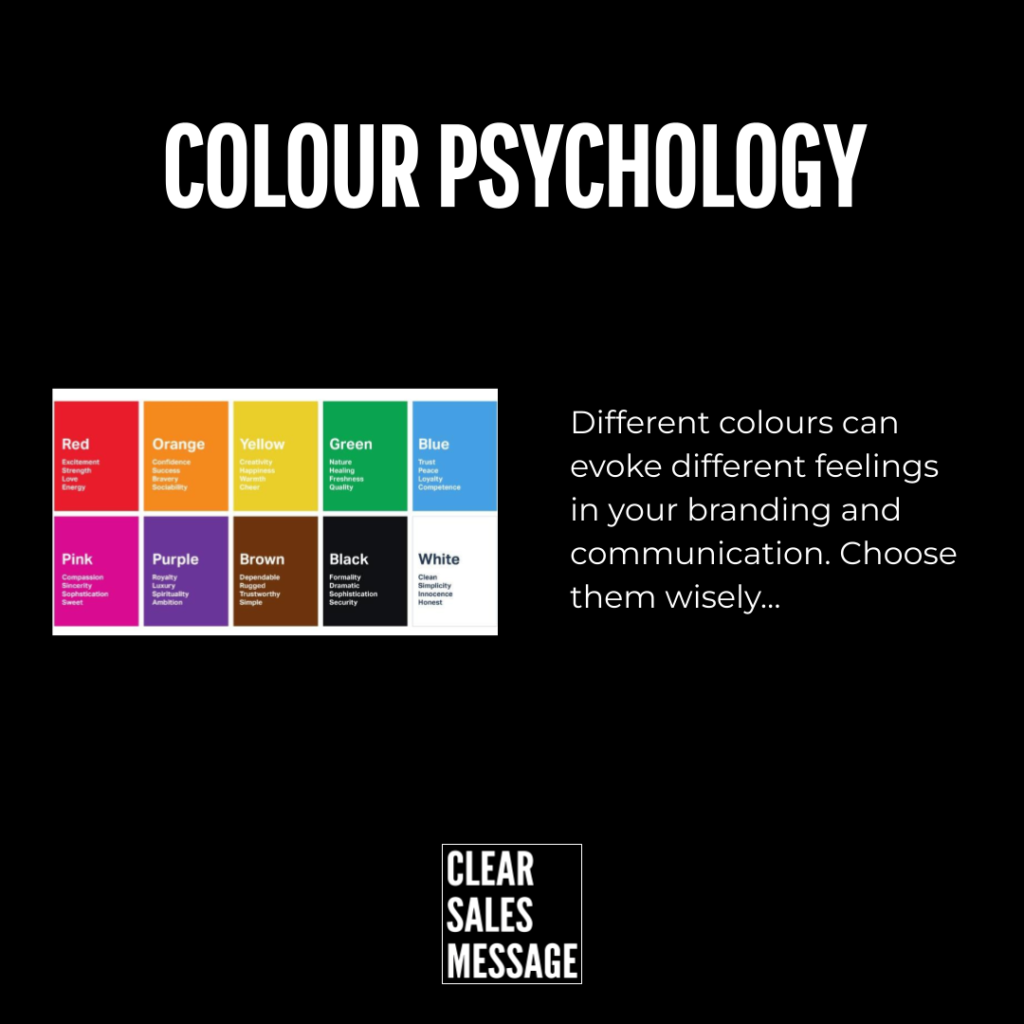
Colour psychology is the study of how different colours affect how we think and feel. Blue suggests trust. Green suggests nature. Orange suggests energy. These aren’t random associations. They’re deeply rooted in how humans experience the world.
So the question isn’t whether your colours are sending a message. They are. The question is whether that message is the right one for your business and your buyers.
What Is Colour Psychology?
Colour psychology is the study of how colour influences human behaviour, mood, and decision-making. Different colours trigger different emotional and mental responses. Those responses happen fast, mostly before conscious thought kicks in.
In a branding and sales context, this means the colours you use in your logo, website, packaging, and marketing are all quietly shaping how buyers perceive you. A brand that looks trustworthy, exciting, or calming isn’t just lucky. In many cases, it’s the result of deliberate colour choices.
Big brands understand this well. Think about IBM, Coca-Cola, or McDonald’s. Their colours are not accidental. Each one is chosen to create a specific feeling and reinforce a specific message in the mind of the buyer.
Why Does Colour Psychology Work?
It works because colour is part of how humans read the world. We use mental shortcuts called schemas to make fast connections between things we see and what they mean. Colours are loaded with those associations, built up over a lifetime of experience.
Red means danger or urgency. Green means safety or nature. Blue means calm and reliability. These links are so deeply embedded that they operate below conscious thought. So buyers react to your colours before they’ve even read your name.
As a result, the wrong colours can undermine everything else you do. A financial brand using bright, playful tones may look friendly but feel unsafe. A health brand using dark, cold colours may look professional but feel clinical. The colour has to match the message, because when it doesn’t, buyers feel the tension even if they can’t name it.
How Can You Use Colour Psychology In Sales?
Start by asking what feeling you want buyers to have when they first encounter your brand. Then check whether your current colours support that feeling or work against it.
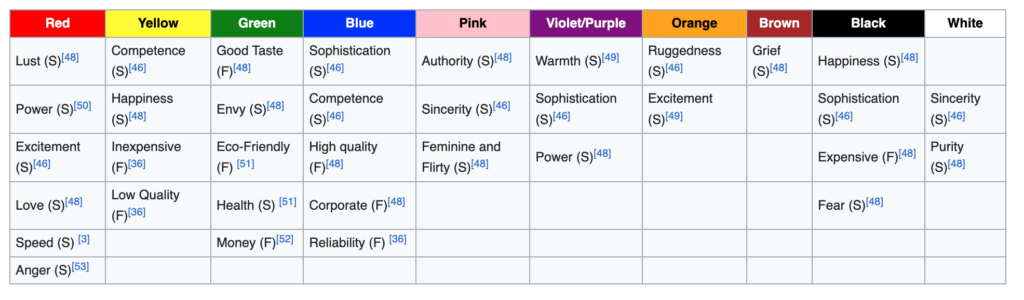
According to Wikipedia, here are the common associations for key colours. It’s no surprise that blue links to corporate credibility, green to the environment, and orange to excitement and energy.
Match your colour to your buyer’s expectation
Every market has colour norms. Buyers arrive with expectations about what a business in your space should look and feel like. Meeting those expectations builds instant credibility. Breaking them is a risk. However, breaking them deliberately and well can also make you stand out.
Use contrast to draw attention
Your call to action button, your key headline, or your most important offer should stand out from the rest of the page. A contrasting colour pulls the eye there naturally. So don’t bury the thing you most want buyers to notice in a colour that blends in.
Keep it consistent
Colour builds recognition over time. The more consistently you use your colours across every touchpoint, the faster buyers start to associate those colours with your brand. That recognition is valuable. Don’t dilute it by changing your palette every year.
Test before you commit
If you’re unsure whether your current colours are helping or hurting, test them. Show your branding to people outside your business and ask how it makes them feel. Their answers will tell you far more than any internal debate about favourite shades.
When Colour Psychology Works Best
Colour psychology works best when your brand is still being built or is due a refresh. That’s the moment to be deliberate. Choose colours that say what you need them to say for the right buyers, rather than ones you happen to like personally.
It also works well when you’re reviewing a website or landing page that isn’t converting. Before changing the copy or the layout, look at the colours. Sometimes a simple change to a button colour or a background tone can shift how the page feels and lift the response rate.
Similarly, it’s worth thinking about colour when you’re entering a new market or targeting a new type of buyer. Because what works in one context may not work in another. Different audiences carry different colour associations.
When Colour Psychology Becomes Dangerous
Colour alone won’t save a poor product or a weak message. It’s a supporting signal, not the whole story. If you rely too heavily on the idea that the right colour will fix your conversion rate, you’ll miss the deeper issues that actually matter.
Cultural context also matters a lot. Colour associations vary between cultures. White means purity in some contexts and mourning in others. Red means luck in some markets and danger in others. So if you sell internationally, check your colours work in every market you operate in.
And changing your colours too often erodes brand recognition. Therefore, once you’ve made a deliberate, well-informed choice, stick with it long enough for it to do its job.
Common Colour Psychology Mistakes
Choosing colours you like rather than colours that work
Personal preference is not a branding strategy. The colours that work for your business are the ones that create the right feeling in your buyer’s mind. Your opinion of the colour matters far less than their reaction to it.
Ignoring what your competitors are doing
If every business in your market uses blue, using blue too makes you blend in. But using a very different colour makes you stand out. Look at your competitive landscape before you commit. Sometimes the best move is to go where others haven’t.
Using too many colours at once
A busy palette creates visual noise. It also dilutes the emotional signal each colour is trying to send. Stick to a small, clear palette with a dominant colour, a secondary tone, and an accent. That’s enough for most businesses.
Applying colour inconsistently
If your website uses different shades to your printed materials, or your social media uses a completely different palette, the brand feels fragmented. Buyers notice, even if they can’t say why. So lock down your exact colour codes and apply them everywhere.
Colour Psychology – An Example
A financial consultancy originally uses bright orange and pink tones in its branding. The colours are eye-catching but they don’t communicate the trust, stability, and professionalism that buyers expect from a financial partner.
After reviewing colour psychology, they rebrand with deep blues and greys. These are colours linked to competence, reliability, and confidence.
As a result, their website and marketing materials feel far more aligned with what buyers expect. Trust goes up. So do conversion rates. The product didn’t change. But the way buyers felt about it did.
See Also