Practical Sales Training™ > How to connect with your buyer > Comparative Messaging
Comparative Messaging
Most buyers don’t choose in a vacuum. They weigh you up against something else. Another supplier, a cheaper option, or just doing it themselves. The question is whether you help them make that comparison or leave them to do it alone.
When buyers compare without your help, they often get it wrong. They focus on price, miss the real differences, and sometimes walk away from the better choice. Comparative Messaging fixes that. You lay out the comparison clearly, on your terms, so the right answer is obvious.
It’s not about putting rivals down. It’s about doing the thinking for the buyer before doubt creeps in.
What Is Comparative Messaging?
Comparative Messaging means showing buyers how your offer stacks up against their other options. That might be a direct rival, a broader field of competitors, an alternative solution, or the option of doing nothing and handling it themselves.
The goal is to remove the work of comparison from the buyer’s plate. Instead of asking them to research and decide, you give them the contrast they need right there in your pitch, your ad, or your proposal.
Done well, it makes the decision feel easy. Because the answer is already in front of them.
Why Does Comparative Messaging Work?
Buyers need context to make decisions. A number on its own means little. But that same number next to a competitor’s higher figure suddenly means a lot.
Comparative Messaging works because it makes it obvious why you’re the right choice. You give the buyer the most compelling reasons to choose you versus everything else, so they don’t have to hunt for them. As a result, they feel more confident and the decision gets easier to make.
It also works because contrast is how the brain judges value. We don’t assess things in isolation. We compare. So if you don’t provide the comparison, the buyer will find one elsewhere. And that comparison might not favour you.
How Can You Use Comparative Messaging In Sales?
There are four main ways to use comparison in your messaging. Each one suits a different situation.
1. Compare to the Direct Competition
Bad-mouthing rivals is never a good look. But if you have a clear, factual advantage over a named competitor, a direct comparison can be very powerful. Think of the Mac vs PC adverts. They didn’t insult. They simply showed the difference. If you’d rather not name names, “compared to the leading brand” adds a layer of intrigue while still landing the point.
2. Compare to the Broader Market
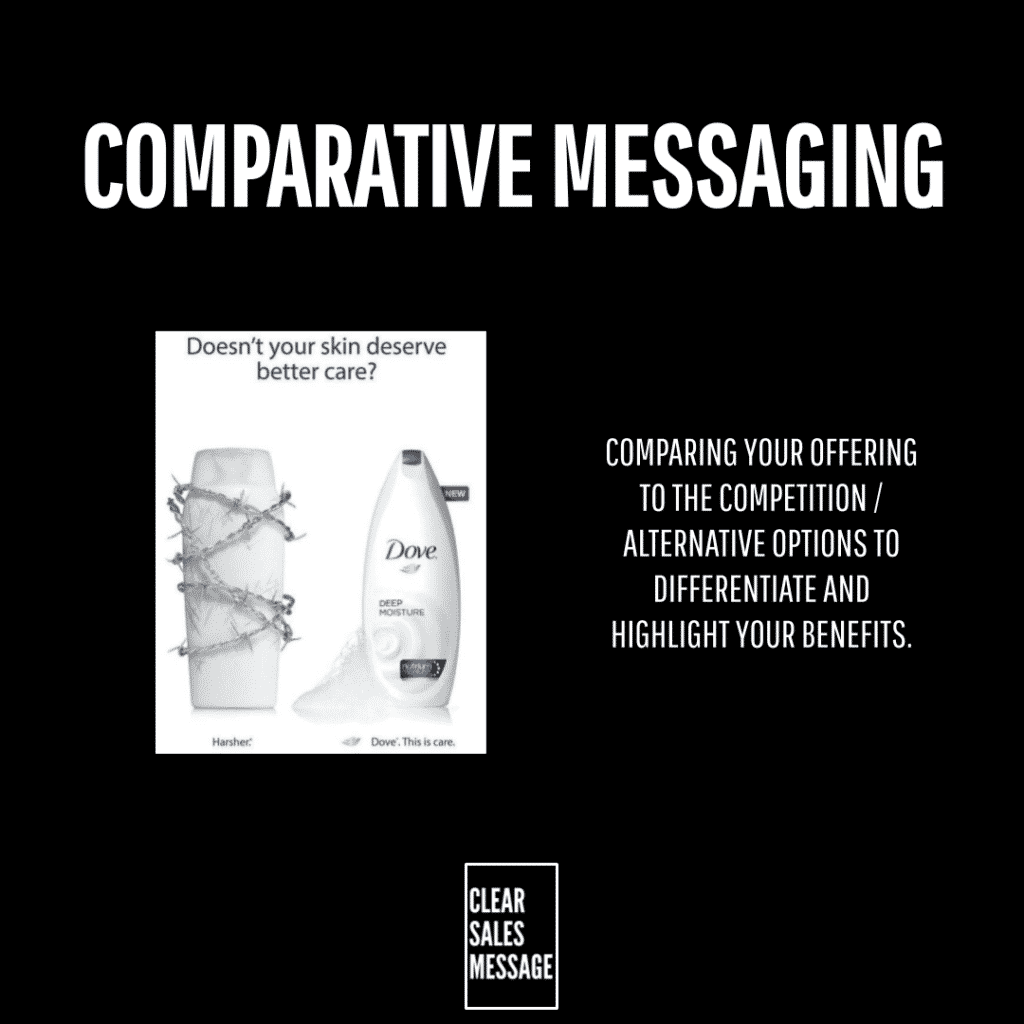
Instead of targeting one rival, you can compare yourself to all competitors as a group. Dove’s long-running claim that it’s kinder to skin than “all other” body washes is a good example. Notice how the barbed wire Semiotics in their ads reinforces that contrast visually. This approach is less risky than naming rivals and still draws a clear line between you and the field.
3. Compare to Alternative Methods
Sometimes your real competition isn’t another supplier. It’s a different way of solving the same problem. Should a homeowner use grass seed or just lay artificial turf? If your product or service is one approach among several, showing why your method wins helps buyers make the right call. This is especially useful when buyers don’t yet know which type of solution they need.
4. Compare to DIY
Many buyers will consider doing it themselves before they consider hiring you. So address that option head on. Show what DIY actually costs in time, risk, and effort. When buyers see the real comparison, “I’ll just do it myself” starts to look a lot less appealing.
When Comparative Messaging Works Best
This approach works best when you have a real, provable advantage. The comparison has to be honest. Buyers can sense when a comparison chart is rigged in your favour and it destroys trust fast.
It also works well early in the buyer’s decision process. Before they’ve shortlisted, before they’ve started researching, you can shape how they think about their options. Get in early with a clear comparison and you set the frame for everything that follows.
Similarly, it works well in crowded markets where buyers struggle to tell suppliers apart. If everything looks the same, a clear side-by-side comparison is a breath of fresh air.
When Comparative Messaging Becomes Dangerous
The biggest risk is making claims you can’t back up. If your comparison is selective, exaggerated, or misleading, you open yourself up to legal challenge and reputational damage. Every claim needs to be factual and fair.
Also avoid comparisons that make you look insecure. If you spend more time attacking a rival than talking about your own value, buyers wonder why you’re so focused on them. Keep the energy on what you do well.
And don’t compare on the wrong things. Choosing metrics that flatter you but don’t matter to the buyer is a missed shot. Focus the comparison on what they actually care about.
Common Comparative Messaging Mistakes
Comparing on Price Alone
Price comparisons invite a race to the bottom. If the only difference you highlight is cost, you’re telling buyers that price is all that matters. Instead, compare on value, results, speed, risk, or experience. Make the comparison about the full picture.
Being Too Aggressive
Comparisons that feel like attacks put buyers on edge. They start to sympathise with the competitor you’re targeting. Keep the tone factual and calm. Let the contrast do the work.
Forgetting the Buyer’s Perspective
It’s easy to compare on things that matter to you as the seller. But the comparison only lands if it maps to what the buyer actually wants. Ask yourself: “Does this buyer care about this metric?” If not, drop it and find one they do care about.
Comparative Messaging – An Example
A professional cleaning company notices that many potential clients hesitate because they think cleaning themselves is cheaper. So instead of listing features, they run an ad that says:
“Compared to doing it yourself, we save you 10 hours a week and we use eco-friendly products that last longer. Your time is worth more than a mop.”
They back this up with a simple comparison chart:
- DIY: Requires buying supplies, takes 10 hours a week, risk of damage.
- Other cleaning companies: Fixed packages, no tailored service.
- Our company: Flexible plans, eco-friendly products, results guaranteed.
The contrast is clear. Buyers can see the difference without having to work for it. As a result, the decision feels simple. That’s Comparative Messaging doing exactly what it should.
See Also