
Practical Sales Training™ > How to connect with your buyer > Customer Journey

Customer Journey
Most sellers focus on the moment of sale. But the buyer’s journey starts long before that, and it carries on long after.
At every stage, your buyer thinks differently, looks in different places, and needs a different message from you. If you only show up at the conversion stage, you miss most of the journey. Disappear after the sale, and you leave repeat business and referrals on the table.
Understanding the Customer Journey gives you a map. It shows you where your buyer is, what they need to hear, and what action you should take at each point to move them forward.
What Is the Customer Journey?
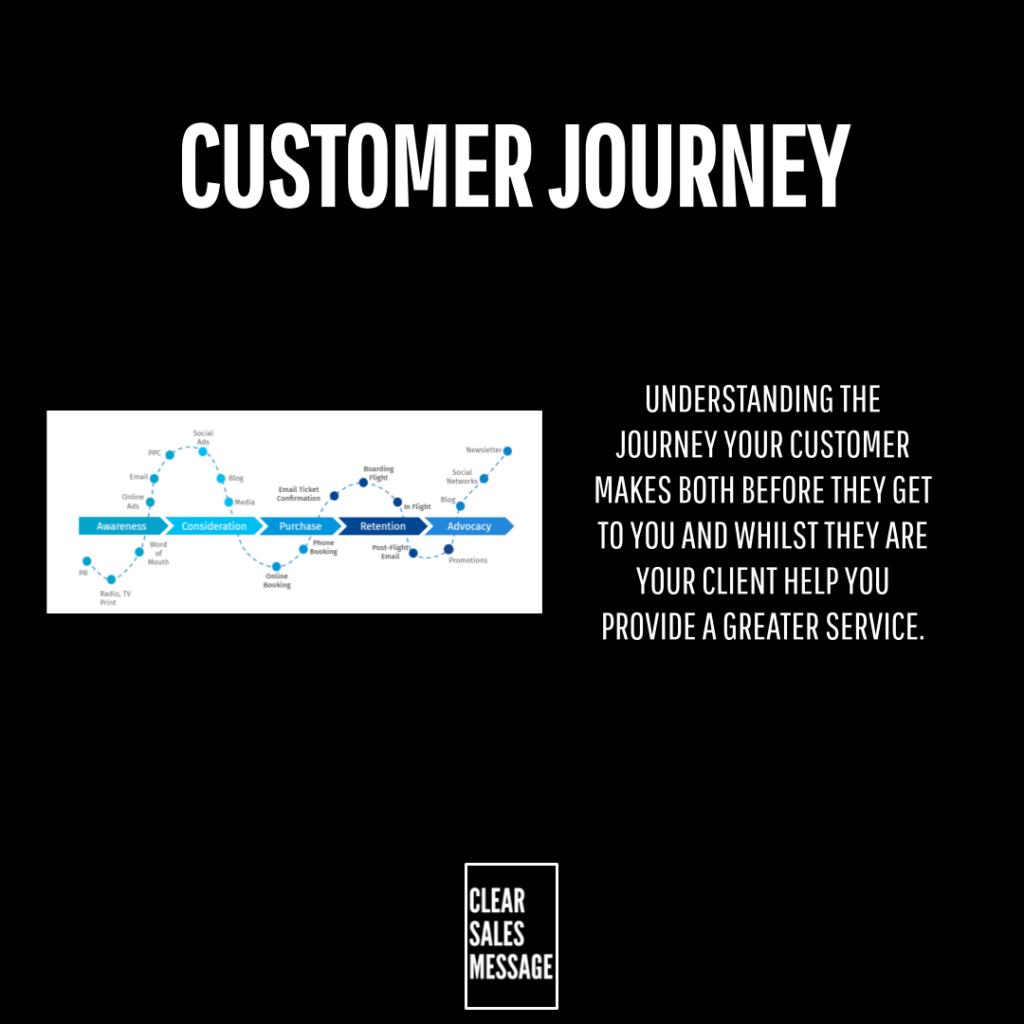
The Customer Journey is the full path a buyer takes from first becoming aware of you to becoming a loyal advocate for your business. It covers every stage of their decision, not just the point where they hand over money.
Most businesses know their product well. But fewer understand the journey their buyer actually takes before they buy, or why they stop buying afterwards. The Customer Journey fixes that. It gives you a clear view of buyer behaviour at every stage so you can align your message and actions to match what they need right then.
There are five stages: Awareness, Consideration, Conversion, Retention, and Advocacy. Each one matters. However, most businesses only focus on two or three and wonder why growth stalls.
Why Does Mapping the Customer Journey Work?
It works because buyers behave differently at each stage. A buyer who just discovered you needs something completely different from one who is weighing up their options. So a message that lands at one stage can fall flat at another.
When you map the journey, you stop guessing. You know where your buyers look for information, what questions they ask, and what doubts they carry. As a result, you can put the right message in the right place at the right time, instead of saying the same thing everywhere and hoping it lands.
Mapping the journey also forces you to look at the stages most businesses neglect. Retention and Advocacy rarely get the attention they deserve. Both are where loyal customers and organic referrals come from, and both cost far less than winning new business cold.
How Can You Use the Customer Journey In Sales?
Work through each of the five stages with your specific offer and your specific buyer in mind. Do not use a generic version. The more closely you map it to your actual buyer, the more useful it becomes.
Awareness
This stage is about reaching the right buyer at the right time. Where does your buyer go when they first realise they have a problem? Are you visible there? If not, they find someone else before they ever find you.
Consideration
At this stage, the buyer compares their options. They want to know how you stack up against the alternatives and whether you can actually deliver on what you promise. Give them clear, honest reasons to choose you over everyone else.
Conversion
What does your buyer need in order to say yes? What doubt do they need to resolve first? There are 50+ things that can help at this stage. The key is knowing which ones matter most to your specific buyer.
Retention
Most businesses underinvest here. But keeping a customer costs far less than winning a new one. What do you do after the sale to make sure your buyer comes back? A plan here is not a nice-to-have. It is a direct revenue decision.
Advocacy
Happy customers talk. But most do not unless you make it easy for them. Consider what you can put in place, like loyalty schemes or referral programmes, to turn satisfied buyers into active promoters.
When Mapping the Customer Journey Works Best
It works best when you do it with a specific buyer type in mind. Different buyers take different journeys. A first-time consumer moves differently from a repeat B2B contact. So build a map for your most important buyer first, then refine it from there.
Bringing in multiple perspectives also helps. Sales, marketing, and customer success each see a different part of the journey. When you combine those views, gaps appear that no single person would have spotted alone. Those gaps are usually where you lose the most revenue.
When Customer Journey Mapping Becomes Dangerous
The biggest risk is treating it as a one-time task. Buyer behaviour shifts and markets change. A map you built two years ago may no longer reflect how your buyers actually behave today. Review it regularly, not just when something goes wrong.
Building it on assumptions rather than evidence is the other trap. Talk to real buyers. Look at where drop-off actually happens in your funnel. A journey map built on guesswork can point you in entirely the wrong direction and give you false confidence while it does it.
Common Customer Journey Mistakes
Only focusing on conversion
Conversion matters, but it is one stage out of five. Pour everything into closing and neglect awareness, retention, and advocacy, and you work harder than you need to for every single sale.
Using a generic template
A Customer Journey only helps when you tailor it to your actual buyer. Generic versions look neat but tell you nothing useful. Make it specific or do not bother.
Ignoring retention and advocacy
These two stages produce your most loyal customers. But many businesses treat the sale as the finish line. It is not. It is the start of the next stage.
Building it once and forgetting it
Markets shift and buyer behaviour changes. A journey map needs reviewing, not just creating. Set a date to revisit it and treat it as a live document, not a finished one.
Customer Journey – An Example
A boutique skincare brand had low repeat purchases. After mapping the Customer Journey, they found they put almost everything into Awareness through Instagram ads and influencer campaigns. Retention and Advocacy had nothing behind them at all.
So they fixed each stage. Awareness: ads showing common skin problems. Consideration: content explaining why their formula outlasts drugstore alternatives. Conversion: a 10% first-time buyer discount backed by customer reviews. Retention: personalised emails with skincare tips and refill reminders. Advocacy: a refer-a-friend programme with free samples.
Within three months, repeat purchases rose by 35% and organic referrals grew. All because they stopped treating conversion as the end and started working the full journey.
See Also