

Practical Sales Training™ > How to connect with your buyer > Key Feature List
Key Feature List
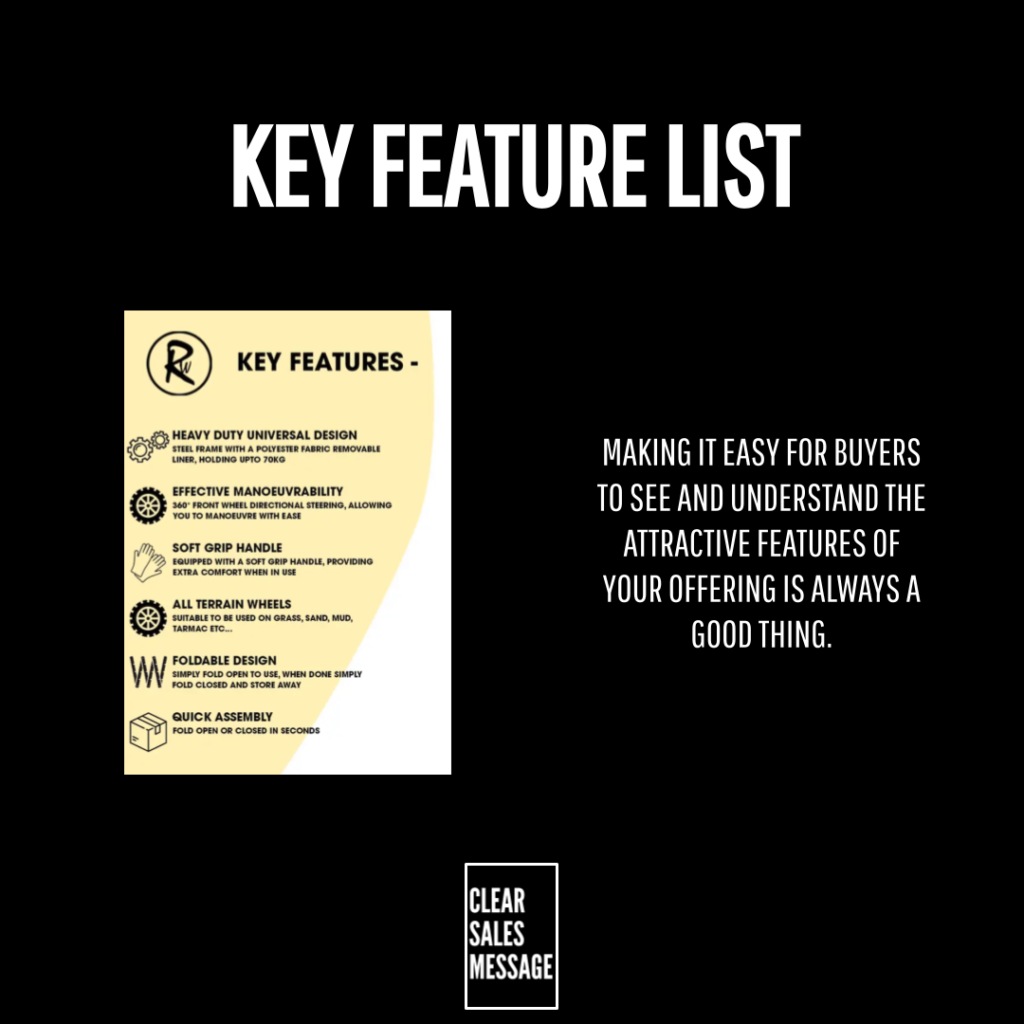
Buyers make decisions based on what they understand. When they don’t know what they are getting, they hesitate. Clarity moves them forward. A key feature list creates that clarity fast.
It is one of the simplest things you can add to a product page, a proposal, or a sales conversation. Yet most businesses leave it out, assuming buyers will figure out what matters. They won’t. So you have to show them.
A good key feature list does not just describe your offer. It answers the buyer’s most important question before they ask it: what is in this for me?
What Is a Key Feature List?
A key feature list is a short, clear summary of the most important things your product or service offers. Not every feature. Just the ones that will actually influence whether someone buys.
It works best when each feature links directly to a benefit. The feature tells the buyer what it is. The benefit tells them why it matters. Together, they give the buyer everything they need to make a confident decision without having to read through a full brochure or sit through a long presentation.
Done well, a key feature list also prevents assumption and exclusion. Buyers who have to guess what is included often assume the worst. Show them clearly, and the guessing stops and the buying starts.
Why Does a Key Feature List Work?
It works because it removes the effort of understanding. Buyers are busy and easily distracted. When your offer takes too long to grasp, they move on. But when the key points land immediately, they engage. Because clarity reduces friction, and friction kills sales.
A key feature list also works because it shows buyers you understand what they care about. When the features you highlight are the ones that matter to them, they feel seen. That feeling builds trust faster than almost anything else you can say.
Also, listing features explicitly removes the risk of a buyer assuming something important is missing. Many sales are lost not because the product lacks a feature, but because the buyer did not know it was there. So a clear list of what is included answers the silent objections before they are ever raised.
How Can You Use a Key Feature List In Sales?
The starting point is to think about your offer from the buyer’s perspective. What are the three to five things that would most influence their decision to buy? Start there. Leave out the technical detail that only matters after the sale is made.
Always Link Features to Benefits
A feature on its own tells the buyer what they are getting. But a feature with a benefit tells them why it matters. Use the phrase “what that means is” to bridge the two. For example, a feature of this page is it links to related articles throughout. What that means is you can explore every idea in more depth without having to search for it. That extra line is what makes the feature land. Without it, the buyer has to do the work of connecting the dots themselves.
Use Icons to Make It Visual
A simple graphic or icon next to each feature makes the list easier to scan and more memorable. Buyers process visuals faster than words. So when each feature has a visual marker, the whole list lands quicker and sticks longer. Also, a well-designed feature list signals professionalism. It shows the buyer that you have thought about their experience, not just your product.
Put It Where Decisions Happen
A key feature list only works if it appears at the right moment. On a product page, that means above the fold where buyers land. A proposal needs it early, before the pricing. In a sales conversation, bring it up in the first few minutes before the buyer’s attention drifts. Because the list is designed to make the decision easier, so it needs to show up before the buyer has already made up their mind.
Focus on What the Buyer Actually Cares About
The temptation is to list everything you offer. But a long list loses the buyer faster than a short one. So be selective. Choose the features that address the buyer’s biggest concerns, answer the questions they most commonly ask, and highlight the things that set you apart from the alternatives. A tight, relevant list converts. One that covers everything says nothing.
When a Key Feature List Works Best
It works best when buyers arrive with limited knowledge of your offer and limited time to build it. A cold prospect landing on a product page, a buyer comparing you to three rivals, or a decision-maker reading a proposal on their phone all need fast, clear answers. A key feature list gives them that instantly.
It also works best when your offer has real, tangible features that buyers can picture in use. Physical products, software tools, and structured services all lend themselves well to this format. Because the buyer can read a feature, picture themselves using it, and feel the benefit before they have spent a penny.
Also, it works best when the features you highlight match what buyers are actually asking about in sales conversations. If the same three questions come up every time, those are the features to put at the top of the list. Because the buyer’s most common questions are always a map to their most important concerns.
When a Key Feature List Becomes Dangerous
The main risk is listing features without benefits. A feature that means nothing to the buyer is just noise. When the list fills up with technical specifications that only experts understand, buyers switch off. So always connect each feature to the outcome it creates for the person reading it.
There is also a risk of listing too many features. A list of twelve things competes with itself. The buyer does not know what to focus on, so they focus on nothing. Three to five strong, benefit-led features will always outperform a long list of weaker ones. Cutting the list down forces you to keep only what truly matters to the buyer.
However, the biggest danger is showing features that do not match what the buyer actually values. When the list reflects what you are proud of rather than what your buyer cares about, it misses. So build it from the buyer’s perspective. Talk to customers, listen to what they mention first, and let their language shape the list.
Common Key Feature List Mistakes
Listing Features Without Benefits
One common mistake is stopping at the feature name without explaining why it matters. “Anti-skid base” tells the buyer what it is. “Anti-skid base, which means it stays exactly where you put it” tells them why that counts. The second version does the selling. The first just describes the product. So never let a feature sit alone. Always add what that means for the buyer.
Including Too Many Features
Another mistake is treating the key feature list as a complete product spec. When everything goes in, the most important things get buried. So edit ruthlessly. Ask yourself which features would genuinely change a buyer’s mind, and list only those. Because a short list of the right things converts far better than a long list of everything.
Burying It Too Far Down the Page
A third mistake is placing the key feature list at the bottom of a product page or deep in a proposal where most buyers never reach it. The list exists to make the decision easier, so it needs to appear early. Put it where the buyer’s eye lands first. Because if they have to scroll to find what matters, many of them won’t.
Key Feature List – An Example
Hardware brands do this well. Rather than relying on a single product description, they create individual images for individual features, each one showing exactly what the product does and why that matters to the buyer.
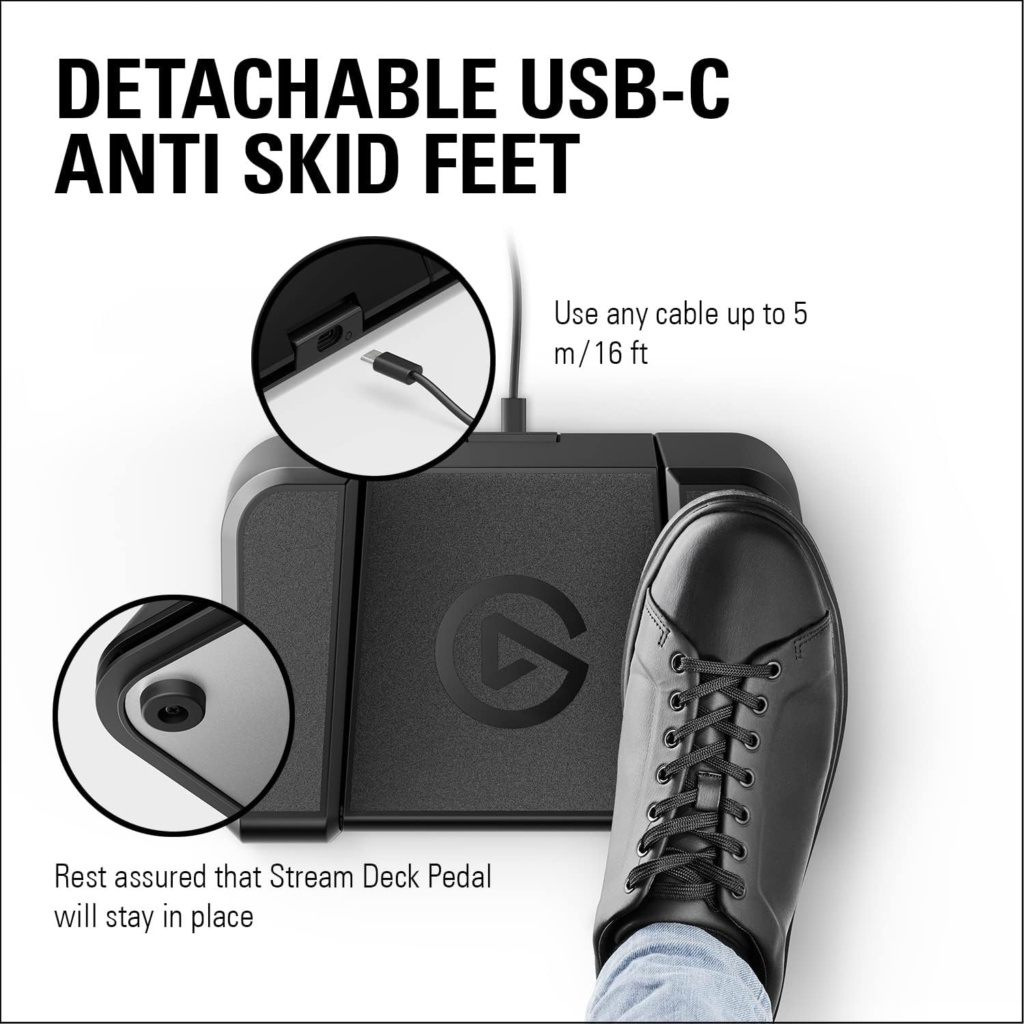
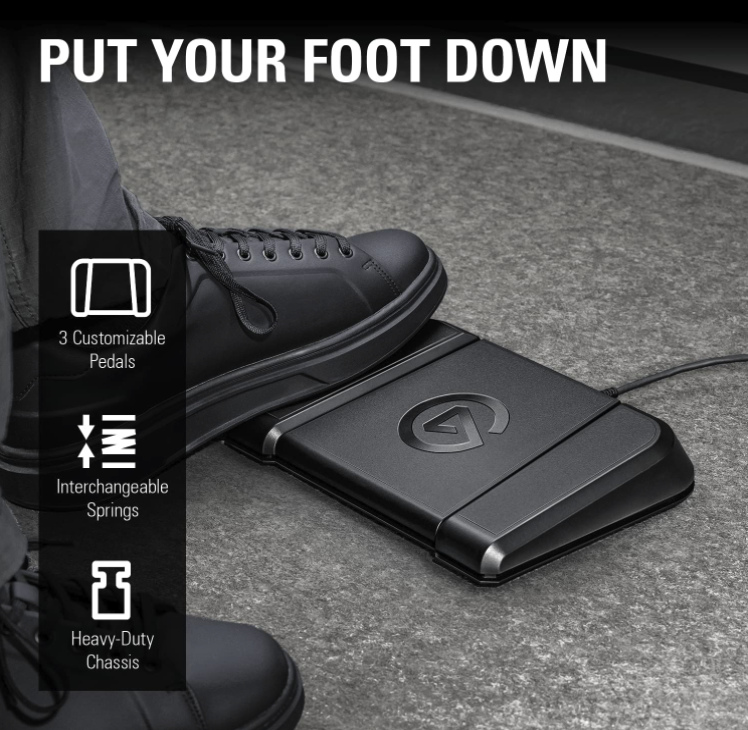
Each panel gives the buyer one clear piece of information with a visual to back it up. No paragraph to read. No brochure to download. Just the feature, the benefit, and the image together in seconds. That speed of understanding is exactly what a good key feature list delivers. And it is what turns a browsing buyer into a buying one.
See Also