
Practical Sales Training™ > How to connect with your buyer > Lagniappe

Lagniappe
Buyers expect to get what they paid for. Nothing more. So when something extra arrives with their order, the reaction is almost always the same. They smile. They feel good about the purchase. And they remember the business that surprised them.
That moment is what Lagniappe creates. The gesture does not need to be big or expensive. What counts is that it arrives without warning and feels genuinely thoughtful.
The word comes from Louisiana French and simply means a little something extra. But in sales, that little something extra can do a great deal of work.
What Is Lagniappe?
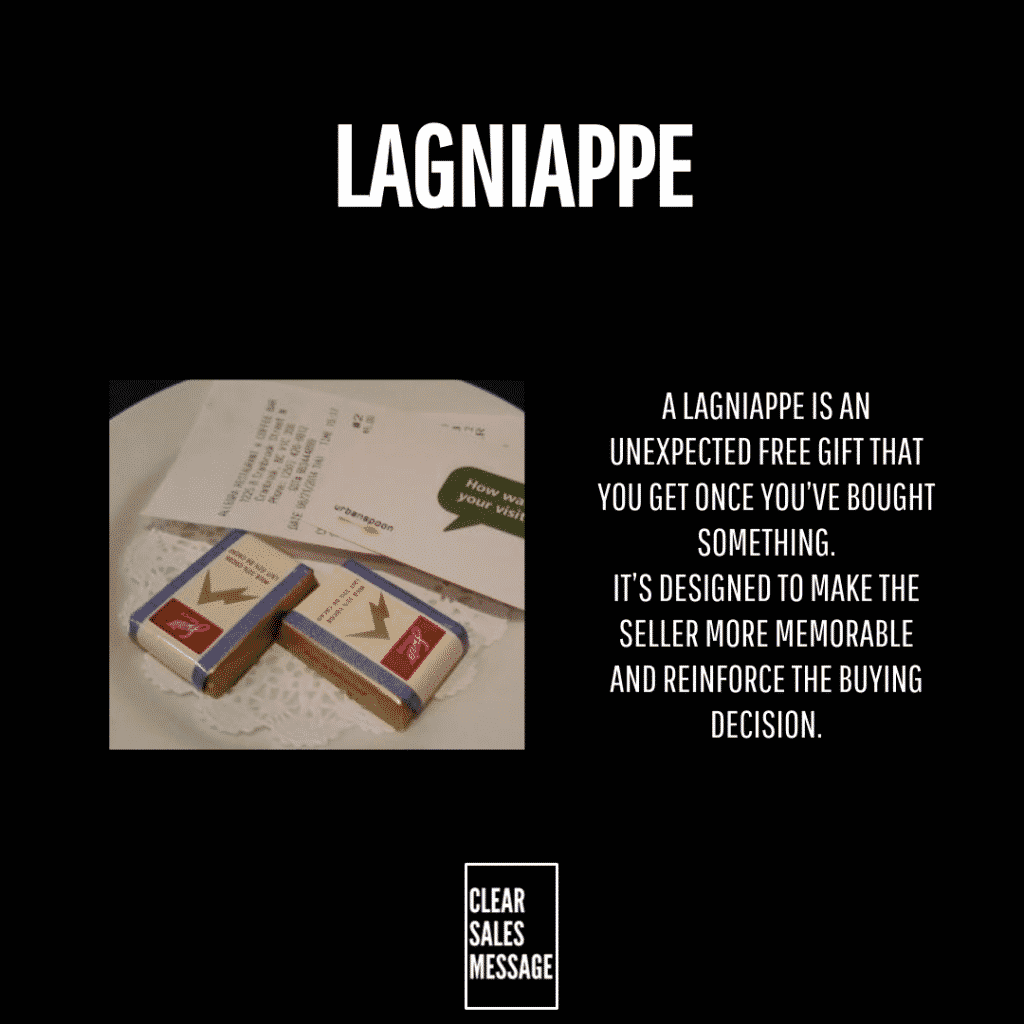
Lagniappe is an unexpected gift or bonus given to a buyer at the point of purchase. It is not something they asked for, not something they paid for, and not something they were promised. It simply arrives as a pleasant surprise.
It can take almost any form. A handwritten note. A small freebie in a parcel. A sample of another product. A personalised video message sent after an order. The format matters less than the feeling it creates. Because the point of Lagniappe is not the object itself. It is the message behind it: we noticed you, and we wanted to give you a little more than you expected.
That message lands hard. Because most businesses do not send it. And the ones that do stand out immediately.
Why Does Lagniappe Work?
It works because buyers arrive with a baseline expectation. They expect to receive what they paid for and nothing else. So anything beyond that baseline feels like a gift, even when it is very small. The gap between what they expected and what they got creates a positive emotional response that sticks.
Lagniappe also triggers reciprocity. When someone gives us something we did not ask for, we naturally want to return the gesture. In a buying context, that often means leaving a review, telling a friend, or coming back to buy again. So a small gesture at the point of purchase can generate far more value than the cost of the gesture itself.
Also, Lagniappe reinforces the buyer’s decision. Every purchase carries a small amount of doubt. Did I make the right call? Did I pick the right brand? A small unexpected extra answers that question without words. It says yes, you chose well. That reassurance reduces buyer’s remorse and strengthens the bond between buyer and business at exactly the right moment.
How Can You Use Lagniappe In Sales?
The key is to think about what you could offer that costs very little but feels genuinely valuable or surprising to your buyer. It does not need to be expensive. What counts is that it feels personal, thoughtful, and unexpected.
Include a Handwritten Note
A short handwritten note costs almost nothing and carries enormous weight. It signals that a real person thought about this order and took a moment to acknowledge it. For product businesses, tucking a note into the parcel is one of the easiest Lagniappe gestures you can make. Also, it pairs naturally with The Handwritten Effect, making the whole delivery feel more personal and more premium.
Add a Sample or Freebie
A small sample of another product gives the buyer something to try without any obligation. It costs very little per unit but creates a genuine moment of delight when discovered in the box. For the buyer, it feels like a bonus. So Lagniappe can carry a commercial benefit as well as an emotional one, acting as a soft introduction to something else they might buy.
Send a Personalised Video
For service businesses, a short personalised video sent after a purchase or at the start of an engagement is a powerful Lagniappe move. It takes a few minutes to record but leaves a lasting impression. Because most buyers never receive a personal video from a business they have just hired, the surprise of it creates an immediate connection that a standard welcome email never could.
Offer an Unexpected Upgrade
Upgrading a buyer without being asked is one of the most powerful forms of Lagniappe. A faster delivery, a better seat, a larger size, or an added feature all create the same feeling. The buyer got more than they paid for. So a spontaneous upgrade at low cost to you can generate word of mouth that no marketing budget can buy.
When Lagniappe Works Best
It works best when it is genuinely unexpected. If buyers come to anticipate the extra, it stops being a surprise and starts being part of the standard offer. So avoid making Lagniappe a formal policy that everyone knows about. Keep it something that arrives without warning and feels genuinely spontaneous.
It also works best when it fits the buyer and the context. A generic freebie that has nothing to do with the purchase feels like a leftover rather than a gift. But something that connects to what they bought, or that shows you know something about them, hits much harder. The more personal it feels, the stronger the effect.
Also, Lagniappe works best when the core product or service is already good. It is not a way to rescue a weak offer. When the main experience disappoints, a small bonus will not fix it. But when the main experience is solid, Lagniappe turns a good purchase into a great one. That distinction matters because great purchases get talked about.
When Lagniappe Becomes Dangerous
The main risk is making it predictable. Once buyers expect the extra, it loses its power. A note that used to feel personal becomes part of the packaging. A sample that once surprised now feels like a standard inclusion. So vary the gesture, keep it fresh, and resist the urge to systematise it too heavily.
There is also a cost risk if the gesture is too generous. The whole point of Lagniappe is that it is low cost but high impact. When the extra starts eating into your margins, the commercial logic breaks down. So keep it proportionate. A small, thoughtful gesture outperforms a costly one almost every time.
However, the biggest danger is inauthenticity. Buyers can tell when something was added as a tactic rather than a genuine expression of care. A freebie that feels like a marketing insert does not create delight. So treat Lagniappe as a real gesture, not a formula. Because the warmth behind it is what makes it work.
Common Lagniappe Mistakes
Making It Too Predictable
One common mistake is turning Lagniappe into a standard part of every order so buyers come to expect it. The moment they expect it, the surprise is gone. So if you use Lagniappe regularly, vary it. Change the gesture, change the timing, change who receives it. Keep the buyer guessing in the best possible way.
Choosing the Wrong Gesture
Another mistake is offering something generic that has no connection to the buyer or the purchase. A branded pen included with a luxury skincare order misses the mark entirely. The gesture needs to feel relevant. So think about what your buyer would actually appreciate and choose something that fits. Because a well-chosen Lagniappe feels personal, and a poorly chosen one feels like a clearance item.
Using It to Compensate for a Weak Experience
A third mistake is using Lagniappe to paper over a poor product or a frustrating buying process. A cookie does not fix a bad cupcake. Lagniappe amplifies a good experience. It cannot rescue a bad one. So fix the core first, then add the extra. Because the gesture only lands well when the foundation underneath it is already strong.
Lagniappe – An Example
A local bakery sells a box of cupcakes for £12. At the point of purchase, the baker smiles and says:
“Here’s a little extra treat from us. Enjoy this complimentary chocolate chip cookie on the house.”
The buyer was not expecting anything beyond their cupcakes. But that one small gesture creates a moment they will talk about. The purchase feels more generous, the business feels more human, and the chance of a return visit goes up significantly.
An online skincare brand takes the same approach by including a travel-size face serum in every order. It costs very little per unit. But buyers discover it in their parcel and feel like they got more than they paid for. That feeling turns a one-time buyer into a repeat customer. And that is exactly what Lagniappe is designed to do.
See Also