
Practical Sales Training™ > How To Convert > Perspective Benefit

Perspective Benefit
Some buyers care about what your product does for them. But just as often, they care about what others will think. That gap is where Perspective Benefit lives.
It is the shift from “how will I feel?” to “how will I look?” Once you tap into that, your message lands in a much deeper place. The buyer stops thinking about price and starts thinking about how they will be seen.
This works because people are social. And the opinion of those close to them often matters more than their own.
What Is Perspective Benefit?
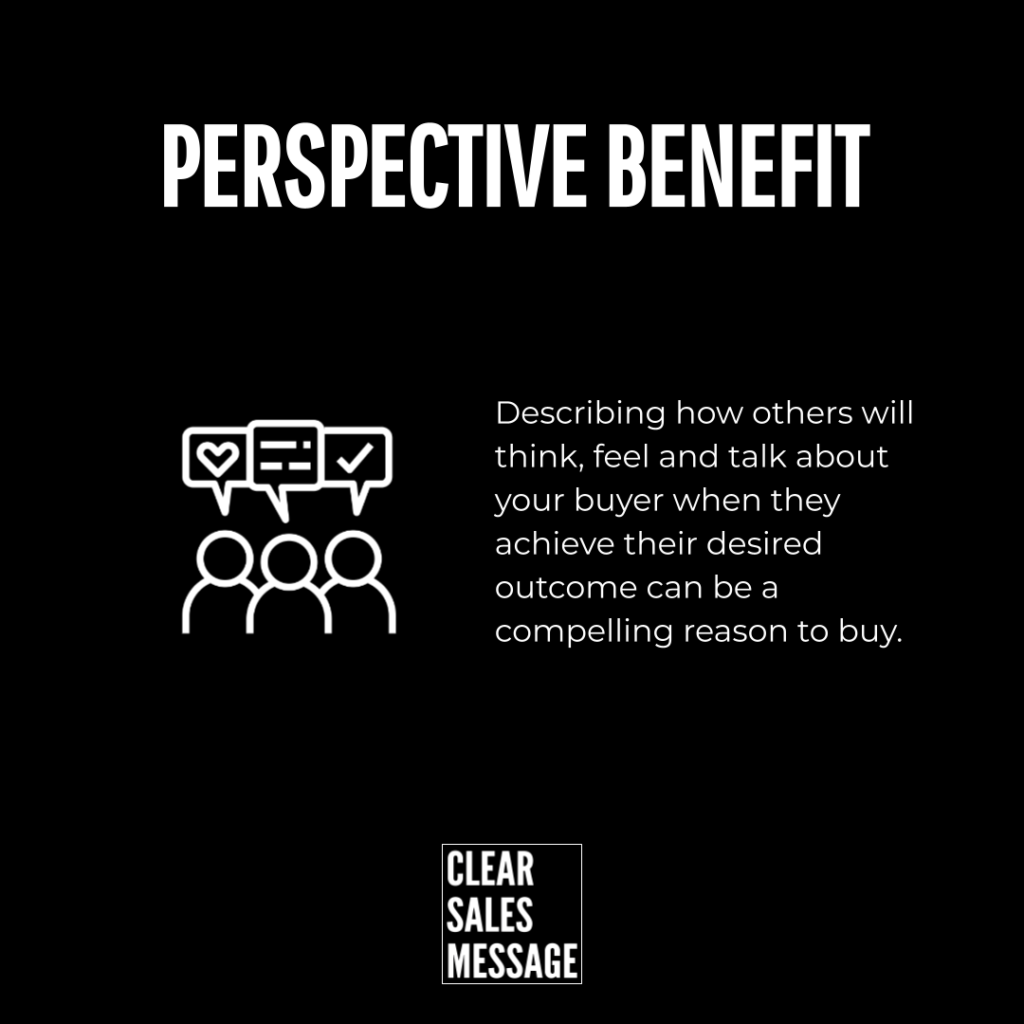
Perspective Benefit is the practice of thinking about how people close to your buyer will react to their purchase. In other words, it is about the ripple effect of the buying decision. It goes beyond what the buyer gets for themselves. It asks what others will say, think, or feel as a result.
Think of it as selling the reaction, not just the result. It is one of the most natural ways to reach a buyer’s real reason for buying.
Why Does Perspective Benefit Work?
Buyers do not always buy for logical reasons. They buy to feel good, look good, or be seen in a certain way. So when your message speaks to how others will view them, it hits a nerve. Features and prices cannot do that.
It works because you are not selling a product. Instead, you are selling a version of the buyer that others will admire. That is a much stronger pull.
How Can You Use Perspective Benefit In Sales?
Work Out Who Matters to Your Buyer
Start by thinking about who is close to your buyer. Think about their partner, their family, their friends, their team, or their rivals. Ask yourself: what would those people say if they saw your buyer with this product or using this service? That question will point you straight to the message that moves them.
Write the Reaction, Not the Feature
Once you know who matters, write the words those people might say. Use that reaction as your message rather than a list of what the product does. Rather than “built to last,” try “your clients will notice the difference straight away.” The reaction is the benefit. Everything else is just detail.
Use A and B to Test Your Message
A good way to check if you are using Perspective Benefit is to write two versions of your message. Version A stays inside the buyer’s head. Version B speaks to what others will think or say. Here is an example for a gym:
A – Feel great with a 6 pack.
B – Attract compliments from strangers at the beach.
Both of these sell the same goal. But B speaks to what a stranger will think, not just what the buyer will feel. The Perspective Benefit version lands harder because it touches something real and social.
When Perspective Benefit Works Best
Perspective Benefit works best when the buyer’s sense of self is tied to how they are seen. This is common with luxury goods, fitness, fashion, home design, cars, and career tools. It also works well in B2B. When the buyer wants to impress their team or their boss, this gives them a reason to act.
It is also useful when you are trying to move a buyer off the fence. Sometimes all it takes is helping them picture the reaction they will get. That image does more work than any feature list.
When Perspective Benefit Becomes Dangerous
It breaks down when you get the audience wrong. If your buyer does not care what others think, this will not land. So take time to check whether social status matters to them before you build your whole message around it.
Be careful not to make it feel shallow or forced. A good Perspective Benefit message feels true, not like flattery. If it sounds like you are telling someone they want to show off, they will pull back.
Common Perspective Benefit Mistakes
Staying Inside the Buyer’s Head
Staying inside the buyer’s own head is the easy default. But buyers often tell you who they want to impress if you ask the right questions. So listen for names, mentions of family, or comments about what their colleagues will think. Those clues show you exactly which audience to write for.
Making the Social Gain Too Obvious
It can feel clumsy if you state the social gain too bluntly. But done well, it should feel like a natural part of the message. Only use it when it fits the buyer’s world, not as a trick to force a yes. Buyers sense when they are being pushed, and they resist it.
Using Generic Reactions
Many sellers write vague reactions like “people will be impressed.” That is too thin to move anyone. Instead, make it specific: “your team will notice the difference in the first week.” A tight, real reaction is far stronger than a broad, vague one.
Perspective Benefit – An Example
A luxury watch brand could shift its message like this:
A – “Own a precision-crafted timepiece.”
to
B – “Get noticed every time you shake hands.”
Both lines sell the watch. But the second taps into Perspective Benefit. The buyer is not just imagining how they will feel. Instead, they are picturing how others will react. That is the moment the purchase stops feeling like a luxury and starts feeling like a smart social move.
See also