
Practical Sales Training™ > How To Lose The Sale > Showrooming

Showrooming
Someone spends twenty minutes in your shop. They pick things up, ask questions, and seem genuinely interested. Then they pull out their phone. Three taps later, the same product is on its way from Amazon. They walk out empty-handed.
Your store just became a free try-before-you-buy service for an online retailer. You paid the rent, the staff, and the rates. They got the sale.
It happens every day. And if you sell physical products, it is probably happening to you.
What Is Showrooming?
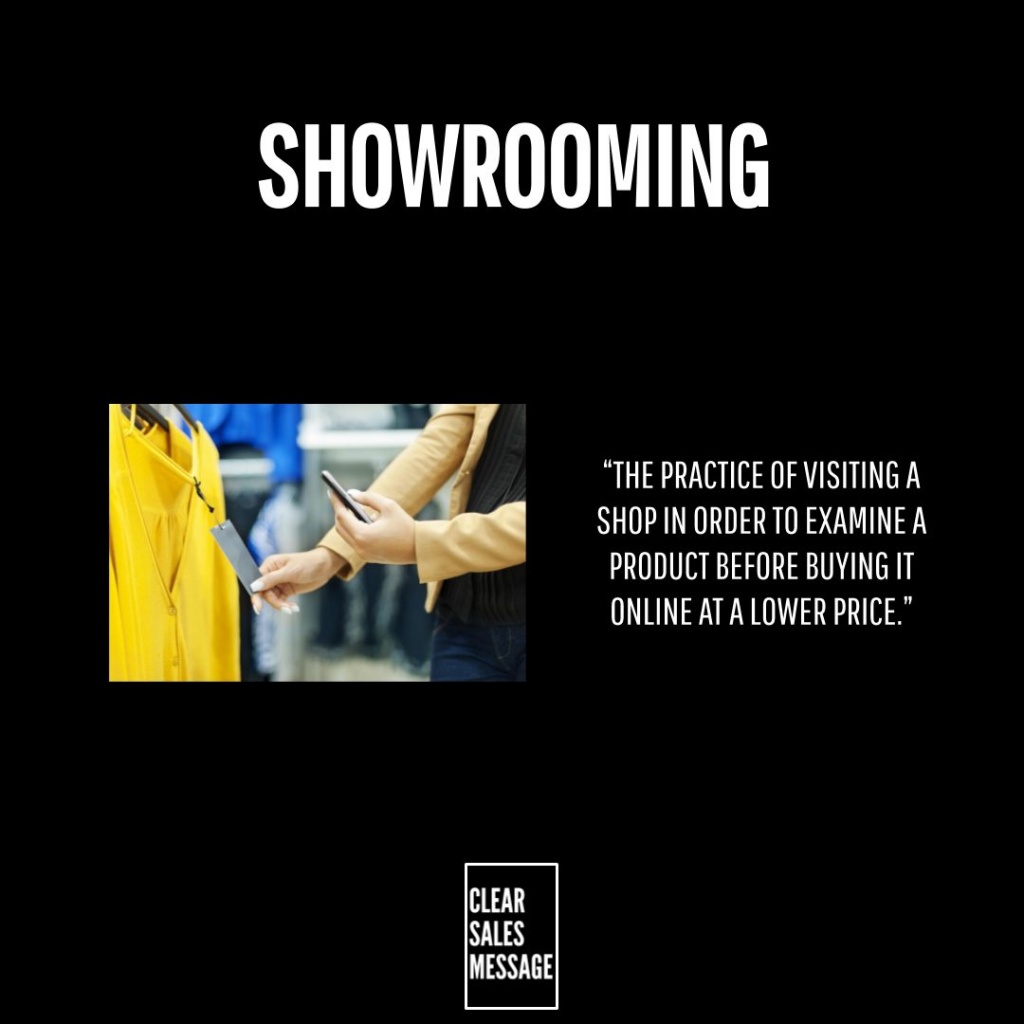
Showrooming is when a buyer visits a physical store to see, touch, or try a product, then buys the same item online at a lower price. The store provides the experience and the expertise. The online retailer gets the money.
Smartphones made this easy. A buyer can search, compare, and order without leaving your shop floor. The gap between your price and the cheapest online option is visible in seconds. So the decision to Showroom happens faster than ever.
And buyers do not feel bad about it. They are price-driven. Even when they are holding the product they want, paying £50 less for the same thing is hard to argue with. A short wait for delivery feels like a fair trade.
Why Does Showrooming Happen?
Price is the main driver. Buyers know that physical retail costs more to run, and they know that online retailers can undercut you. So when they find something they want in your store, the instinct is to check if they can get it cheaper. Most of the time, they can.
Patience plays a role too. Next-day and same-day delivery have removed the main reason to buy in person. The appeal of having it right now is not what it used to be. So the urgency that once drove in-store sales has quietly disappeared.
Trust matters as well. Many buyers trust large online retailers more than smaller physical ones, especially for returns and guarantees. So even when the price gap is small, the online option can feel like the safer bet. You have to work harder to win that confidence face to face.
How Can You Fight Back Against Showrooming?
There is no single fix. But several approaches can reduce the damage and give buyers a reason to buy from you directly.
Go Niche
Become the specialist in your category rather than a generalist stocking the same things as everyone else. When buyers come to you for your expertise and your curation, the conversation changes. You are not just selling a product. You are selling knowledge that Amazon cannot replicate. That specialist status makes your price much easier to justify.
Go Unique
Carry products that simply cannot be bought online. Exclusive ranges, locally made items, or products you have sole rights to stock all remove the ability to compare. Because the buyer can only get it from you, the Showrooming option disappears entirely. This takes more work to set up, but the commercial benefit is real.
Sell the Service
Some buyers genuinely value personal service over the cheapest price. They want advice, fitting, installation, or aftercare that an online retailer cannot offer. Lead with that. Make it visible and make it feel worth paying for. Amazon cannot give you thirty minutes with a genuine expert. Lean into it hard.
Price Match
Risky, but it works. A clear price match policy removes the main reason to Showroom. When the buyer knows you will match any verified lower price, there is no reason to go elsewhere. The margin hit is real. So is the sale. And a buyer who purchases from you once is more likely to come back than one who walked out the door.
Promote Immediacy
Online is cheaper, but it involves waiting. Lean into the fact that the buyer can have it right now, today, without a delivery window. “Take it home today” is a simple message. But it speaks directly to the one thing physical retail can offer that online cannot. Make it loud.
When Showrooming Hurts Most
Showrooming hurts most when your product is widely available online and the price difference is significant. Electronics, cameras, appliances, and sports equipment are the most vulnerable. Buyers in those categories almost always check online before committing, and the savings can be large enough to justify the wait.
It also hurts when your team has invested real time in the sale. A buyer who spends forty minutes with a salesperson getting advice and then walks out to buy online has cost you time, expertise, and the revenue. It affects morale too. It makes investing in great staff feel pointless.
When Showrooming Is Less of a Problem
Some products are hard to Showroom. Fresh food, haircuts, bespoke clothing, and anything that requires fitting or customisation cannot easily be replicated online. Move your offering towards the experiential or the bespoke end of the spectrum and Showrooming becomes far less of a threat.
Loyal buyers also Showroom less. A customer who trusts you, values your advice, and has bought from you before is far less likely to reach for their phone while you are talking. Building genuine long-term relationships is one of the best defences against Showrooming. It also costs nothing extra to do.
Common Showrooming Mistakes
Ignoring It
Showrooming is not a phase. It is how modern buyers behave. Physical retailers who do not adapt their offer, their pricing strategy, or their service proposition will keep losing sales to it. So take it seriously and decide which counter-strategies make sense for your business. Hoping it goes away is not a strategy.
Competing on Price Alone
You will rarely win a pure price war against a large online retailer. Their overheads are lower and their volumes are higher. So build value that price does not capture. Service, expertise, immediacy, exclusivity. Those are the things online retailers struggle to deliver, and they are where your best competitive ground sits.
Underinvesting in the In-Store Experience
If your store offers nothing that the online version does not, Showrooming will win. A store that is genuinely enjoyable to visit, with knowledgeable staff and a strong sense of service, creates reasons to buy that go beyond the product. Invest in the experience and it becomes a competitive advantage. Leave it flat and it stays a liability.
Not Asking for the Sale
Sometimes Showrooming happens simply because nobody asked the buyer to commit. A confident, direct close at the right moment can convert a browser into a buyer before they reach for their phone. Train your team to spot the buying signals and act on them. A buyer who has not yet checked online can still be won.
Showrooming – An Example
A buyer walks into a high-end electronics store to try the latest noise-cancelling headphones. They test them. They ask questions. They clearly like them. The in-store price is £299. So they pull out their phone, find the same model on Amazon for £249, and place the order right there. Then they leave.
The store did all the hard work. The expertise, the demonstration, the reassurance. Amazon got the sale. And it happens every day in stores across the country.
Each of the strategies above gives you a real shot at keeping that buyer in the room and closing the sale before they ever reach for their phone.
See Also