
Practical Sales Training™ > How to connect with your buyer > The Additional Supplier Effect

The Additional Supplier Effect
“We already have a supplier for that.” It is one of the most common objections in sales. And most people accept it and move on.
But this objection has a flaw. It assumes that having one supplier is enough. For most buyers, however, that assumption has never been tested. So instead of retreating, you can use it as an opening.
The Additional Supplier Effect is a simple shift. Instead of trying to replace the existing supplier, you make the case for being an additional one. As a result, the conversation changes completely.
What Is The Additional Supplier Effect?
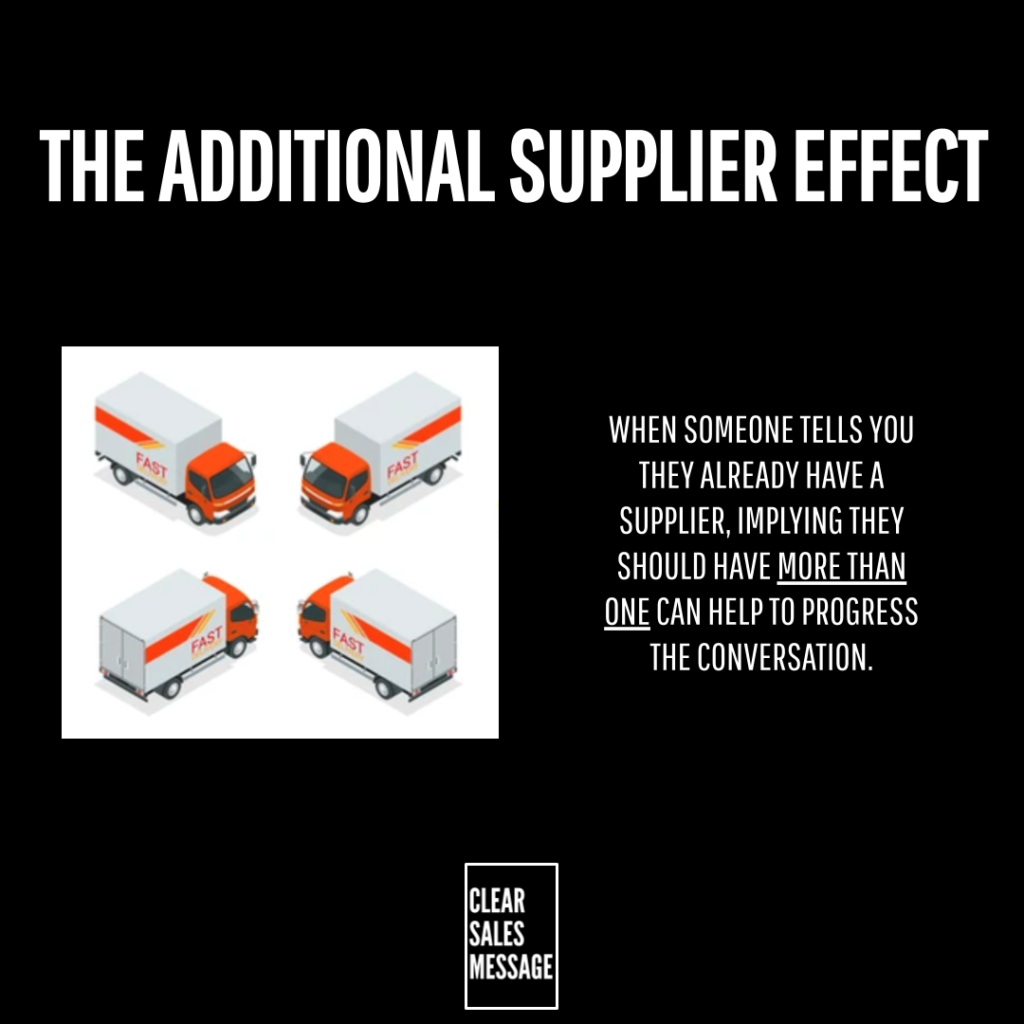
The Additional Supplier Effect is a technique for handling the incumbent supplier objection. Instead of arguing that you are better than who they already use, you suggest they should have more than one supplier in the first place.
The key move is a question: who else supplies you? Most buyers only have one. So asking the question exposes a gap they have not considered. Because of that, it changes the frame from “we do not need you” to “maybe we should not rely on just one supplier.”
It works, in part, because it does not attack the existing relationship. Instead, it questions the structure around it. That is a much easier conversation to have.
Why Does The Additional Supplier Effect Work?
The objection “we have a supplier” sounds final. But it is only final if you accept its premise – that one supplier is the right answer. Most buyers, however, have never stopped to ask why they only use one.
Asking “who else supplies you?” is a form of dead end question. You already know the likely answer – they probably do not have a second supplier. So the question does not open a debate. Instead, it surfaces a gap the buyer now has to think about.
It also reframes the conversation around the buyer’s interests, not yours. You are not pushing to replace someone. Instead, you are pointing out a commercial risk they are carrying by relying on a single source. That is a very different pitch – and a much harder one to dismiss.
Risk is a strong motivator. Buyers who depend on one supplier are exposed if that supplier has a problem – a delivery failure, a price hike, or a quality drop. Raising that possibility plants a seed. And once a buyer starts thinking about risk, they are therefore already open to the idea of a second supplier.
How Can You Use The Additional Supplier Effect In Sales?
Ask the question
The next time a buyer says they already have a supplier, do not accept it as a closed door. Instead, ask: “Who else supplies you?” or “How many suppliers do you have for this?” Most buyers will pause. That pause is the effect working.
Introduce the risk angle
Follow the question with a brief point about risk. For example: “A lot of our clients came to us after a problem with their existing supplier. Having a second option means you are covered if something changes.” You are not criticising their current supplier. You are simply making the risk visible.
Position yourself as an addition, not a replacement
Make it clear you are not asking them to switch. You are asking them to add you. That removes the threat of disruption and makes the ask feel much smaller. “We are not suggesting you drop anyone – just that you have us as an option when you need it” is a low-friction entry point. As a result, the buyer feels in control.
Suggest a trial or small first order
Once the buyer is open to the idea of a second supplier, make it easy to start. A small trial, a single order, or a short pilot removes the commitment barrier. The goal is to get on the list – because once you are on it, you can grow from there.
When The Additional Supplier Effect Works Best
This technique works best in categories where supply reliability matters. If what you sell is business-critical – raw materials, IT support, logistics, print, or anything the buyer depends on regularly – the risk of a single supplier is easy to make real. So the conversation feels urgent, not theoretical.
It also works well in categories where buyers shop on price. If your market involves regular purchasing decisions, suggesting a tendering model gives the buyer a clear reason to add you. It is not just about risk. It is also about getting a better deal over time.
Similarly, it suits situations where the incumbent relationship is old and unchallenged. Buyers often stay with a supplier out of habit rather than genuine satisfaction. A question about who else they use can therefore surface doubt that was already there.
When The Additional Supplier Effect Becomes Dangerous
This approach can backfire if the buyer has a strong, close relationship with their current supplier. Questioning that relationship – even indirectly – can feel tone-deaf. So read the room before you raise the risk angle.
It also does not work if you push too hard too soon. The question needs to land and breathe. If you follow it immediately with a pitch, you break the effect. Instead, ask the question, let them think, and respond to where they go.
Finally, do not use this as a way to get in the door and then try to become the main supplier too quickly. Buyers notice when “we just want to be an option” turns into “can we take over the whole account.” Build trust first, because the long game here is worth playing.
Common Additional Supplier Effect Mistakes
Accepting the objection without question
Most salespeople hear “we have a supplier” and move on. But the objection is not as strong as it sounds. It just needs one follow-up question to test it. Not asking that question is therefore the most common missed opportunity in this situation.
Trying to replace rather than add
The moment you try to convince a buyer their current supplier is not good enough, you create resistance. They will defend the relationship even if they have doubts about it. So position yourself as an addition and let the relationship develop from there.
Raising risk in a clumsy way
Saying “what happens if your supplier lets you down?” can sound like a scare tactic. Instead, frame it as something you have seen with other clients – a story, not a warning. That makes it feel like useful insight rather than pressure.
Not having a small first step ready
If a buyer warms to the idea of adding you but you cannot offer a low-commitment entry point, the moment passes. So always have a trial, a sample, or a small first order ready to suggest. Make it easy to say yes.
The Additional Supplier Effect – An Example
A sales rep sells packaging materials. She calls a prospect and gets the response: “Thanks, but we already use someone for that.” Instead of backing off, she asks: “Of course – who else do you use alongside them?”
There is a pause. The buyer admits they only use one supplier. She follows up: “We work with a lot of businesses who brought us in as a backup after a delivery issue. It is just good practice to have a second option. Would it be worth a quick conversation about what we could offer?”
The buyer agrees to a call. So the objection that felt final turned into an opening – because she questioned the premise rather than fighting the position.
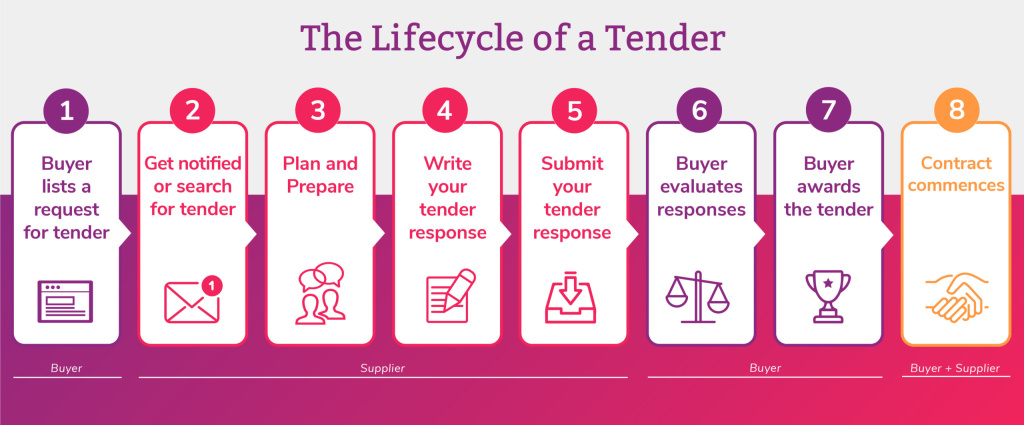
In theory, what this approach describes is a tendering model – where a supplier is chosen from a pool based on commercial fit, rather than defaulting to one static relationship. Tendering gives the buyer better outcomes and more control. Framed that way, adding a second supplier is not a disruption. It is an attractive proposition.
See Also