
Practical Sales Training™ > How To Convert > The Finance Effect

The Finance Effect
Someone wants what you sell. They just don’t have the full amount sitting in their account today. So they say nothing, and you lose a sale you never even knew you had.
What Is It
The finance effect means making your offer affordable by giving people more than one way to pay. Instead of one lump sum, you split the cost into smaller pieces. That single change can turn a “maybe one day” into a “yes, today.”
Why Does It Work
It works because wanting something and being able to pay for it are two different problems. Buyers often want your offer, but the cash isn’t there right now. Since flexible payment removes that block, the people who want to buy actually can.
Lack of funds is one of the most common reasons a sale dies. It’s also one of the easiest to fix. But if you don’t offer a solution, or don’t make it obvious, most buyers will never even ask.
How Can You Use It
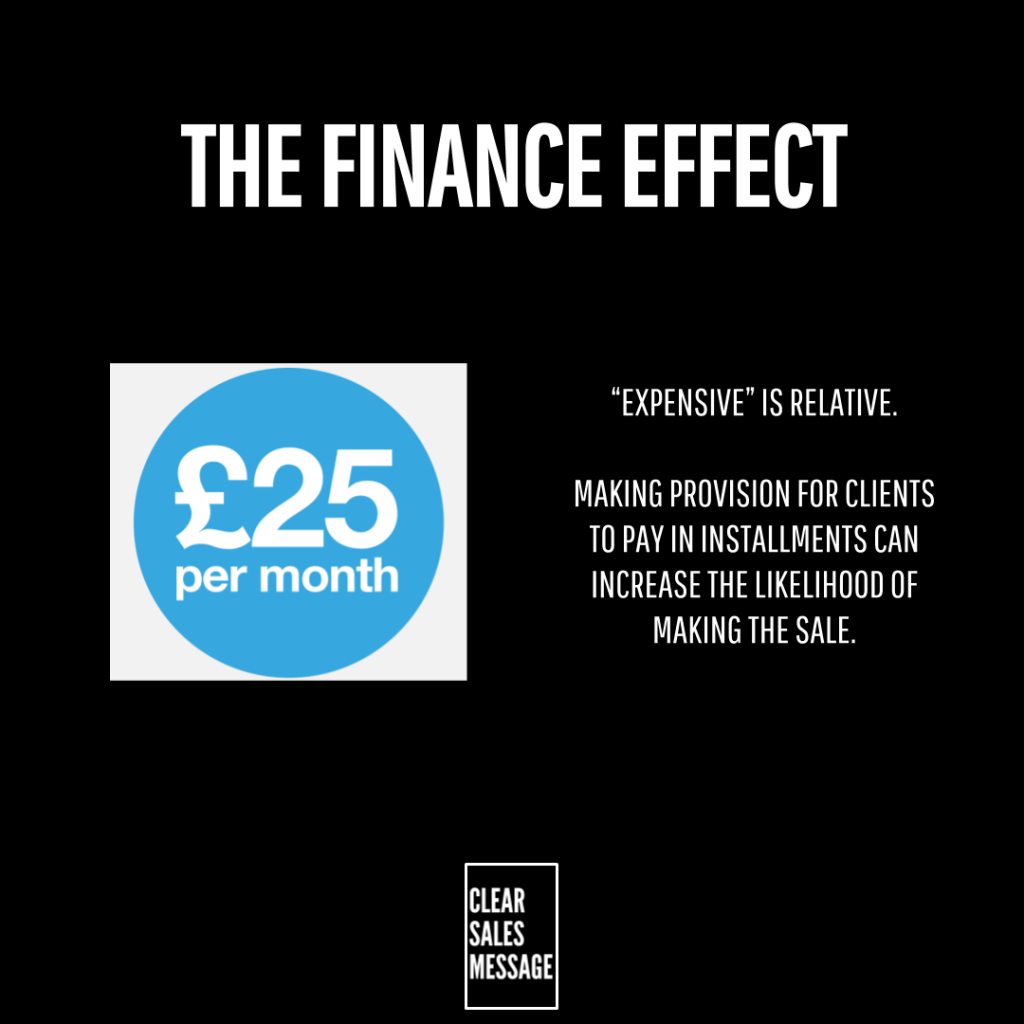
Expensive is relative. It’s not just four figure purchases that put people off.
Set A Threshold
Look at anything you sell above £100 or $100. That’s where finance starts to matter, since even a moderate price can stall a buyer with tight cash flow that week.
Offer A Payment Plan
Break the total into smaller monthly amounts. Alternatively, partner with a third party finance provider who handles this for you. Either way, the goal stays the same: make the number smaller and the yes easier.
When It Works Best
This works best on higher ticket items, where the full price creates real hesitation. It also works well when your buyer wants the outcome badly, but the timing of the cost is what’s stopping them.
A gym membership, a course, or a big piece of kit are all good candidates. In each case, the value is clear. Only the size of the invoice gets in the way.
When It Becomes Dangerous
Finance becomes a problem when it’s used to disguise a price that’s genuinely too high for the value on offer. Buyers notice eventually, and that damages trust.
It’s also risky if the terms are confusing or hide extra costs. A finance option should make things easier, not add a new source of doubt right before someone buys.
Common Mistakes
Hiding The Option
If your buyer doesn’t know finance exists, it doesn’t help them. Say it clearly, and say it early in the conversation.
Overcomplicating The Terms
Long contracts and small print create hesitation. Keep the terms short and easy to explain in one sentence.
The Finance Effect – An Example
Peloton Turns A Big Price Into A Small One
Peloton sells high-end fitness bikes that cost around £1,750 outright. That’s a hard number for most people to justify in one go.
So instead of losing those buyers, Peloton offers 0% interest monthly payments, starting as low as £45 a month. This turns a luxury expense into something that feels manageable, without ever discounting the product.
The bike isn’t cheaper. It’s just easier to pay for.
See also
- The Pay Now Start Later – Allow buyers to secure something but not take delivery or use it until later when they are ready.
- Pay On Results – Take payment once you have delivered the result your buyer wanted.
- Pay As You Go – Allow buyers to pay as they consume your offering.
- Prepayment – Allow buyers to build a credit balance they can draw down later.
- Buy Now Pay Later – Allow buyers to take the item today and pay for it later.

