

Practical Sales Training™ > How To Convert > The Pay As You Go Effect
The Pay As You Go Effect
Some buyers don’t want a big commitment upfront. Instead, they want to pay only for what they actually use.
So the Pay As You Go Effect gives them exactly that. Their spend simply follows their consumption.
What Is It
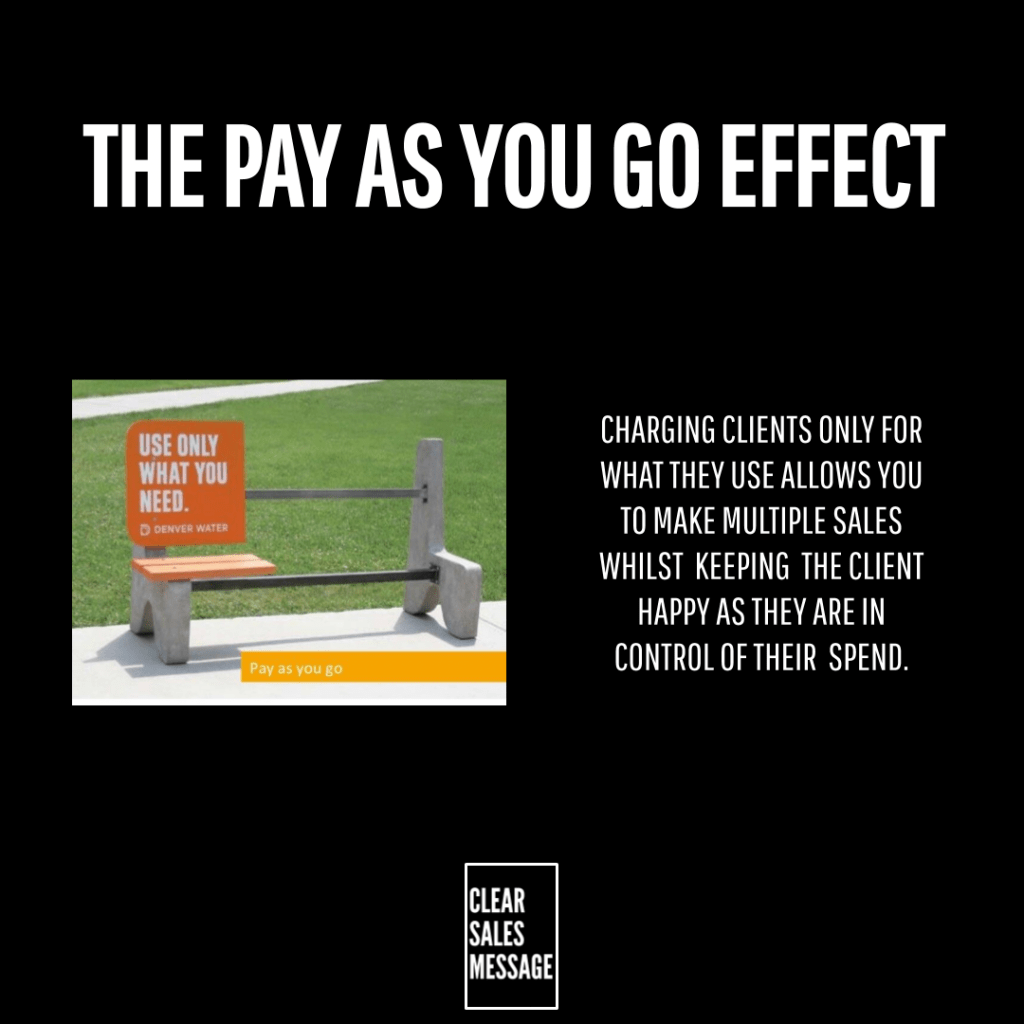
The Pay As You Go Effect means creating a consumable version of your offering. A buyer’s spend is set by how much they use.
Why Does It Work
It works because buyers control their own spend. They only pay for what they consume.
So as the seller, you get repeated chances to sell to the same client. It also helps you reach some buyers you’d otherwise miss. Buyers who only want a part of your offering, or the bare minimum. Everyone wins.
How Can You Use It
Make Your Offering Consumable
If you can’t already offer this, ask how you could make your offering consumable. So create a limit that requires buyers to buy more once they hit it.
Find The Right Unit To Meter
If you sell a service, look at what your client naturally consumes. For example, that could be hours, calls, emails, projects, or requests.
Charge For More When They Need It
Once you’ve set that limit, you can charge for extra units whenever needed. So each top up becomes another sale to the same client.
When It Works Best
This works best when buyers are wary of a big upfront commitment. So a lower entry point gets them started sooner.
It also suits offerings people use in bursts, rather than constantly. So paying per use just feels fairer to them.
When It Becomes Dangerous
This backfires if usage becomes unpredictable for the buyer. So an unclear bill creates more anxiety than a flat fee would.
It also weakens revenue if buyers never move up from pay as you go. So always build a path toward a bigger commitment.
Common Mistakes
Making The Unit Too Confusing
If buyers can’t predict their bill, they hesitate to use your offering. So keep the unit simple and easy to picture.
Never Offering An Upgrade
Leaving buyers on pay as you go forever caps your revenue. So build a clear route to a retainer or bigger package.
The Pay As You Go Effect – An Example
A virtual assistant company offers two pricing options. The monthly retainer costs £600 for unlimited support. Or instead, clients can pay as they go, at £30 an hour.
So many new clients start with pay as you go. They just want to test the waters. So many move to the retainer once they see the value.
This reduces the buyer’s initial risk, and gives them full control over spend. It also creates repeat revenue every time a client needs more help. And it opens a path toward higher value packages.
The same model works well elsewhere too. For example, creative services often charge per design or per revision. SaaS companies use usage based billing instead. Events charge per ticket, and coaching charges per session.
6 different ways to structure payment for your offering
- The Pay now start later Effect – Allow buyers to secure something but not take delivery until later, when they’re ready.
- Pay on results – Take payment once you’ve delivered the result your buyer wanted.
- Prepayment – Allow buyers to build a credit balance they can draw down later.
- Buy now pay later – Allow buyers to buy today, but pay for it later.
- Finance – Offer finance or instalment payments to ease your buyer’s cashflow.