
Practical Sales Training™ > How To Convert > The Buy Now Pay Later Effect

The Buy Now Pay Later Effect
Price is rarely the real objection. Cash flow usually is. A buyer who wants what you sell can still stall — simply because the payment timing does not work right now.
This effect removes that barrier. Instead of finding the money today, the buyer commits now and deals with payment later. Desire drives the decision — not the state of the bank balance.
For many sellers, this one change converts buyers who would otherwise have walked away.
What Is The Buy Now Pay Later Effect?
Buy now pay later separates the moment of purchase from the moment of payment. Your buyer agrees to go ahead today — but the money leaves their account at a later date.
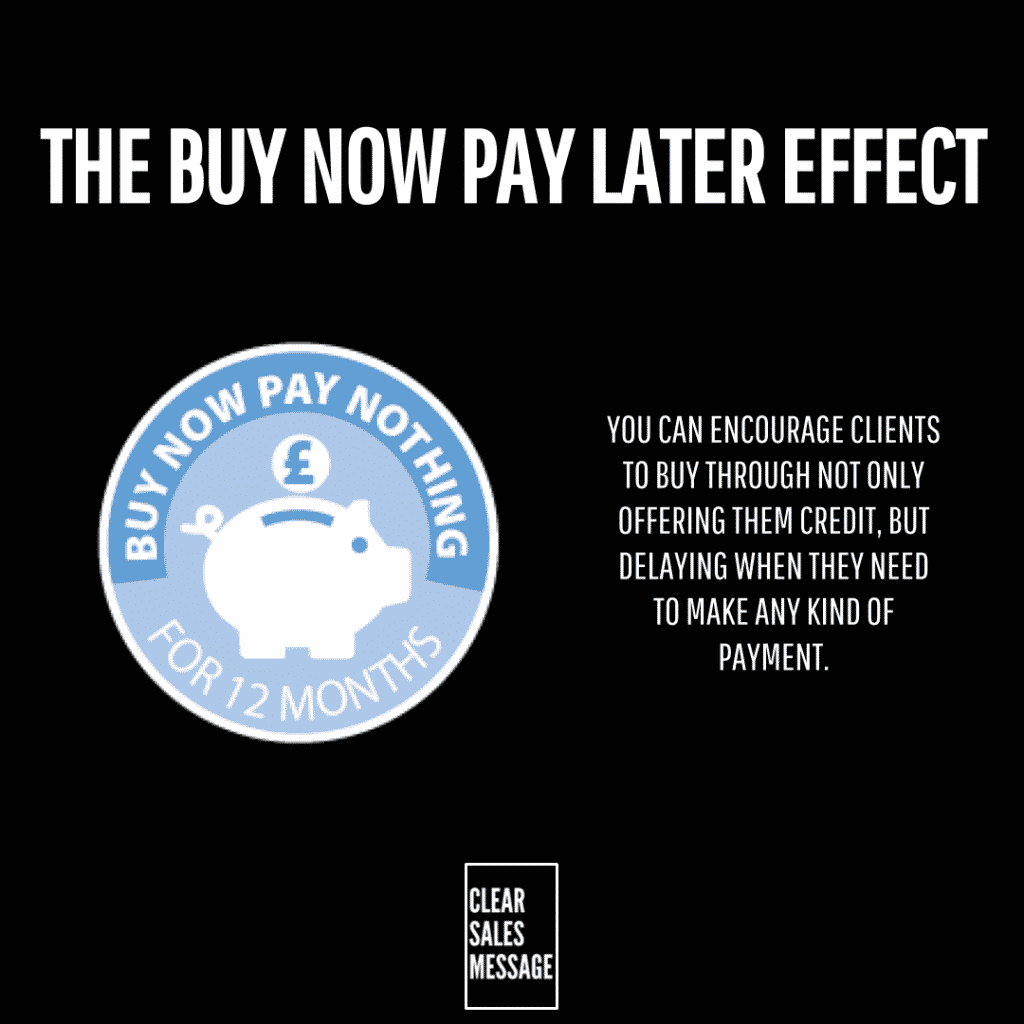
Sometimes this means simple deferred payment after delivery. Other times it connects to a finance plan, giving the buyer a period of zero repayments before instalments begin. Either way, cash flow stops being a reason to say no.
Why Does The Buy Now Pay Later Effect Work?
Cash flow is a genuine obstacle for many buyers. Even someone who sees the value clearly may hesitate if the payment lands at the wrong time.
Deferring payment removes that friction. Rather than solving a cash flow problem before saying yes, the buyer acts on desire now and sorts the finances later.
There is also a psychological side to this. Paying later feels less final than paying now — so buyers who are almost convinced find it easier to commit when money is not leaving immediately.
How Can You Use The Buy Now Pay Later Effect In Sales?
Offer deferred payment after delivery
Let buyers take delivery now and pay 30 or 60 days later. Common in B2B sales, this removes the cash flow objection entirely. Because payment falls due after delivery, saying yes becomes much easier.
Combine with a finance plan
Pairing buy now pay later with a finance arrangement is a popular structure. No payments for an initial period — three, six, or twelve months — then repayments begin. Buyers get to benefit from the purchase before the cost kicks in.
Use it to close hesitant buyers
When a buyer stalls on timing or cash flow, a deferred option can unlock the sale. Rather than losing the deal to “not right now”, you give them a way to say yes today. Often, that is all they needed.
Build it into your standard offer
Make buy now pay later a visible part of how you sell — not a last resort. Show payment options upfront on your website, in proposals, and in conversations. That way cash flow never gets a chance to become an objection.
When The Buy Now Pay Later Effect Works Best
Higher-value purchases benefit most from this approach. The bigger the number, the more a buyer tends to hesitate on timing — so a deferred payment option carries more weight here.
Desire also plays a big role. Someone who wants what you sell but whose budget cycle is a month away can say yes now instead of drifting away. You keep the momentum rather than losing the sale to a delay.
When The Buy Now Pay Later Effect Becomes Dangerous
Problems arise when buyers overcommit. If someone takes on something they cannot truly afford, deferred payment delays the issue — it does not solve it. When the payment date arrives, the relationship can sour fast.
Cash flow risk cuts both ways too. You deliver before you receive money, so make sure the terms are clear, the agreement is in writing, and you are comfortable with the gap between delivery and payment.
Common Buy Now Pay Later Mistakes
Keeping it hidden until the buyer objects
Many sellers only mention deferred payment when a buyer pushes back on price. By then, hesitation has already built. Lead with it as a feature instead — so cash flow never feels like a wall.
Not setting clear terms
Vague payment arrangements cause problems later. Set out in writing when payment falls due and what happens if it is missed. A handshake deal on deferred payment can become a dispute when the date arrives.
Using it as a substitute for value
Flexible payment removes a cash flow barrier — but it does not replace a strong value case. A buyer who is not convinced will still walk away, just a little later. Build the value first, then offer the flexibility on top.
Not checking affordability
Deferred payment works best when buyers can afford to pay — just not right now. If you have real doubts, tread carefully. A sale that ends in a bad debt costs more than walking away would have.
The Buy Now Pay Later Effect – An Example
DFS in the UK built much of their retail success on finance deals. Buy now pay later is one of their most effective tools. A sofa is a big, considered purchase — and most buyers do not want to hand over a large sum on the day they walk in.
By offering a period with no payments, DFS lets buyers say yes in the moment of excitement. Rather than going away to “think about it” and never returning, they commit while desire is at its peak. That is exactly when you want the decision to happen.

6 Different Ways To Structure Payment For Your Offering
- Pay now start later — Allow buyers to secure something but not take delivery until later when they are ready.
- Pay on results — Take payment when you have delivered the desired result for your buyer.
- Pay as you go — Allow buyers to pay as they consume your offering.
- Prepayment — Allow buyers to create a credit balance that they can then draw down.
- Buy now pay later — Allow buyers to buy today but not pay until later in the future.
- Finance — Offer finance and instalment payments to ease cash flow for your buyer.
See Also