

Practical Sales Training™ > How To Connect With Your Buyer > The Language Effect
The Language Effect
What Is It?
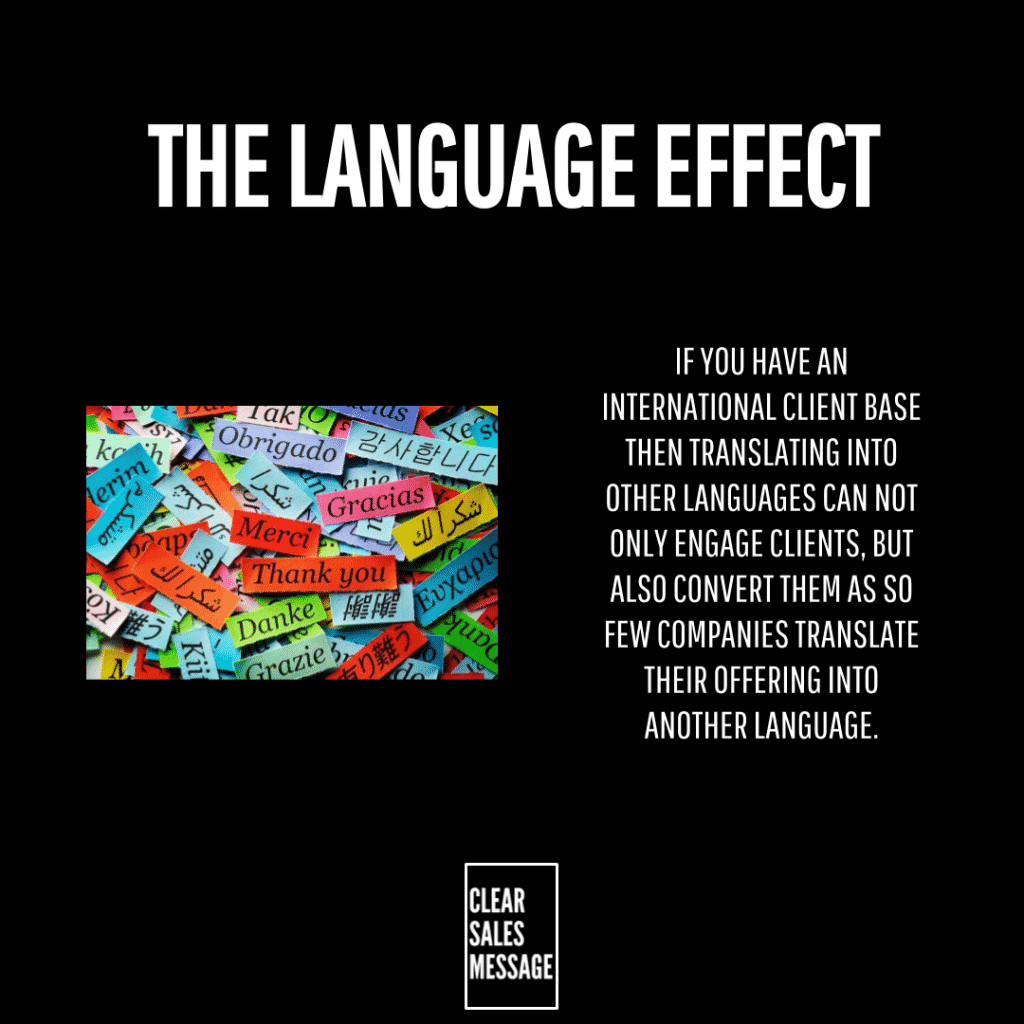
People buy in their native language more often than not. So the Language Effect is simple. Speak their language, and you sell more.
Why Does It Work?
Buyers want confidence and certainty. So they want a solution they fully understand, without any guesswork.
A native language removes that guesswork instantly. Because when someone reads in their own tongue, everything feels clearer and safer.
So if your offer only speaks English, you’re asking every other buyer to work harder just to trust you. That extra effort costs you sales.
How Can You Use It?
Translate The Key Pages First
Many businesses only run in English. So that gap is actually a big opportunity. Start with your homepage, checkout and onboarding, since these are the pages where trust matters most.
Match The Local Tone, Not Just The Words
Literal translation only gets you halfway there. So also match the tone and phrasing your buyer actually uses. A formal tone might suit one region, while a conversational one suits another nearby.
Use Their Actual Words
Speaking your buyer’s language also means using their terminology, not just their alphabet. First person questions are a strong way to borrow your client’s own vernacular back to them.
When It Works Best
This works best when you already have a growing audience in another language. That signal tells you exactly where to translate first.
It also works well for anything transactional, like checkout or onboarding. Because confusion at these steps costs you the sale directly, not just the click.
When It Becomes Dangerous
The risk is using a rough or literal translation. Since machine translated copy often reads awkwardly, it can hurt trust instead of building it.
Ignoring regional tone causes similar damage. So a phrase that works in one country might feel wrong or overly formal in another.
Done well, this builds real trust fast. Done carelessly, it just draws attention to the gap you were trying to close.
Common Mistakes
Translating Word For Word
A literal translation often misses tone completely. So work with a native speaker instead of relying purely on software.
Stopping At The Homepage
Translating your homepage but not checkout creates a jarring switch. So carry the language all the way through the journey.
Ignoring Regional Differences
Spanish in Spain isn’t identical to Spanish in Mexico. So check your tone against the actual region you’re targeting.
The Language Effect – An Example
The E-Learning Platform
An e-learning platform ran everything in English at first. But they noticed a growing user base in Latin America. So they translated the homepage, checkout and onboarding emails into Spanish.
Conversions from Spanish speaking visitors rose by 34% within three months. That’s a big jump from one change.
Buyers felt more confident and informed. So they no longer had to guess what they were signing up for. As a result, the brand felt more accessible and trustworthy overall.
They also went beyond literal translation. Because tone mattered too, they shifted between formal and conversational Spanish depending on the region.
See also