
Practical Sales Training™ > How To Get Attention > The Mystery Effect

The Mystery Effect
What Is It?
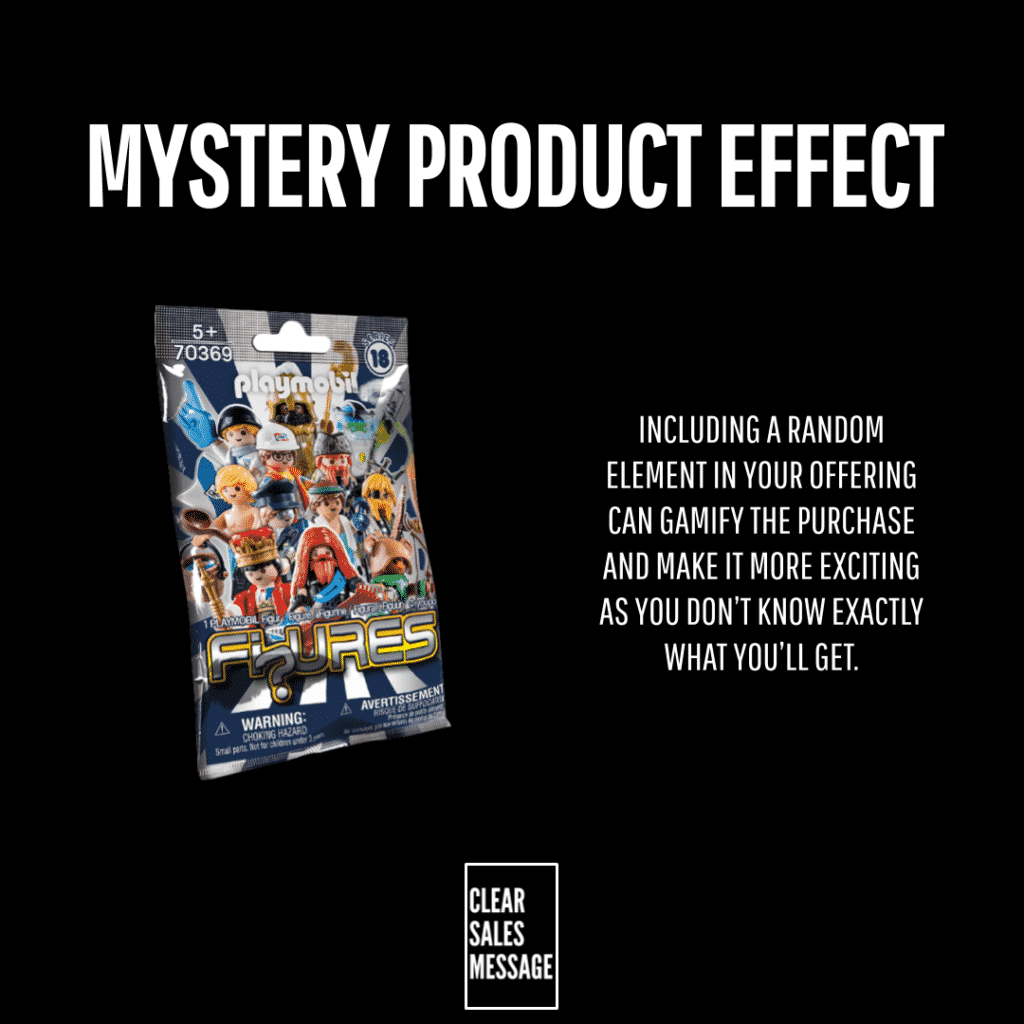
The Mystery Effect hides the exact item until after purchase. So the buyer knows the category, but not the contents.
It sounds risky. But for the right offer, that risk is the whole appeal.
Why Does It Work?
Some buyers like being told what to choose. So a curated surprise removes the decision for them entirely.
Others just enjoy not knowing. Because the fun comes from the reveal, not the certainty.
Either way, mystery adds something a normal listing can’t. So it turns a simple purchase into a small moment of excitement.
How Can You Use It?
Check If It Actually Fits
This isn’t right for every business. So it works best with physical goods, especially anything collectable or varied enough to genuinely surprise someone.
Set Clear Expectations
Tell buyers what category they’re getting, even if the specifics stay hidden. So promise a mix of bestsellers or a certain value, rather than leaving everything a total unknown.
Use It To Introduce New Products
A mystery bundle is a great way to get buyers trying things they wouldn’t normally pick. So it can lead directly to future full price purchases later.
When It Works Best
This works well in fashion, stationery, toys, books and cosmetics. Subscription models also suit this naturally.
It works best when buyers already trust your quality. Because the surprise only feels fun if they’re confident it’ll still be worth having.
When It Becomes Dangerous
The risk shows up when buyers feel let down by what they get. Because a genuinely disappointing surprise damages trust fast.
Overpromising the value inside makes this worse. So keep the description honest, even while keeping the contents hidden.
Used well, this creates real delight. Used carelessly, it just feels like a gamble buyers didn’t sign up for.
Common Mistakes
Overpromising The Value
Claiming huge value inside sets buyers up to feel short changed. So keep your promise realistic and specific.
Using It For The Wrong Product
Mystery doesn’t suit every offer. So don’t force it onto something buyers need full control over, like a service or a big purchase.
Giving No Detail At All
Total silence on what’s inside feels like a gamble, not fun. So give buyers just enough detail to trust the surprise.
The Mystery Effect – An Example
The Mystery Mini Bundle
A skincare brand sells a Mystery Mini Bundle for £12. Buyers get three travel size products, but they don’t know which ones until the box arrives. The brand promises a mix of bestsellers and seasonal exclusives.
Some buyers love the surprise itself. Others enjoy the feeling of discovery more than the actual products.
It also introduces buyers to items they might never have picked on their own. So that exposure often leads to a full price purchase down the line.
This same idea works well beyond skincare too. Fashion, stationery, toys, books and subscription boxes all use the exact same mechanic.
See also