
Practical Sales Training™ > How To Convert > The One Click Effect

The One Click Effect
Every extra click costs you a sale. The moment a buyer has to think or wait, you risk losing them.
So the One Click Effect is what happens when you strip that away. You give people the shortest route from browsing to buying.
Fewer clicks makes buying feel effortless. So it quietly does the selling for you.
What Is It
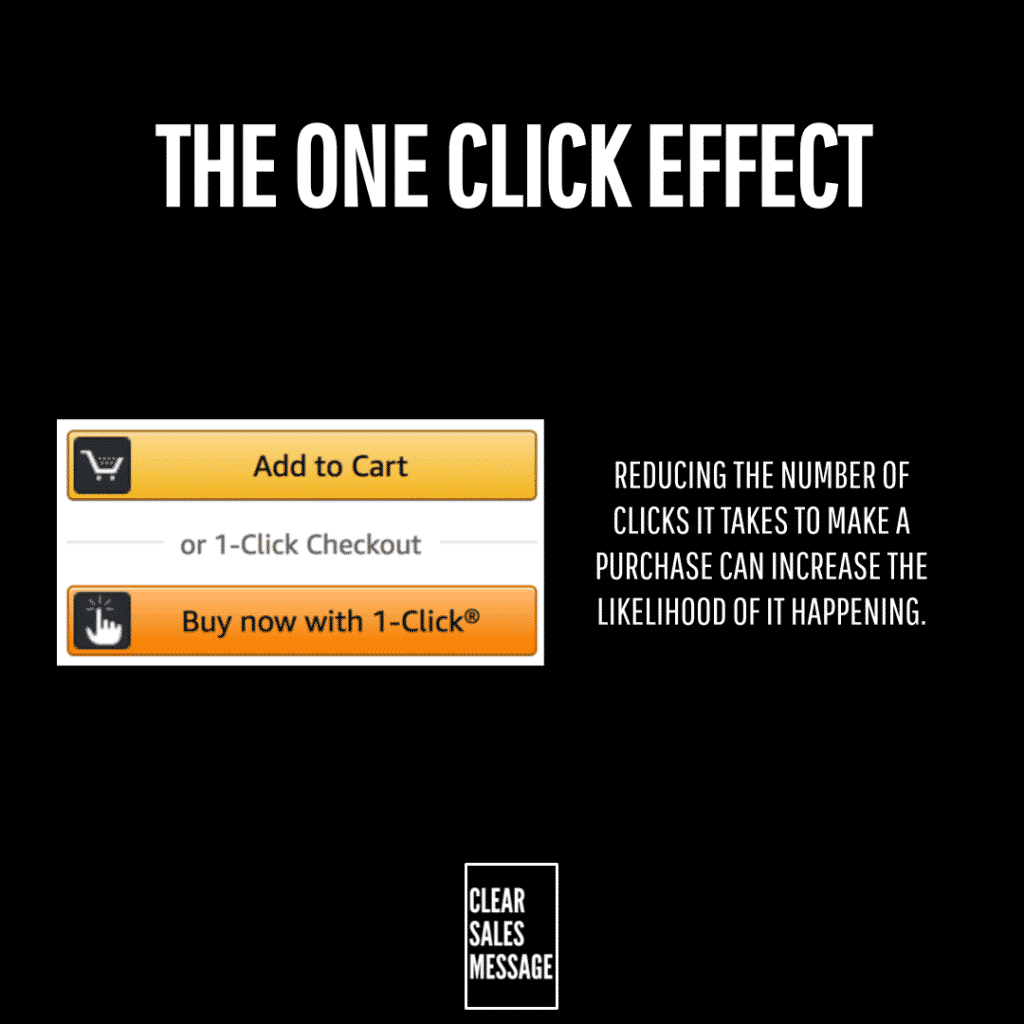
The One Click Effect means keeping clicks to a minimum. Ideally just one.
You remove every unnecessary step between browsing and buying. So there’s nothing left to slow the buyer down.
Why Does It Work
It works because of the path of least resistance. We’re also wired to get what we want using the least effort possible.
So strip out the complexity. You end up working with human nature.
So every extra click adds friction. And friction gives the buyer time to hesitate, or change their mind.
How Can You Use It
Cut The Steps Between Browsing And Buying
A full one click purchase might be out of reach for your business. But you can still cut the clicks down hard.
Look at every page and every field in your checkout. Also ask what you could remove, combine, or automate.
Automate What You Can
Auto-fill billing and shipping details wherever possible. So the buyer never has to type the same thing twice.
Cut unnecessary form fields too. So every extra box is one more reason to give up.
Combine Steps Into One
Put shipping and payment on the same page. So there’s one less page to lose someone on.
Change your button language too. “Buy now” commits someone further than “next” ever will.
When It Works Best
This works best for buyers who already know what they want. They’re emotionally committed, and they just need the fastest way to say yes.
It also works well on mobile. So every extra tap costs more attention there than it does on desktop.
When It Becomes Dangerous
Speed can backfire when a buyer needed more information first. Rushing the decision often ends in a refund.
It also gets risky for higher priced or complex offers. Some purchases need a pause, rather than a shortcut.
Common Mistakes
Removing Steps Without Removing Doubt
Cutting clicks alone won’t remove hesitation. So without trust, speed doesn’t help. It just gets buyers to the doubt faster.
Hiding Costs To Keep It Simple
A short checkout still needs to be honest. So don’t strip out shipping costs or fees just to keep things quick.
So buyers punish surprises at the final step harder than almost anywhere else.
The One Click Effect – An Example
An online gift shop simplified its checkout down to one option. It shows one button instead: Buy Now with Apple Pay or Google Pay.
You don’t need an account. And there’s no multi page checkout. Just one click, and it’s done.
So it removes friction. No forms, no delays, no distractions. The buyer is already committed while looking at the product. So they act instantly.
So fewer clicks simply means higher conversion.

See also