
Practical Sales Training™ > How to connect with your buyer > The Personification Effect

The Personification Effect
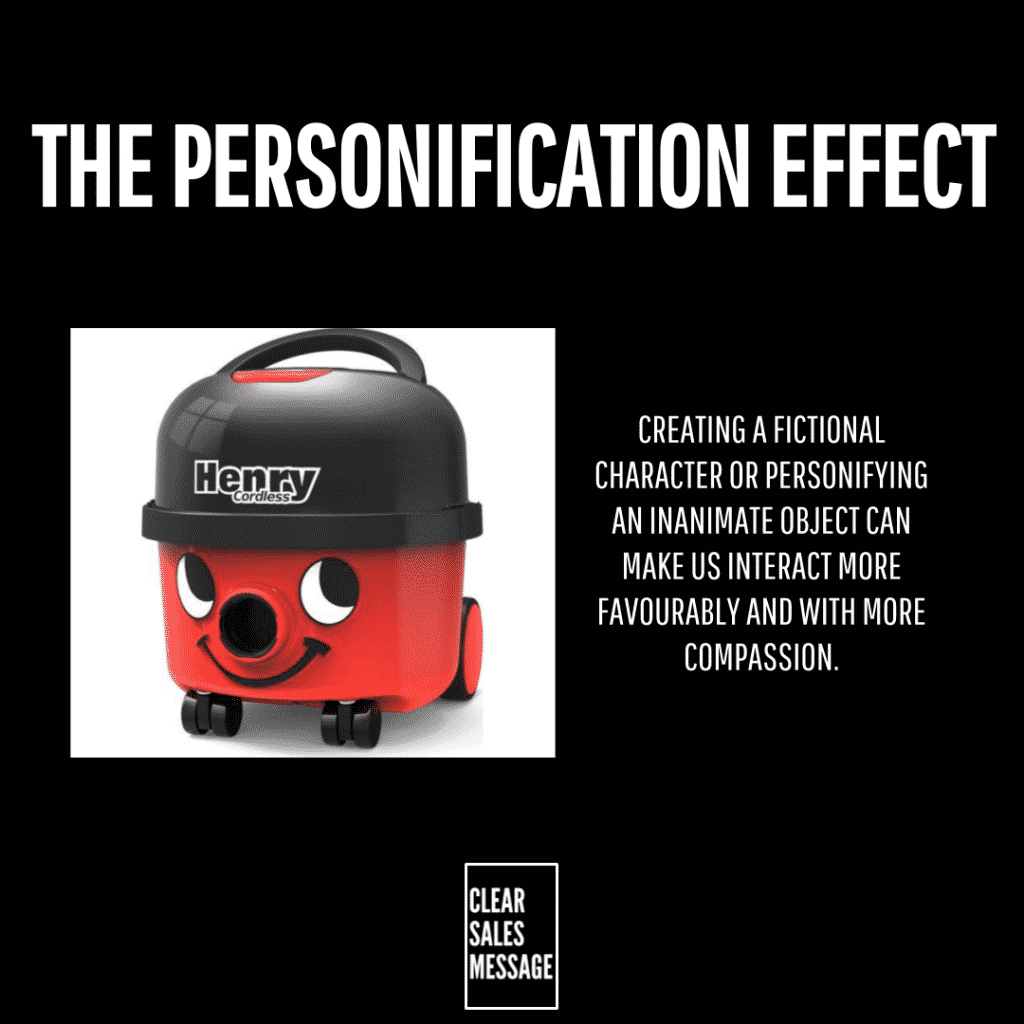
A vacuum cleaner is just a machine. Give it a name and a face. Suddenly it feels like something you’d miss if it broke.
The Personification Effect works by changing how we relate to something. A character does that, whether it’s a thing or a brand.
What Is It
The Personification Effect means using a fictional character, or giving personality to something inanimate. So you create a recognisable character for your brand.
Why Does It Work
It works because personifying something changes how we interact with it. So you feel differently about a Dyson than you do about a Henry Hoover.
The name alone doesn’t explain it. Henry also has a face.
How Can You Use It
Create A Fictional Character
Build a character that represents your offering. Think Ronald McDonald.
Personify Something You Already Sell
Give personality to something inanimate you already sell, the way Henry Hoover did. So ask whether naming part of your offering would actually help. Would it draw people in, or would it put them off?
Consider A Cartoon Version Of Yourself
You can also use a cartoon version of yourself. That’s what I do on my YouTube channel. So it’s a lighter way to put a face on your brand. You don’t need to invent a whole new character.
When It Works Best
This works best when your offering feels dry, technical, or hard to warm to. So a character gives buyers something human to connect with.
It also works well for brands aimed at children. So character loyalty runs deep at that age.
When It Becomes Dangerous
This backfires if the character feels forced, or doesn’t match your brand at all. So a mismatched character confuses buyers more than it connects with them.
It also weakens your message if the character overshadows what you actually sell. People should remember your product first, and the mascot second.
Common Mistakes
Creating A Character That Doesn’t Fit
Forcing a character onto a serious or high stakes offering can undermine trust. So match the tone of your character to the tone of your offering.
Overusing The Character
Leaning on the character in every single touchpoint gets tiring fast. So use it where it earns its place, not everywhere by default.
The Personification Effect – An Example
So a tech support company created a friendly animated character called Chip. He’s a smiling cartoon microchip, wearing glasses and a headset.
Chip shows up in explainer videos. He also pops up on the live chat window with friendly tips. Onboarding emails feature him too, under a checklist named after him. And he appears across social media as the voice of the brand.
So Chip gives a face and a personality to something usually dry and technical. Clients feel more at ease, and the brand becomes easier to remember.
He also makes a technical exchange feel more human. So it stops feeling like a faceless service.
The same approach works well in a few places. For example, kids’ brands use it to build loyalty early. B2B services use it to humanise complex offers. Also, product packaging uses it to stand out on the shelf.
See also