Practical Sales Training™ > How People Work > The Unlimited Effect

The Unlimited Effect
What Is It
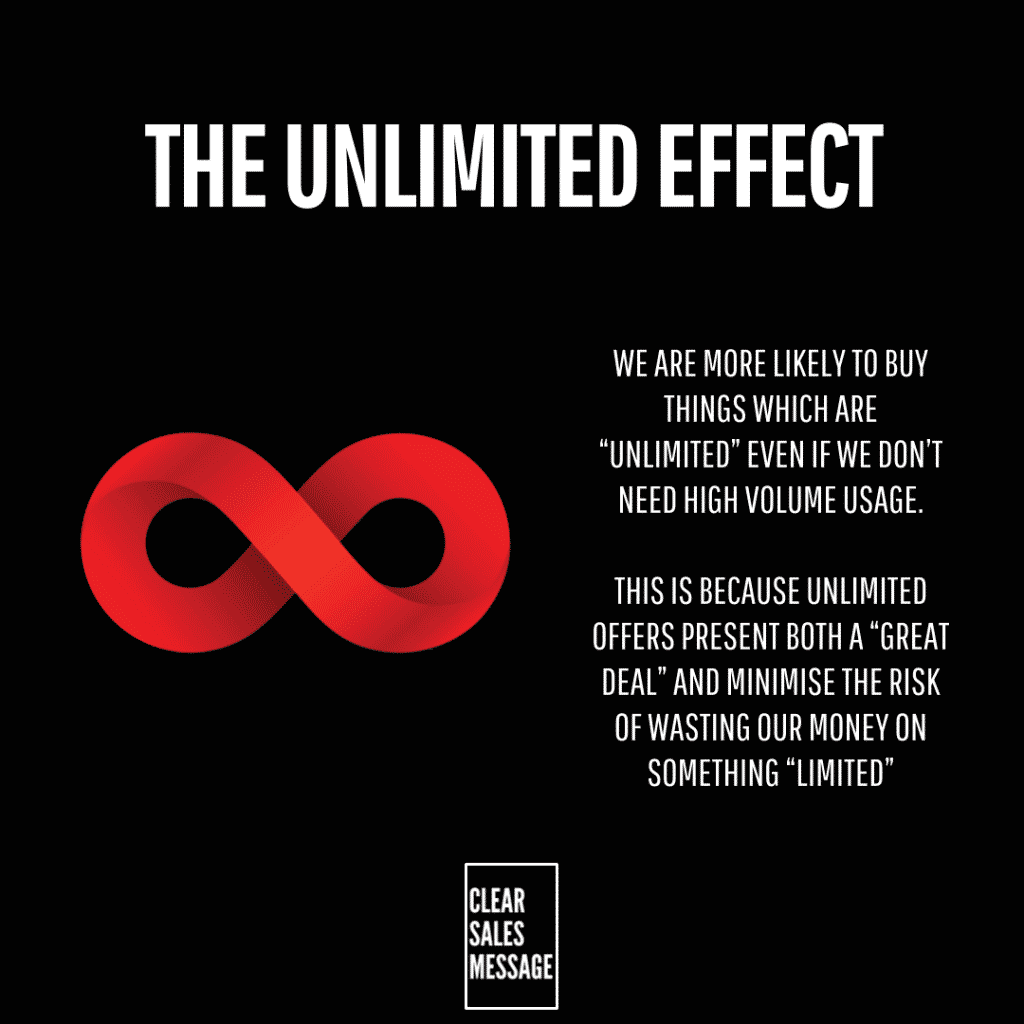
We’re more likely to buy things that are “unlimited,” rather than those with a fixed amount of supply, even if we have no need and won’t use more than the limited offering anyway.
It’s a strange effect once you notice it. The number rarely matters as much as the word attached to it.
“Unlimited” does emotional work that no specific figure, however generous, quite manages to match.
Why Does It Work
It works because, as buyers, we’re seeking not only the best value, often identified by sheer quantity of the offering, but also looking to minimise our risk. An offering that’s unlimited can seemingly have no downside, since we can use as much as we need.
The reality is that unlimited offers seldom get a lot of usage. But it’s the peace of mind that “unlimited” provides that can help convert the sale.
Buyers aren’t really buying volume. They’re buying the removal of a worry, the fear of running out at the exact wrong moment.
How Can You Use It
Find the part of your offering you can make unlimited
If part of your offering can be made unlimited, and it has no real effect on your bottom line, this can be a powerful addition to your sales pitch.
Look at digital first, since the cost stays low
Digital products and intangible items can be made unlimited quite easily, and for no cost, with a potentially unlimited upside for you too.
Price the tier around the peace of mind, not the usage
Buyers rarely calculate whether they’ll actually use the full unlimited allowance. Price it against the comfort it provides, not against average consumption.
When It Works Best
This works best with digital or low marginal cost offerings, where genuinely unlimited access costs you very little extra to provide.
It also works best alongside a capped alternative, since the contrast between “limited” and “unlimited” is what makes the unlimited option feel worth the extra cost.
When It Becomes Dangerous
It backfires if “unlimited” turns out to have hidden caps or fine print. A buyer who discovers a limit on their “unlimited” plan feels genuinely misled, not just disappointed.
It also becomes risky if the unlimited tier genuinely costs you more than it earns, since heavy users can turn a low cost promise into a real financial problem.
Overpromising “unlimited” everywhere dilutes it too, since the word loses meaning the moment every plan claims it regardless of real cost.
Common Mistakes
Hiding real limits behind the word “unlimited”
Fair use policies or hidden caps that contradict the marketing damage trust the moment a buyer runs into them.
Applying it where the cost genuinely scales
Offering unlimited access to something with real marginal cost can quietly turn profitable customers into a financial risk.
Using the word too often across your offering
“Unlimited” loses its pull the moment every single tier claims it. Save it for the genuine premium option.
The Unlimited Effect – An Example
An Online Learning Platform
An online sales training platform offers two pricing tiers:
- Standard Plan – £49/month: Access to 3 new lessons per month
- Unlimited Plan – £79/month: Unlimited lessons, unlimited access
Even though most users only consume 3 to 5 lessons a month, over 70% choose the Unlimited Plan.
Why? Because “unlimited” feels like better value and offers peace of mind, even if the buyer never actually uses the full benefit.
See also
- The Lifetime Effect
- Future Updates
- 50+ ways that people work & make decisions
- 100+ ways to differentiate