Practical Sales Training™ > How To Convert > The Lifetime Effect

The Lifetime Effect
What Is It
Giving access to a service, or a warranty, that lasts a whole lifetime can help your buyer decide faster. It’s a promise with no end date. That alone changes how a buyer weighs up the offer.
Why Does It Work
It works because it limits risk for buyers. If it’s lifetime access, they use this to justify the price, and see it as a great deal. If it’s a lifetime warranty, they use it to quell any doubts they have.
Depending on what you sell, this may cost you very little to offer. So it’s well worth thinking about, even if it feels bold at first.
How Can You Use It
For lifetime access, you just need to give people access to what you already have. Then think about how to stop people misusing your generosity.
For a lifetime warranty, the main thing to check is cost. A lifetime can be a long time. If things go wrong, are you ready to cover it?
If you can make it work, lay out clear terms for your buyers. Then create a simple graphic to promote it to future buyers.
When It Works Best
This works best when the real cost stays low over time. Think digital access, or products that rarely fail.
It also works best as something few rivals offer. It should feel rare, not something buyers already expect from everyone.
When It Becomes Dangerous
It backfires if the promise costs too much to keep. A lifetime deal that quietly gets watered down damages trust more than never offering it.
It also becomes risky if the terms are vague, or full of hidden catches. A buyer who finds a loophole feels tricked, not reassured.
Promising a lifetime deal on something costly to maintain can put real pressure on your business later.
Common Mistakes
Skipping the maths before committing
Offering a lifetime promise without checking the real cost first is the biggest mistake. Do the maths before you commit in public.
Writing vague terms
Writing vague terms that leave room for dispute undermines the whole guarantee. Be specific about what’s actually covered.
Not planning for misuse
Failing to plan for genuine misuse can quietly cost you more than you expect. Build in fair limits from the start.
The Lifetime Effect – An Example
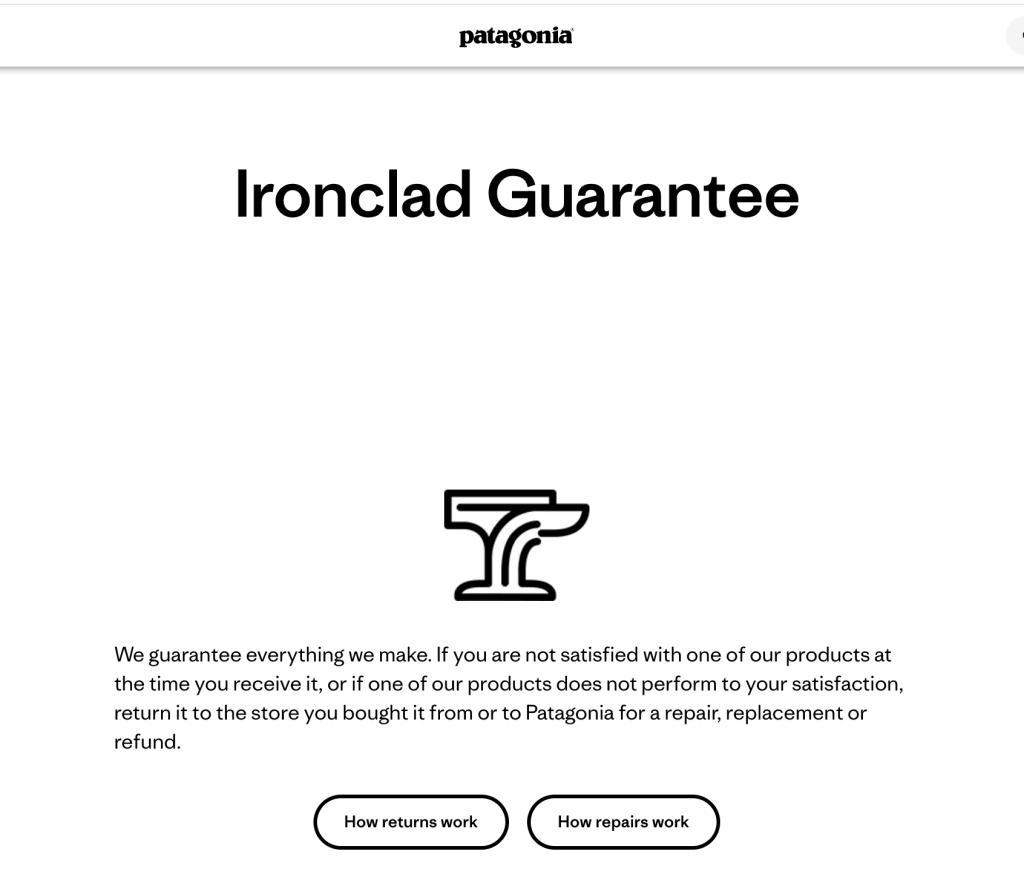
Patagonia’s Ironclad Guarantee
Patagonia famously have their ironclad guarantee. It promises to repair, replace, or refund any product that doesn’t perform, for as long as you own it.
The guarantee removes the whole question of how long a product will last. A buyer stops wondering if it’ll last, since the brand has already promised to stand behind it.
See also