Practical Sales Training™ > How To Convert > The Price Freeze Effect

The Price Freeze Effect
Most buyers delay. They think about it, compare their options, and tell themselves they will decide next week. But next week, the price goes up. And suddenly the decision they were putting off has a real cost attached to it.
The Price Freeze Effect turns that delay into urgency. Instead of discounting to attract buyers, you hold the price steady and give buyers a deadline to lock it in. The offer is not a reduction. It is protection from a future increase. That framing makes a significant difference to how buyers respond.
Because the price freeze feels like a favour rather than a sale, it lands better with buyers who resist being sold to. You are not pushing them. You are giving them a chance to avoid losing out. And loss aversion, as any buyer psychology study will confirm, is a far stronger motivator than the promise of a gain.
What Is The Price Freeze Effect?
The Price Freeze Effect is when you offer a buyer the chance to secure a current price before a planned increase takes effect. The buyer commits now and is protected from the higher price when it comes in. In return, you get the sale, the commitment, or the sign-up you were waiting for.
It is different from a discount. A discount reduces the price from its current level. The Price Freeze Effect holds the price where it is and uses an upcoming increase as the reason to act. The buyer does not feel they are getting a bargain. They feel they are avoiding a loss. That distinction matters because it preserves your pricing integrity while still creating a compelling reason to buy.
The effect works in two main ways. You can use it ahead of a genuine planned price rise, or you can use it to promote the fact that your prices have not increased when perhaps they should have. Both approaches give the buyer a reason to act sooner rather than later.
Why Does The Price Freeze Effect Work?
It works because it taps directly into FOMO and loss aversion. Buyers feel the prospect of paying more in the future far more keenly than they feel the appeal of paying less today. So when you frame the decision as “act now or pay more later,” the psychological pull is strong.
There is also a clarity benefit. Many buyers sit on the fence because the decision feels low-stakes. Nothing bad happens if they wait. The Price Freeze Effect changes that. Suddenly, waiting has a consequence. Because the consequence is financial and concrete, it gives the buyer a genuine reason to stop delaying.
It also works because it feels fair. A price increase is a normal part of doing business. Offering buyers the chance to beat it is a gesture of goodwill. As a result, the Price Freeze Effect builds trust at the same time as it drives conversion. The buyer feels looked after rather than pressured, which makes them more likely to say yes and more likely to stay.
Finally, it avoids the damage that discounting can cause. When you discount, you signal that your price was too high to begin with. When you freeze, you signal that your price is right and that the buyer is getting a chance to hold it. That is a much stronger position to sell from.
How Can You Use The Price Freeze Effect In Sales?
Before a price increase.
If you are planning a price rise, offer to hold the current price for buyers who commit before the increase kicks in. Give them a clear deadline and a clear reason. Because the increase is real, the urgency is real too.
Promoting a held price.
If your prices have stayed flat when they could have risen, you can use that as a selling point without any discounting at all. Telling buyers that you have held your prices despite cost increases positions you as fair and considered. That story can be just as compelling as a formal freeze offer.
Use a Clear Deadline
A price freeze without an end date is just a price. The urgency comes from knowing that the window closes. So set a specific date and communicate it clearly. The closer the deadline, the stronger the pull. Give buyers enough notice to make a decision, but not so much that the urgency fades before they act.
Make the Increase Visible
The Price Freeze Effect is most powerful when the buyer can see exactly what they are avoiding. Show the current price and the future price side by side. Because the difference is concrete, the decision to act becomes easier. Vague references to a price rise carry far less weight than a specific number on a specific date.
Target Warm Prospects First
The Price Freeze Effect works best on buyers who are already considering you. Cold prospects have no emotional investment in your price, so the freeze means little to them. However, a warm prospect who has been weighing up the decision will feel the deadline much more sharply. So lead with this offer to your existing pipeline before promoting it more broadly.
Keep the Increase Genuine
The Price Freeze Effect only works if the increase is real. A fake deadline or a manufactured price rise will damage trust the moment a buyer finds out, and buyers often do find out. So only use this approach when the increase is genuine and planned. The effect is powerful precisely because it is honest.
When The Price Freeze Effect Works Best
It works best when you have a real price increase coming and a pipeline of warm buyers who have not yet committed. Those buyers need a reason to act. The freeze gives them one that feels urgent without feeling pushy. Because the deadline is external rather than manufactured by you, it does not feel like a sales tactic. It feels like useful information.
It also works well for subscription products and recurring services, where locking in a price has long-term value for the buyer. The longer the relationship, the more a price freeze is worth. So the effect is amplified when buyers can see that the saving compounds over time.
Similarly, it works in markets where buyers are price-sensitive but resistant to discounting. The Price Freeze Effect gives them a financial reason to act without triggering the suspicion that comes with a sudden sale or a discount offer out of nowhere.
When The Price Freeze Effect Becomes Dangerous
The biggest risk is using it on a price rise that never actually happens. If you announce a freeze, let the deadline pass, and then keep the same price with no increase, buyers who held off will notice. That erodes trust and makes every future communication feel less credible. So only announce a freeze if the rise is confirmed.
There is also a risk of training buyers to wait for a freeze before committing. If you use the Price Freeze Effect repeatedly, buyers may start to expect it as part of your normal cycle. Instead of acting when they are ready, they wait for the next freeze window. That undermines the urgency you are trying to create.
Finally, watch the margin impact of long-term price locks. Freezing a price for a short window is low risk. Promising a price forever is a different matter. Make sure any long-term commitments still work financially at the locked rate, especially if your own costs are likely to rise.
Common Price Freeze Effect Mistakes
No Clear Deadline
A price freeze with no end date creates no urgency. Buyers will note it and move on. Set a specific date, communicate it in every message, and stick to it. The deadline is the engine of the whole effect. Without it, you just have a price.
Failing to Show the Future Price
If buyers cannot see what they are saving, the freeze loses most of its power. Always show both prices. The current price and the price it will become after the deadline. Because the contrast makes the decision concrete, buyers who can see the gap are far more likely to act than those who are told a rise is coming without any figures attached.
Using It Too Often
Repeated price freezes teach buyers that the urgency is not real. When the same offer cycles around every few months, it stops feeling like a genuine opportunity and starts feeling like a marketing habit. Reserve the Price Freeze Effect for real price changes and it will land with the weight it deserves every time.
Sending It to Cold Prospects Only
Cold prospects have no attachment to your current price. They have nothing to protect. So a freeze offer sent only to cold leads will underperform. Your warmest prospects, those already in conversation with you, are the ones most likely to respond. Start there and work outward.
The Price Freeze Effect – An Example
A software company plans to raise its subscription price from £49 a month to £59 a month at the end of the quarter. Before the increase goes live, they send an email to their existing trial users and warm leads:
“Lock in your subscription at £49 a month forever – price freeze ends March 31st.”
The message is simple and the stakes are clear. Buyers who sign up before the deadline pay £49 a month for as long as they stay. Buyers who wait pay £59. Because the choice and the consequence are both visible, many buyers who had been sitting on the fence make the decision before the deadline arrives.
That is the Price Freeze Effect in action. No discount, no sale, no pressure. Just a clear deadline, a real price difference, and a reason to act now rather than later.
See Also
12 alternative ways to discount your offering:
- First purchase – Discount the first purchase a buyer makes with you.
- Follow up offer – Follow up those who didn’t buy with an incentive.
- Cashback – Don’t discount, but provide cash back to those who pay full price.
- Themed Sale – Create an event or reason to hold a sale.
- Price Match – Offer to match the genuine price of a competitor.
- Buy more – Incentivise buyers to spend more with ascending discounts.
- Free gift – Offer a free gift with purchase.
- Early bird – Offer a discount for those who buy or pay in advance.
- Flash Sale – Hold a flash sale.
- Budget version – Create a naturally cheaper version of your offering to appeal to lower spending buyers.
- Case Study Offer – Having a lower price for the first buyers, in exchange for reviews and feedback.
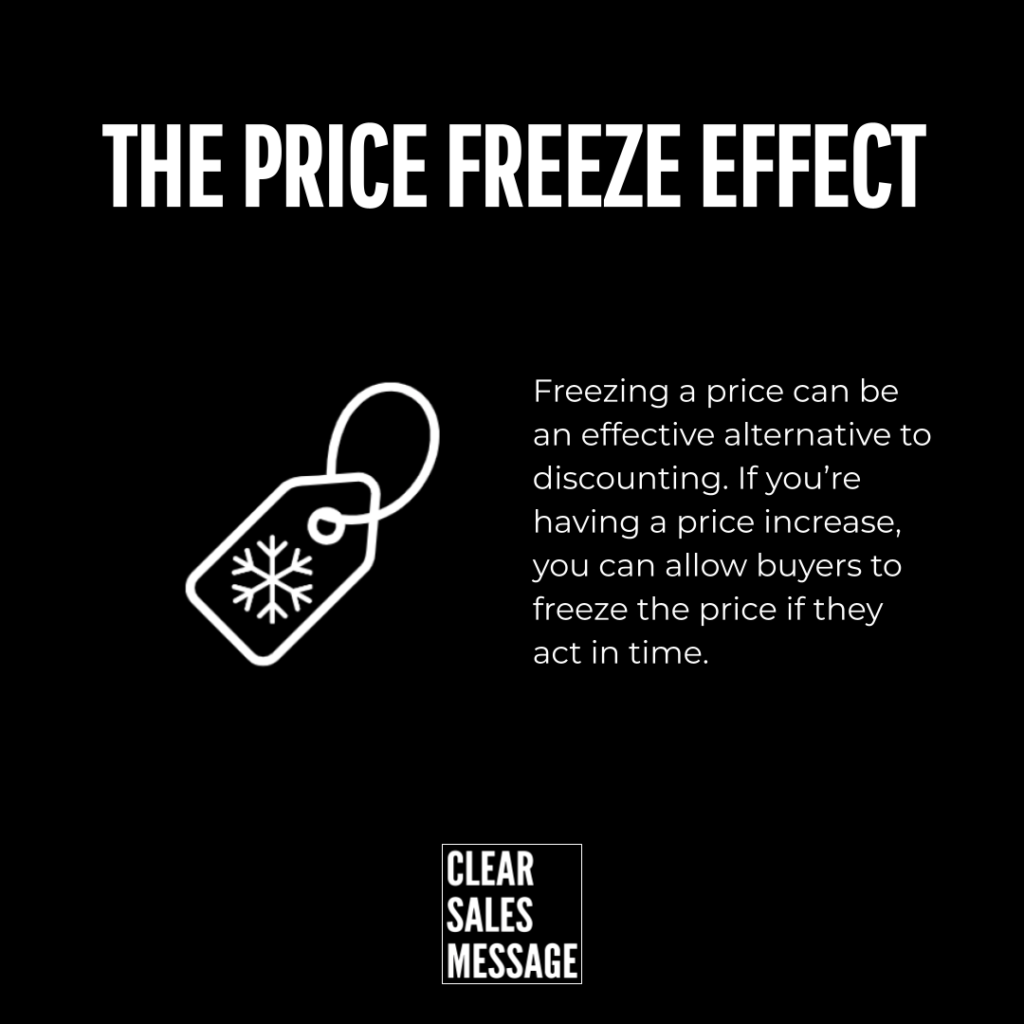
- Freeze the price – Allow buyers to avoid a price increase if they lock in.

