
Practical Sales Training™ > How To Convert > The Free Gift Effect

The Free Gift Effect
A discount cuts your price. A free gift doesn’t. Yet it can still feel like an even better deal to the person buying.
What Is It
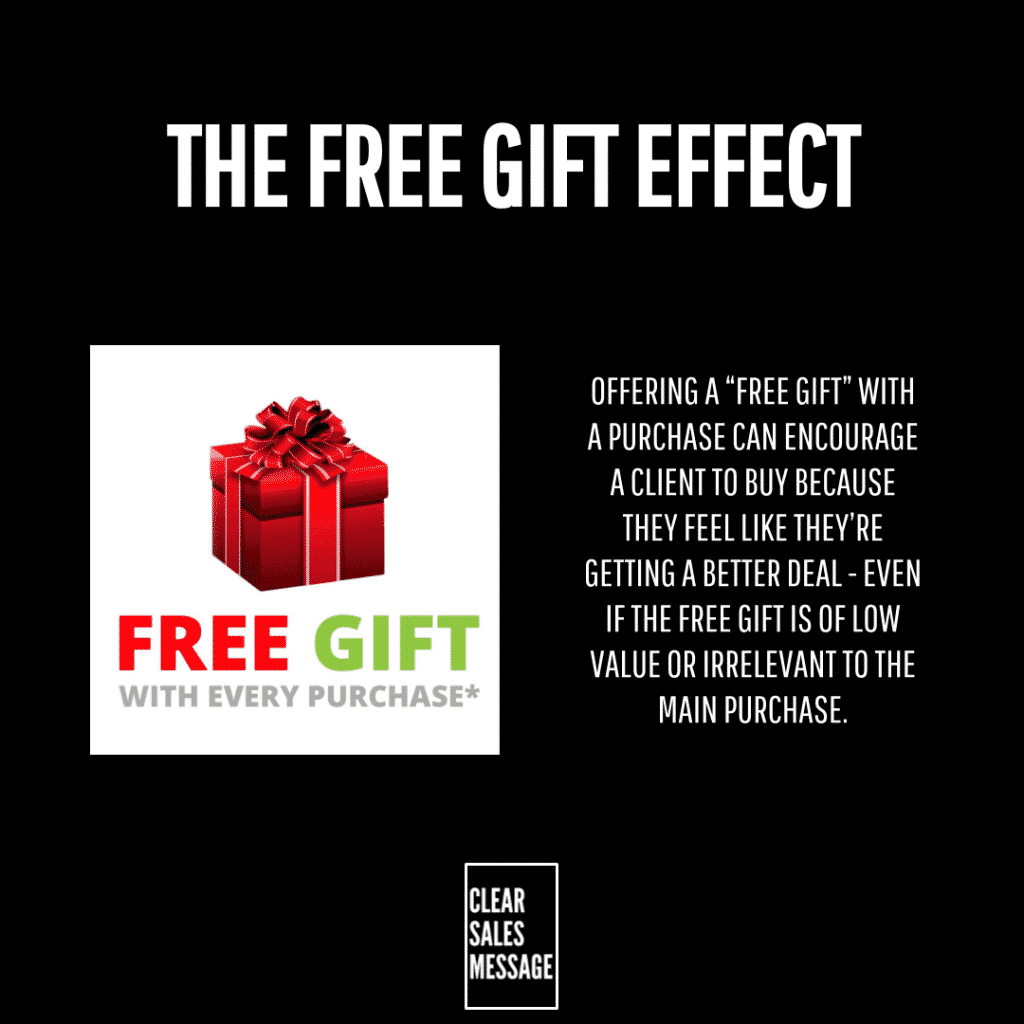
The free gift effect means offering a free gift with a purchase. It encourages someone to buy, since they feel like they’re getting a better deal.
Why Does It Work
We all want value for money. In fact, most of us want to feel we got more than we paid for. That feeling drives the free gift effect.
The gift itself often has little real value to the buyer. Sometimes it’s not even related to what they bought. But the idea of getting something for nothing is still strong enough to tip a decision.
How Can You Use It
There are several ways to apply this, depending on what you sell.
Free Information Products
Free information costs you nothing to give. It also carries a high perceived value, and it scales easily too. As a result, it builds trust and respect with your clients.
Free Physical Products
Giving away something physical that costs you money can feel counterintuitive. But it often works better than a discount of the same value.
Spend an extra £1, £5, or £10 on a free gift, and it usually beats cutting your price by that same amount. You could also use branded merchandise, or products another company gives you free to promote their own business.
Free Support
Offering ongoing support after a purchase reassures a buyer that you genuinely care. If they call you, you get a chance to help further, and maybe sell something else too. If they never call, you’ve still lost nothing either way.
Free Upgrade
If you have a higher priced offer, don’t discount it. Instead, give a free upgrade to that offer, at the price of the cheaper one your buyer was already going to choose.
Say you sell umbrellas. One is a basic £5 model, and one is a £10 deluxe model. So you could offer a free upgrade to the deluxe version for anyone who buys before a set date. This still protects your margin, and it can also create word of mouth around your time limited deal. See the Scarcity Effect for more on that.
When It Works Best
This works best when the gift feels relevant, even if it’s low cost to provide. A gift that connects naturally to the purchase feels thoughtful, rather than random.
It also works well around a deadline. So adding a free gift for a limited time gives buyers a reason to act now instead of waiting.
When It Becomes Dangerous
This backfires if the gift feels cheap or pointless. In fact, a poor quality freebie can damage how buyers see your main offer.
It’s also risky if you rely on it too often. Buyers start expecting a gift every time, so the effect fades once it’s no longer a surprise.
Common Mistakes
Choosing An Irrelevant Gift
A gift that has nothing to do with the purchase feels like filler. So pick something that connects to what your buyer is already after.
Overusing The Offer
A constant free gift stops feeling special. So save it for moments that matter, since that’s when it still carries weight.
The Free Gift Effect – An Example
Clinique’s Free Gift With Purchase
Clinique runs limited time offers where customers who spend a certain amount get a free gift. It’s usually a makeup bag filled with mini skincare and cosmetic products.
This works for three reasons. Customers feel they’re getting more value than they paid for. The limited availability also creates urgency. And it introduces buyers to other Clinique products they might purchase later.
It’s effective enough that many customers time their purchases around these events. So that’s the free gift effect working exactly as intended.
10 Alternative Ways To Discount Your Offering
- First Purchase – Discount the first purchase a buyer makes with you.
- Follow Up Offer – Follow up those who didn’t buy with an incentive.
- Cashback – Don’t discount, but provide cash back to those who pay full price.
- Themed Sale – Create an event or reason to hold a sale.
- Price Match – Offer to match the genuine price of a competitor.
- Buy More – Incentivise buyers to spend more with ascending discounts.
- Early Bird – Offer a discount for those who buy or pay in advance.
- Flash Sale – Hold a flash sale.
- Budget Version – Create a naturally cheaper version of your offering for lower spending buyers.
See also
- Free Delivery
- Free Returns
- The Freebie Effect
- 180+ ways to improve conversion
- 100+ ways to stand out