
Practical Sales Training™ > How to connect with your buyer > The Common Enemy Effect

The Common Enemy Effect
People bond over shared things. Shared interests, shared experiences, shared jokes. But one of the strongest bonds of all is a shared enemy.
In sales, that enemy doesn’t have to be a person or a rival brand. It’s the problem your buyer faces every day. The thing that costs them time, money, and sleep. When you name it, attack it, and show you hate it as much as they do, the connection between you becomes real.
That’s the Common Enemy Effect. And it works faster than almost any other way to build trust.
What Is The Common Enemy Effect?
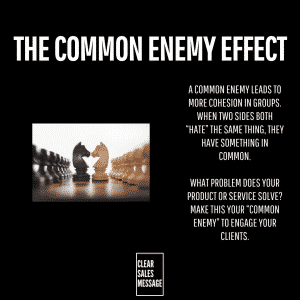
The Common Enemy Effect is what happens when two people or groups unite around a shared dislike. They may have very little else in common. But if they hate the same thing, that’s enough to create a bond.
It works in politics, sport, religion, and everyday life. However, in sales it plays out in a very specific way. Your buyer has a problem. You solve that problem. So you both have the same enemy: the problem itself.
When you frame your pitch around that shared enemy, you stop sounding like a seller. Instead, you sound like an ally.
Why Does The Common Enemy Effect Work?
Shared experience creates connection. When someone else feels what you feel, you trust them more. That’s true even when the shared thing is negative.
In fact, research on group bonding shows that shared threats pull people together faster than shared rewards. A common enemy creates urgency. It gives both sides a reason to act. So when a buyer hears you talk about their problem with real frustration, they think: “This person gets it.”
That moment of recognition is powerful. It lowers the buyer’s guard, builds rapport, and makes your solution far easier to hear. Because now you’re not selling to them. You’re fighting alongside them.
How Can You Use The Common Enemy Effect In Sales?
Start by getting clear on the enemy. What is the problem your product or service exists to destroy? Name it. Be specific. The more clearly you can describe it, the more your buyer will nod along.
Name the Enemy Out Loud
Don’t just hint at the problem. Call it out by name. Giving the enemy a label makes it feel real and makes your opposition to it feel genuine. For example, instead of saying “we help with cash flow issues,” say “late payments are killing small businesses and we built this to stop them.”
Talk About It With Feeling
Don’t describe the problem in dry, neutral terms. Show that it bothers you too. Use words that carry weight. “Frustrating,” “costly,” “unfair,” “broken.” When a buyer hears emotion in how you talk about their problem, they feel understood.
Show You’re on Their Side
Ask questions that show you’ve lived in their world. “Does this happen to you too?” or “We hear this from almost every client we work with.” This signals that you’re not just aware of the problem. You’ve been fighting it for a long time.
Frame Your Solution as the Weapon
Once the enemy is named and shared, position what you do as the tool that defeats it. You’re not selling a product. You’re handing the buyer a weapon in a fight they already want to win.
When The Common Enemy Effect Works Best
This approach works best when your buyer already feels the pain of the problem. If they’re not yet aware of it, you’ll need to build that awareness first. But if they’ve lived with this enemy for a while, naming it out loud hits hard.
It also works well in competitive markets. When several suppliers offer similar things, the one who connects on an emotional level tends to win. The Common Enemy Effect gives you that edge because it creates a human bond, not just a business case.
Similarly, it works well early in a conversation. Use it in your opening to shift from “salesperson pitching” to “trusted ally” within the first few minutes.
When The Common Enemy Effect Becomes Dangerous
Be careful not to name a person or company as the enemy. Attacking a rival brand or a buyer’s previous supplier can backfire badly. It makes you look bitter and puts the buyer in an awkward spot.
Also watch out for exaggerating the problem. If you describe their enemy as bigger or worse than the buyer actually experiences, you lose credibility. The goal is to reflect their reality back to them, not to dramatise it.
And don’t use the enemy as a scare tactic. Buyers notice when fear is being used to push a sale. Instead, use the Common Enemy Effect to build genuine connection, then let your solution do the rest.
Common Mistakes With The Common Enemy Effect
Being Too Vague
“We help businesses grow” names no enemy. It creates no bond. Get specific. “We help consultants stop losing clients to bigger firms who undercut on price” is an enemy a buyer can feel.
Forgetting to Show Your Own Position
The effect only works if the buyer believes you share the enemy too. If you describe the problem coldly or clinically, it sounds like a script. Show genuine frustration with it. Make it clear this is personal for you as well.
Using It Too Late
Many salespeople save this kind of language for the pitch. But the Common Enemy Effect works best at the start. Use it to open conversations, not just close them.
The Common Enemy Effect – An Example
Whether you agree with his views or not, Andrew Tate built a huge following by naming “The Matrix” as his common enemy. His audience may have had very little else in common with each other. But they all shared that one enemy. And that was enough to unite them.
In sales, your version of this doesn’t need to be dramatic. A software firm might name “manual data entry” as the enemy. A recruiter might name “hiring delays.” A coach might name “being stuck.”
The key is specificity. Name it clearly, hate it genuinely, and show your buyer you’ve been fighting it long before they came along. As a result, they’ll trust you faster and buy from you more readily.

See Also