

Practical Sales Training™ > How To Convert > Green Discount
Green Discount
People like saving money. They also like feeling good about themselves.
So give them both at once. A small discount for doing the right thing does more than either reward alone.
What Is It
A green discount means paying your buyer to make a greener choice. So instead of asking nicely, you offer a small incentive instead.
It works because money motivates on its own. Add a genuine environmental benefit, and the pull gets stronger.
Why Does It Work
It works because saving money is always a strong motivator. So pair that motivation with something that actually feels good too.
When buyers save money and act green at once, the decision feels easy. Since there’s no real tradeoff, they take it without much thought.
How Can You Use It
Start by asking what green action your buyer could realistically take. So look for something small, repeatable and easy to say yes to.
Reward Something Reusable
Offer a discount for something reusable, like a cup or a bag. So the buyer brings it themselves, and you reward them for it.
This works well because it’s a tiny habit change. Since the buyer already owns the item, the barrier to using it stays low.
Reward Repairing Over Replacing
Offer a discount for repairing instead of replacing. So make the repair noticeably cheaper than buying new.
Since price often decides this choice, tilting it toward repair needs little persuasion.
Reward Returning Used Items
Offer a discount for returning something once it’s used, like a Pfand system. So pay buyers to bring packaging or containers back.
This turns waste into a small transaction. Since the return itself becomes worth doing, fewer items end up thrown away.
When It Works Best
This works best when the green behaviour also saves you money. So the discount pays for itself through lower costs elsewhere.
It also suits low effort actions that don’t change buyers’ routines much. Since friction kills good intentions fast, keep the ask small.
When It Becomes Dangerous
It becomes dangerous when the discount feels like empty marketing, not a real benefit. So buyers who sense greenwashing lose trust fast.
It also fails if the amount is too small to notice. Since an incentive that doesn’t register won’t shift behaviour either way.
Common Mistakes
Making The Discount Too Small To Notice
Some businesses offer a discount so small it barely registers. So the incentive exists on paper but does nothing in practice.
Ignoring Whether It Actually Saves You Money
Some ignore whether the behaviour actually saves them money. So they end up paying out more than the green action ever recovers.
Making The Green Action Inconvenient
Some make the green action inconvenient without softening the effort involved. So buyers skip it, and the whole discount goes unused.
Green Discount – An Example
50p Off For Your Own Cup
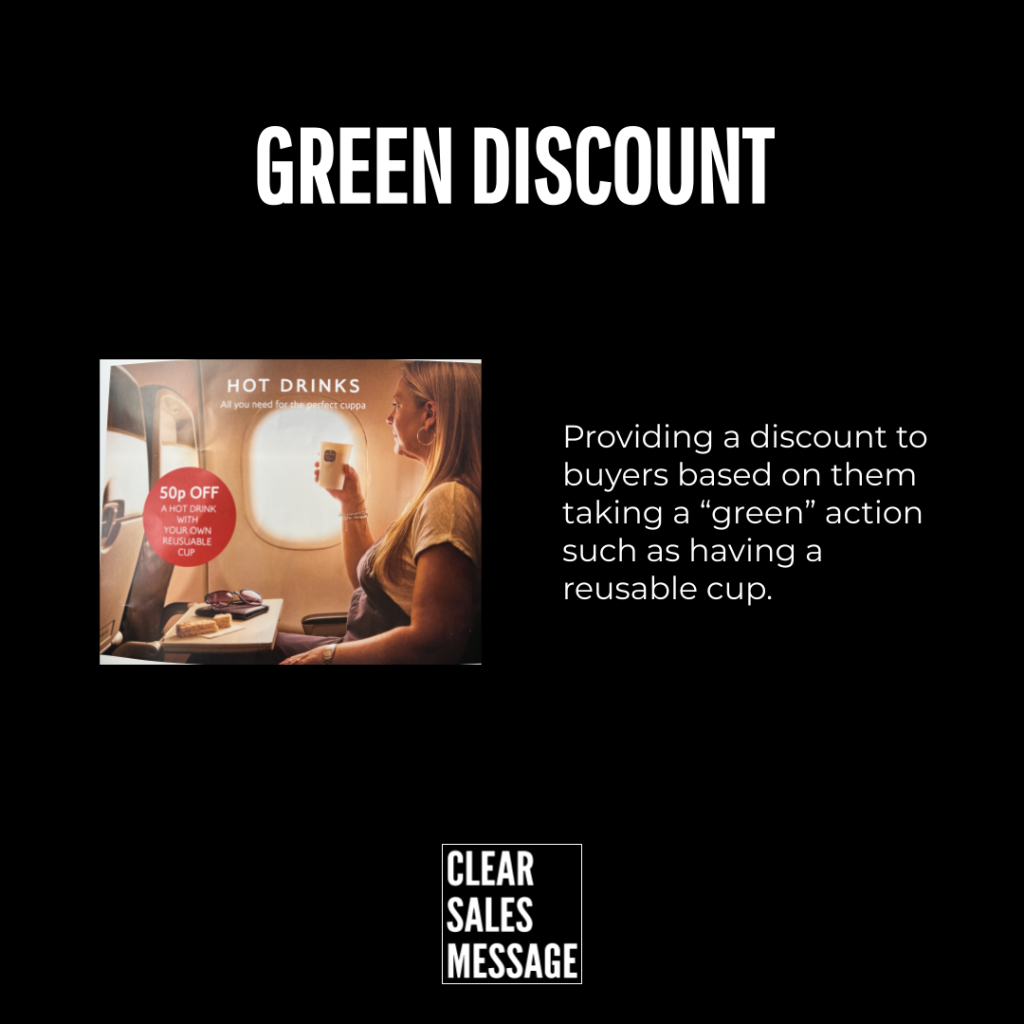
On a recent British Airways flight, this advert caught my eye in their magazine.
It offered a 50p discount for using your own cup, not a disposable one. So a small saving, tied to a small green action, in exactly the moment it mattered.

See also
- The ECO Effect
- The Refunded Incentive Effect
- Pfand System
- 180+ ways to improve conversion
- 100+ ways to differentiate