
Practical Sales Training™ > How To Convert > Pfand System

Pfand System
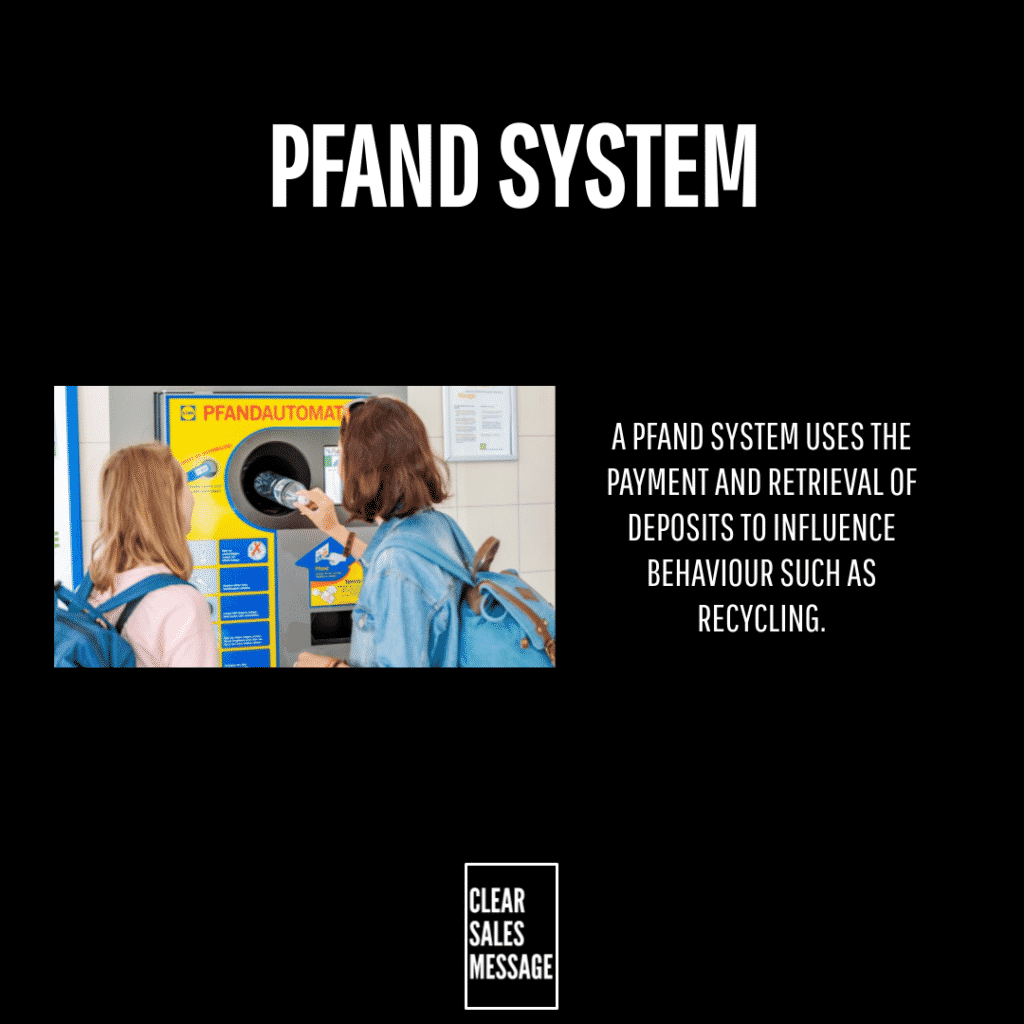
You have probably seen this in action without thinking about it. In Germany, you pay a small deposit on a drinks bottle. When you return it, you get the money back. That small amount of cash is enough to change what you do. It is a simple idea, but it is very powerful.
The Pfand System works because it puts something at stake. Buyers are not just choosing to return a bottle. They are choosing whether to lose money or get it back. That small shift in framing changes everything. Because loss feels worse than gain, most people act to avoid losing out.
In sales, however, the Pfand System is more than just a recycling tool. It is a way to build loyalty, repeat visits, and better buyer habits. So if you sell something physical that can be returned, recycled, or donated, this concept is worth thinking about.
What Is a Pfand System?
A Pfand System is a deposit scheme. A buyer pays a small extra amount when they buy something. They get that amount back when they return the item. If they do not return it, they lose the deposit. The word “Pfand” comes from German and means pledge or deposit.
The key idea is that the deposit creates a reason to act. Without it, buyers might just throw something away or not bother coming back. But with a deposit tied to the transaction, they have a clear reason to return. It creates a loop. Buy, use, return, get money back, repeat.
This is also a form of positive feedback loop. The buyer feels good about returning the item, gets a small reward, and is likely to buy again. So the system helps retention as well as behaviour change.
Why Does a Pfand System Work?
It works for three main reasons. First, it uses loss aversion. Buyers hate losing money more than they enjoy gaining it. So the thought of losing even a small deposit is enough to nudge them into acting. They return the bottle or the cup because they do not want to lose out.
Second, it ties into values. Many buyers care about the planet, about waste, and about doing the right thing. A Pfand System lets them feel good about their choice. They are not just returning a cup. They are also doing something positive. That feeling matters, because buyers are more likely to repeat a behaviour that makes them feel good.
Third, it creates a reason to come back. When a buyer has a deposit tied up in a cup or container, they have a built-in excuse to return. That second visit is a chance to sell to them again. So the deposit does double duty. It changes behaviour and it drives repeat business.
There is also the idea of immediate reward. When buyers get their deposit back, they feel a small win. That reward loop is tied to the values and dreams of your buyers. For buyers who care about eco-friendly habits, getting money back for doing the right thing feels like a win twice over.
How Can You Use a Pfand System In Sales?
Think about what you sell. If any part of your product or service involves a physical item that can be returned, reused, or recycled, you can build a Pfand System around it.
Add a Deposit at the Point of Sale
When a buyer makes a purchase, add a small deposit to the total. Make it clear that they get it back when they return the item. Keep the deposit small enough to feel fair but big enough to matter. Too small and buyers ignore it. Too large and it feels like a penalty.
Make the Return Easy
The easier the return, the more likely buyers are to do it. If returning the item means a long trip or a complicated process, most buyers will give up and lose the deposit instead. So design the return step to be simple. It should take less effort than not bothering.
Link It to a Good Cause
You can also give buyers the option to donate their deposit rather than take it back. This adds another layer of positive feeling. Buyers who choose to donate feel even better about the decision, which builds a stronger bond with your brand.
Use the Return Visit to Sell Again
When a buyer comes back to return something and collect their deposit, that is a sales moment. They are already in your shop or on your site. So use it. Offer them something new. Give them a small reward for returning. The return visit is not just an admin step. It is a chance to deepen the relationship.
When a Pfand System Works Best
A Pfand System works best when the deposit feels fair and the return process is easy. It also works well when your buyers already care about the environment or about reducing waste. Because the system appeals to both their wallet and their values, it is more likely to stick.
It works well for physical products with a clear return point. Cups, bottles, boxes, packaging, and tools are all good examples. However, the concept can also apply in other ways. A deposit on a booking, for example, works on the same principle. The buyer has skin in the game, so they are more likely to show up.
It also works well when you want to build repeat visits. Because the return step brings buyers back to you, the deposit creates natural loyalty. This makes a Pfand System a strong tool for shops, cafes, and any business that benefits from return customers.
When a Pfand System Becomes Dangerous
The biggest risk is friction. If the return process is confusing or inconvenient, buyers will just absorb the loss and walk away. That means you do not get the behaviour change you wanted, and the buyer may feel annoyed instead of good. So a Pfand System that is hard to use can damage trust rather than build it.
There is also a risk of buyers feeling trapped. If the deposit feels too large or the terms are not clear, it can feel like a trick rather than an incentive. Transparency matters here. Buyers need to understand exactly what the deposit is for and how to get it back. If they have to dig for that information, you will lose them.
Finally, the system only works if the deposit is tied to something real. A deposit that never gets returned, or that buyers cannot easily claim, will quickly get a bad name. So make sure the return mechanism actually works before you launch it.
Common Pfand System Mistakes
Setting the Deposit Too Low
If the deposit is so small that buyers do not notice it, it will not change behaviour. The amount needs to sting just enough that losing it feels worth avoiding. A deposit of a few pence is easy to write off. A deposit of £1 or £2 is not.
Making the Return Too Hard
Buyers will only go to so much effort. If the return step involves a form, a wait, or a long journey, most buyers will skip it. Because the effort outweighs the reward, the deposit stops being a motivator. Keep it simple.
Forgetting to Explain the System
Some businesses add a deposit without making it clear why it is there. Buyers who do not understand it feel confused or misled. Always explain the system at the point of sale. Tell buyers what the deposit is, how to get it back, and why it exists. Clear communication makes the whole thing feel fair rather than sneaky.
Missing the Return Visit Opportunity
When a buyer comes back to return an item, many businesses just hand over the deposit and say goodbye. That is a missed chance. Because the buyer is already there, use the moment. Show them something new. Offer a small bonus for buying again on the same visit. The return visit is a gift. Use it.
Pfand System – An Example
A local coffee shop introduces a reusable cup deposit scheme. When a customer orders their drink, they pay an extra £2 deposit. In return, they get their coffee in a reusable metal cup. When they bring the cup back, they get their £2 returned. If they keep the cup, the shop keeps the deposit, which covers the cost of the cup.
The system does several things at once. It reduces waste, because disposable cups are removed from the process. It drives repeat visits, because customers have a reason to come back. Also, it appeals to buyers who care about the environment, so the shop builds a bond with the kind of customer it wants to attract.
That is a Pfand System at work. A small deposit, a clear return step, and a result that is good for the buyer, good for the shop, and good for the planet.
See Also