Practical Sales Training™ > How To Lose The Sale > Perceived Uniqueness
Perceived Uniqueness
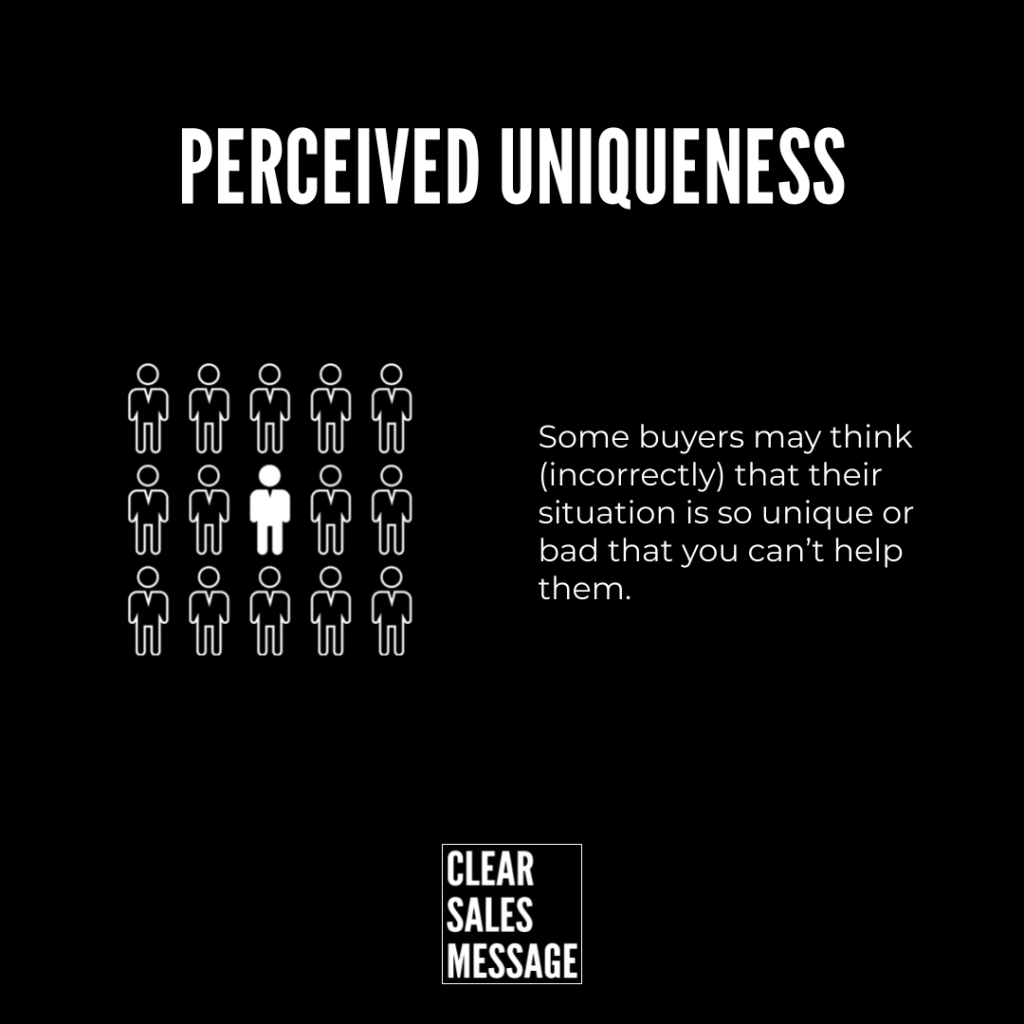
Some buyers believe their problem is too unique for anyone to fix. Even when you truly can help. So your messaging needs to speak to that exact fear, or they’ll never even ask.
Why Does It Work
If someone tries to fix an issue and it gets worse, they turn skeptical fast. Money and time spent, nothing to show. That skepticism deepens further. They start to feel like a special case. Somehow beyond help. Frustration and repeated failure do that to people. It’s a natural response, not a character flaw.
How Can You Use It
State Who You Help And What You Solve
State clearly who you work with, and name the exact problem you solve. So a skeptical buyer can see themselves in that description immediately. Recognition builds trust faster than any promise you could make.
Show How You’re Different, And Answer Their Doubts
Explain how your solution differs from the alternatives they’ve likely already tried. Then back it up with a shareable FAQ. So their specific doubts get answered before they even ask the question out loud.
When It Works Best
This works best with buyers who’ve already tried and failed elsewhere. So the more frustrated your audience, the more this messaging matters. Coaching, consulting and recovery-style offers all lean on this heavily.
When It Becomes Dangerous
It becomes dangerous if you promise a fix for truly unsolvable problems. Because false reassurance just adds another failure to their list. So only claim to help where you can truly deliver.
Common Mistakes
Speaking To Everyone, Not The Specific Skeptic
Speaking to everyone instead of the specific skeptic is the most common mistake I see. A generic promise just doesn’t land. Not with someone who feels like an exception. So name their exact situation, not a broad category.
Making The Claim Without Proof
Making the claim without proof is the second mistake. A skeptical buyer needs more than reassurance. They need a reason to actually believe it this time. So back every claim with a real method or a real result.
Perceived Uniqueness – An Example
The Career Coach
A career coach often meets professionals who feel stuck. Many believe nobody can help them land a better job. In her messaging, she says something direct.
“If you’ve sent out CVs for months, tried rewriting your LinkedIn profile, and even paid for generic career advice, only to get zero interviews, you might think you’re unhireable. You’re not. I work exclusively with mid-level professionals who feel stuck, using a proven three-step system to get you interviews and offers, even if nothing else has worked.”
She names the frustration. She’s specific about who she helps. So the skeptical buyer sees they’re not a special case beyond help.
See Also