

Practical Sales Training™ > How To Get Attention > Picture Words
Picture Words
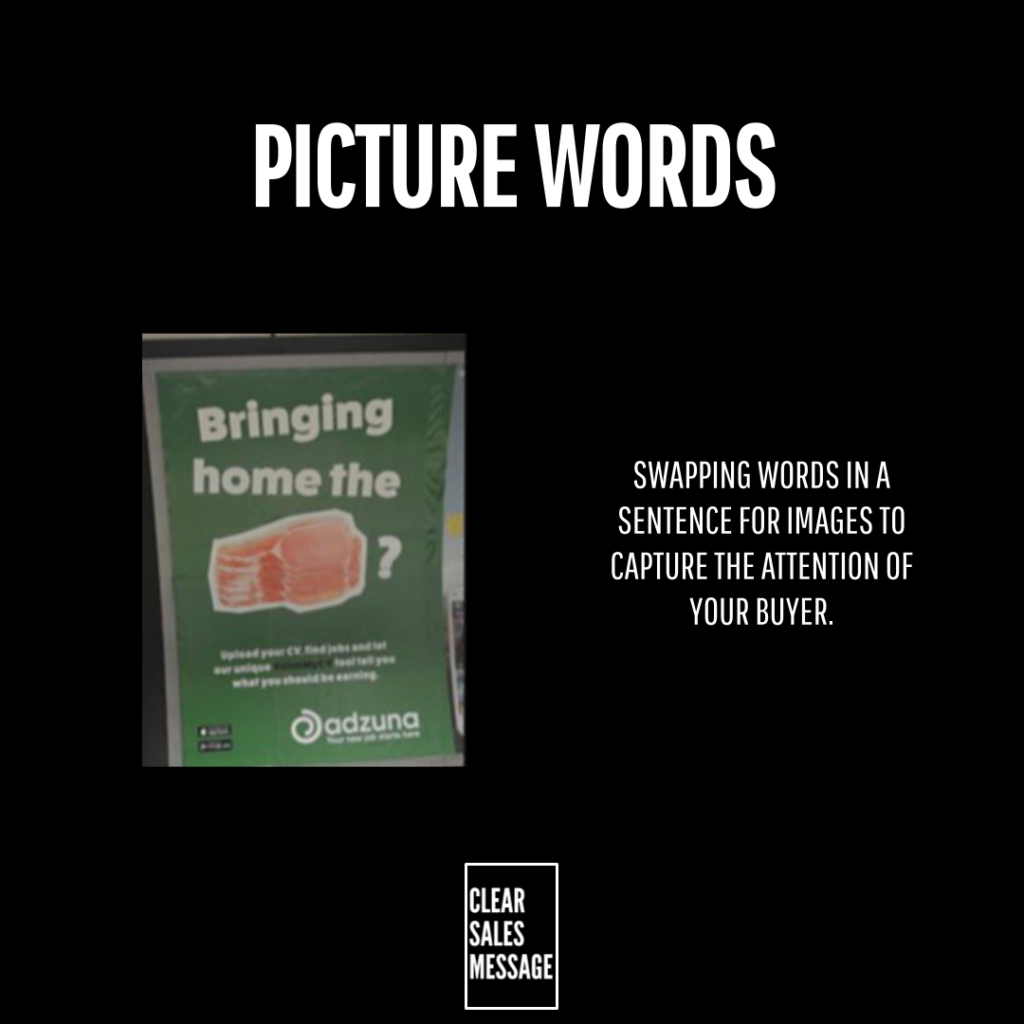
Words do a job. But images do it faster. When a buyer scans a page or a feed, an image catches the eye before a word does. So when you swap a word for a picture inside a sentence, you get the best of both. The sentence still makes sense. But the image makes it stop the scroll.
Picture Words are a simple creative technique with a real psychological punch. They work because the brain processes images faster than text, and because the unexpected replacement of a word with a picture triggers curiosity. That curiosity creates a moment of engagement that plain text rarely does on its own.
Used well, Picture Words make your message more vivid, more memorable, and more likely to be shared. Because the visual element adds a layer of meaning that words alone cannot always carry, the message lands with more impact and stays in the mind longer.
What Are Picture Words?
Picture Words are when you replace a word or phrase in a sentence with an image, an emoji, or a visual symbol that represents the same meaning. The sentence reads normally, but where a word would appear, there is a picture instead. The reader fills in the gap automatically, which creates a small moment of active engagement.
The technique works in advertising, social media, presentations, and anywhere that visual and written content appear together. It does not require a complex design. A single well-chosen emoji in the right place can be enough to create the effect.
The key is that the image must be clear. If the reader has to work too hard to understand what the picture represents, the technique fails. So the goal is always to choose an image so obvious that the reader gets it instantly, without thinking about it.
Why Do Picture Words Work?
There are two main reasons Picture Words work so well.
The first is The Bizarreness Effect. Seeing an image sitting inside a sentence where a word should be is unusual. That oddness catches the eye and holds attention for longer than a standard piece of text would. Because the brain notices things that break a pattern, the unexpected visual swap registers immediately.
The second is Semiotics. Images carry meaning beyond their literal content. A picture of a coffee cup does not just mean coffee. It can suggest warmth, morning routine, comfort, and energy all at once. So when an image replaces a word, it often communicates more than the word itself would have. That added layer of meaning makes the message richer and more memorable.
Together, these two effects make Picture Words a powerful attention tool. The bizarreness stops the scroll. The semiotics deepen the message. As a result, buyers not only notice what you have written but also remember it.
How Can You Use Picture Words In Sales?
Picture Words work best in visual formats where the image and the text have space to work together. Social media posts, display ads, presentation slides, and email headers are all strong places to use them. The technique loses its effect in dense, text-heavy formats where images feel out of place.
Swap One Key Word in a Headline
The simplest approach is to take a headline you already use and replace one word with an image or emoji that means the same thing. Because the rest of the sentence stays intact, the reader understands the message immediately. The visual swap creates the surprise without confusing the meaning.
Use Emojis in Social Media Copy
Emojis are the most accessible form of Picture Words for most businesses. On LinkedIn, Instagram, or email subject lines, a well-placed emoji inside a sentence creates visual contrast that makes the line stand out in a feed full of plain text. Choose emojis that are universally understood and directly relevant to the word they are replacing.
Use Product Images as Words in Ads
In display advertising, you can go further and replace words with actual product images or branded visuals. A food brand might replace the word “breakfast” with an image of their product. Because the image is more vivid and more specific than the word, the message is both clearer and more persuasive.
Apply It to Presentations and Proposals
Picture Words can also work in slide decks and sales documents. Replacing a word on a key slide with a strong image creates a visual anchor that buyers remember long after the meeting ends. Used sparingly, this technique makes the moments that matter most in your pitch far more likely to stick.
When Picture Words Work Best
Picture Words work best when the image is immediately obvious and the sentence still reads cleanly without it. The reader should never feel confused about what the image means. So the strongest Picture Words are built around concepts that have a single, clear visual equivalent. Coffee, money, a trophy, a heart — these all work because there is no ambiguity about what they represent.
The technique also works best when used selectively. One Picture Word in a headline creates impact. A sentence full of image replacements becomes hard to read and the effect is lost. So treat it as a highlight tool, not a style to apply throughout.
Similarly, it works better in casual or consumer-facing contexts than in formal B2B communications. In a social media ad or a consumer campaign, a playful visual swap feels natural and creative. In a formal proposal or a legal document, the same approach can feel out of place. Know your audience and match the tone.
When Picture Words Become Dangerous
The biggest risk is using an image that is not immediately clear. If the reader has to pause and work out what the picture means, the moment of engagement turns into a moment of confusion. That confusion breaks the connection you were trying to make. So always test your Picture Words on someone who has not seen them before. If they hesitate, change the image.
There is also a tone risk. Picture Words have a playful quality that does not suit every brand or every message. Using them in contexts where the buyer expects seriousness or professionalism can undermine credibility. The technique should always feel like a natural extension of your brand voice, not a departure from it.
Common Picture Words Mistakes
Choosing an Ambiguous Image
The image must do one job: replace a specific word clearly. When the image could mean more than one thing, the sentence becomes confusing. Because the reader’s brain pauses to resolve the ambiguity, the flow of the message breaks. Always choose the most obvious, universally understood image available for the word you are replacing.
Overloading the Sentence
Replacing multiple words in a single sentence with images makes it hard to read. The reader has to do too much interpretive work and the message loses its punch. One swap per sentence is usually enough. Two is a maximum. Beyond that, the sentence stops being a sentence and starts being a puzzle.
Using It in the Wrong Format
Picture Words need space and visual context to land properly. In a long body copy email or a dense document, they look out of place. Reserve them for formats where the image and the text are both clearly visible and have room to breathe. The format shapes whether the technique feels clever or just odd.
Forgetting Accessibility
Some readers use screen readers or view content with images turned off. When the key word in your message is an image, those readers may miss the point entirely. So wherever possible, include alt text for images used as Picture Words, and make sure the surrounding copy still makes sense if the image does not load.
Picture Words – An Example
A café runs an ad with the headline:
“Wake up and smell the ☕”
Instead of writing “coffee,” they use an image. The visual swap grabs attention, triggers the Bizarreness Effect, and immediately communicates the sensory experience of the morning. Because the reader fills in the word themselves, the message lands faster and feels more engaging than plain text.
A gym could use a similar approach:
“No pain, no 🏆.”
The trophy replaces “gain.” The meaning is instant. But the image carries more weight than the word would have on its own, because it makes the reward feel concrete and visual. That is Picture Words working at their best.
See Also