
Practical Sales Training™ > How To Convert > Rollover Credit

Rollover Credit
What Is It
There’s nothing worse than paying for something and never getting the benefit of it. If you sell any kind of credit or tokens, letting them rollover with no expiry changes that completely.
The buyer keeps access to everything they paid for, whenever they actually need it. That single choice makes the whole arrangement feel genuinely fair.
Why Does It Work
It works because it’s simply the fair thing to do. Charging someone for something with a hard deadline on its use feels designed for the seller, not the buyer.
By letting buyers access everything they’ve paid for, you avoid the entire issue. There’s no unfairness to argue about, and no buyer’s remorse to manage later.
How Can You Use It
Check If This Applies To You
This only works if you’re charging clients for tokens or credits, tied to access or usage of something specific. If that’s not your business model, rollover credit simply won’t apply.
Decide Your Rollover Terms
If it does apply, decide exactly what can rollover, and for how long. Communicate those terms clearly to your buyer from the very start.
Indefinite rollover is the preferred option for buyers, and it’s the recommendation here too. Even so, you’ll need to make a commercial decision on what genuinely works for your business.
When It Works Best
It works best for subscription or membership models built around recurring credits, like data, sessions, or usage tokens. Buyers in these models notice unused value immediately.
It’s also powerful in competitive markets. A rival’s rigid expiry policy makes your flexibility stand out, without any extra cost to promote it.
When It Becomes Dangerous
Rollover credit becomes risky if it’s promised but poorly tracked behind the scenes. A buyer who’s told their credit carries over, then finds it’s vanished, feels genuinely deceived.
It’s also risky financially if unlimited rollover accumulates faster than your business can sustainably deliver against. Model the numbers before making an indefinite promise.
Common Mistakes
Burying The Terms In Small Print
A rollover policy nobody knows about provides none of the trust benefit. State it clearly, somewhere a buyer will actually see it.
Promising It Without The Systems To Track It
Offering rollover credit without reliable tracking invites disputes and errors. Get the operational side right before making the promise public.
Setting Limits That Feel Arbitrary
A rollover cap with no clear logic behind it feels just as unfair as no rollover at all. Explain the reasoning, or reconsider the limit itself.
Rollover Credit – An Example
ID Mobile’s Data Rollover
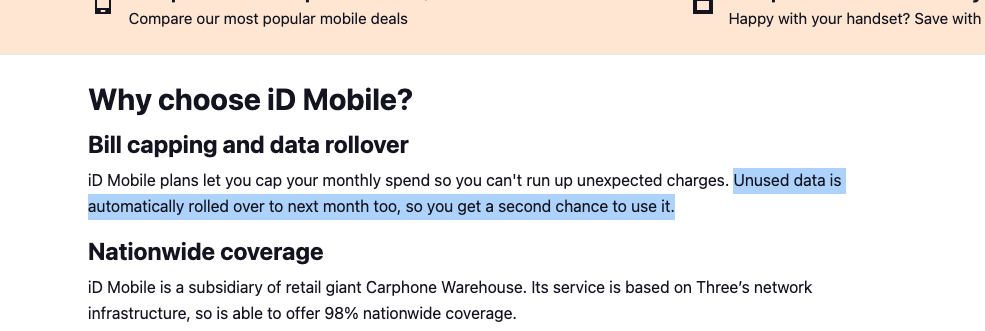
ID Mobile offers rollover of unused data on their mobile phone plans. Data a customer doesn’t use one month simply carries into the next.
That single feature removes the frustration of paying for data that quietly disappears. It’s a small mechanical change with a genuinely large impact on how fair the plan feels.
See also