
Practical Sales Training™ > How To Connect With Your Buyer > Small/Lite Version

Small/Lite Version: Shrink It To Reach A New Buyer
Not every buyer wants the full version of anything. Some want less bulk, less cost, and less to carry around. Give them that, and you’ve opened a door the full version never could.
A smaller version isn’t a lesser one. It’s a different offer for a different buyer.
What Is It
This is about creating a physically smaller, or cut down, version of what you already sell. Not a compromise. A deliberate second option.
Done well, it does two jobs at once. It helps you stand out from the competition, while also opening the door to buyers who were never in your market before.
Why Does It Work
It works for two reasons. First, being smaller or more efficient appeals to early adopters. These are the buyers who like standing right at the edge of innovation. So a leaner version feels like progress to them, not a downgrade.
Second, a smaller version usually costs less to produce. So that lets you set a lower price point. A lower price point then opens up an entirely new audience who couldn’t justify the full version before.
How Can You Use It
Stand Out With Size
Build a smaller, more streamlined version of your offering. Then use it as the contrast point against the bulkier options already sitting in the market. Smaller becomes the story, not just a feature.
Promote The Price It Unlocks
Build the same smaller, more efficient version, but lead with what it costs instead of how it looks. The size becomes the reason you can offer that price, and the price becomes the headline.
When It Works Best
This works best when your full offering has genuine bulk or cost to trim. If there’s nothing real to cut, a smaller version just feels thinner rather than smarter.
It also works best when the smaller version still delivers the core value your buyers actually came for. Cut the excess, never the reason people wanted you in the first place.
When It Becomes Dangerous
It becomes dangerous when smaller starts to mean worse in the buyer’s mind rather than smarter. A lite version that feels like a downgrade gives early adopters a reason to look elsewhere.
It also risks cannibalising your existing offering if buyers can’t see why they’d choose the bigger version at all. The smaller option needs its own clear reason to exist, not just a lower number on the price tag.
Common Mistakes
Shrinking The Product But Not The Price
If a smaller version costs the same as the original, buyers feel cheated rather than delighted. So the whole appeal collapses the moment the price doesn’t shrink along with the product.
Cutting Too Deep Into The Core Value
Trimming size is one thing. Cutting away the actual reason people wanted your product is another thing entirely. So know exactly which parts are bulk and which parts are the point.
Framing It As Less Instead Of Different
Nobody gets excited about a worse version of something. They do get excited about a smarter, leaner one built for a different moment. The framing matters as much as the product itself.
Small/Lite Version – An Example
The iPod Nano
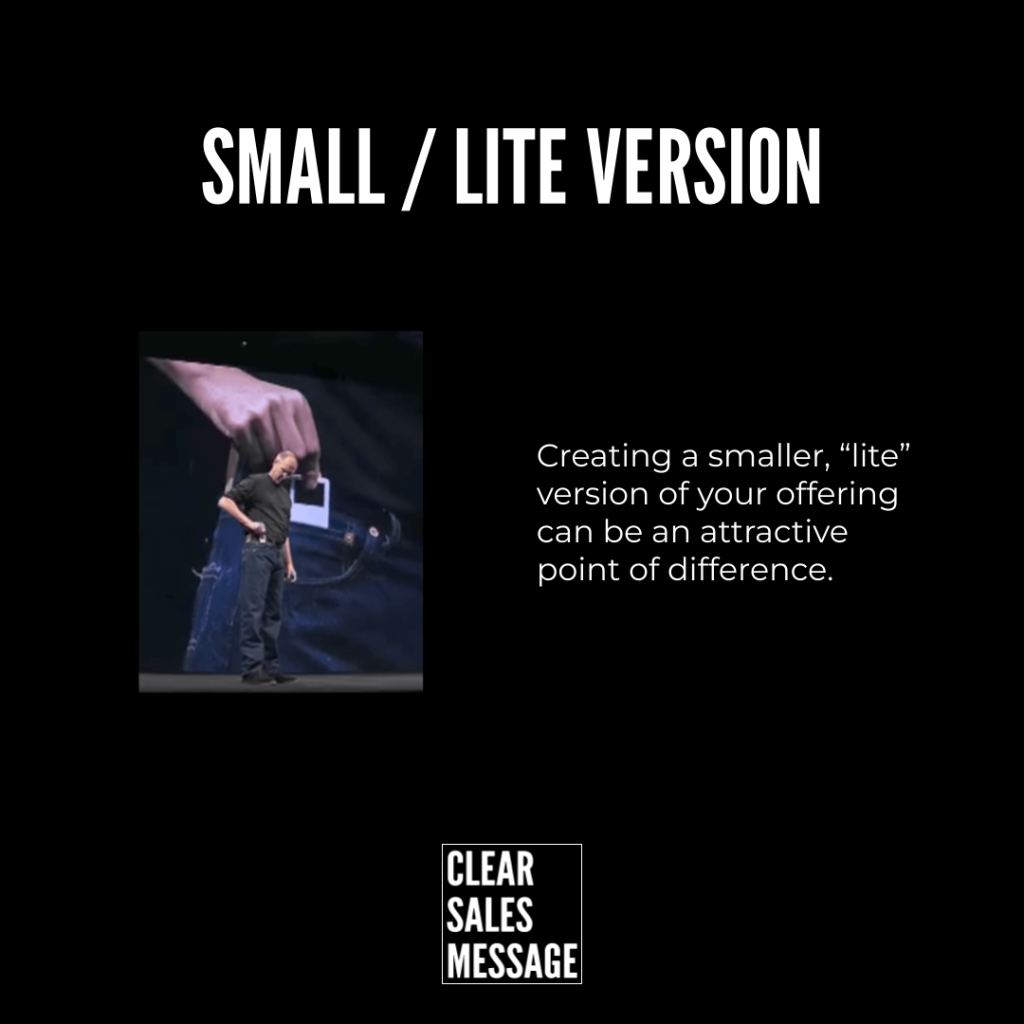
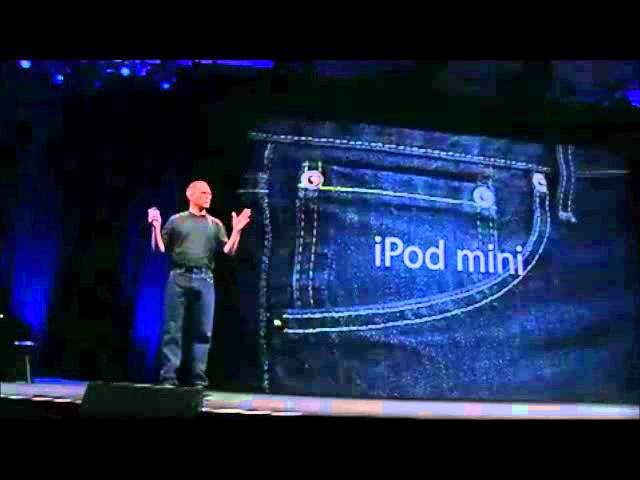
The iPod Nano is a classic example of this in action. So at its launch, Steve Jobs pointed to the small watch pocket built into a pair of jeans. He asked the crowd if they’d ever wondered what it was for.
He then pulled out the Nano and answered his own question. The moment worked because the product wasn’t pitched as a smaller, lesser iPod. Apple pitched it as the answer to a pocket nobody else had found a use for.
See Also
- The Parts Effect
- The Starter Kit
- The Budget Version
- 150+ ways to connect with your buyer
- 100+ ways to differentiate