
Practical Sales Training™ > How To Convert > The Affiliate Effect

The Affiliate Effect
The best person to sell your offer is someone who has already benefited from it. They have lived the result. Someone like that knows who else needs it. And when they recommend you, it lands in a way that no ad ever could. That is the Affiliate Effect.
An affiliate scheme formalises that. You find people who know your work and give them a financial reason to introduce you to others. Both sides win. Buyers get a trusted endorsement rather than a cold pitch.
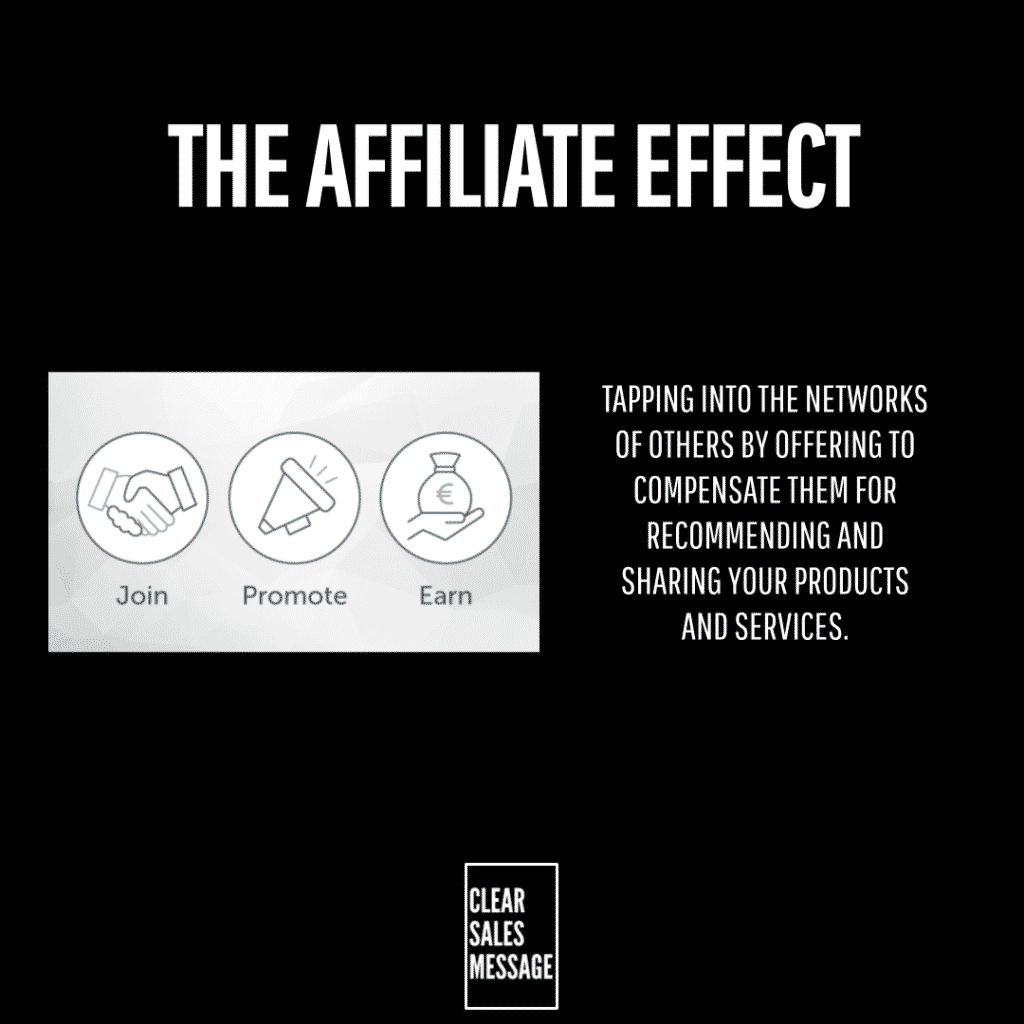
The Affiliate Effect is when you pay others to send new buyers your way. It works because a personal tip from someone who benefited is one of the strongest sales tools there is.
What Is The Affiliate Effect?
Very few things in business beat a personal recommendation. When someone you trust tells you to buy something, you listen. And when that same person earns a reward for being right, their drive to refer only grows. With skin in the game, they look for the right fit rather than just passing your name on.
Affiliates also reach audiences you would never find on your own. A blogger, a client with a large network, an influencer in your sector. Each one opens a door to a group of buyers who might never have heard of you otherwise. Because the intro comes from a trusted source, the buyer arrives warmer than any cold contact would.
There is also a credibility transfer. When an affiliate recommends your offer, they put their own name on it. That means they only refer things they truly believe in. Their name is on the line too. So the endorsement carries real weight.
Why Does The Affiliate Effect Work?
A buyer who arrives through a referral has already passed through a filter. Someone they trust looked at your offer, used it or understood it, and decided it was worth recommending. That pre-qualification saves time on both sides and raises the rate of conversion before the conversation has even started.
There is also a motivation alignment. When an affiliate earns a fee for every referral that converts, they are pushed to match your offer to the right person. Unlike advertising, which broadcasts to everyone, an affiliate scheme focuses effort on buyers who are already a good fit. Because the affiliate knows their audience, they know who to approach.
It also scales without much extra cost. Once an affiliate programme is set up and running, every referral it generates costs you nothing until it converts. That makes it one of the most efficient ways to grow, especially for businesses where margin on each sale is strong.
How Can You Use The Affiliate Effect?
Start by looking at your existing clients. Which ones are truly happy with what you do? Ask yourself which ones already mention you to others without being asked. Those are your natural affiliates. Approach them with a simple, honest proposal: refer someone who buys, and we will reward you for it.
Set the Right Fee
Decide on a fee structure that feels fair. It can be a cut of the sale, a flat fee, a credit against future purchases, or a gift. Set it too low and no one bothers; set it too high and you erode your margin. Find the level that motivates without hurting the numbers.
Keep the Mechanics Simple
Larger firms can use affiliate software that handles tracking, reporting, and payments. Smaller businesses often find that a simple spreadsheet and clear contact is enough. The technology matters less than the relationships. What matters most is that affiliates trust the process and feel rewarded fairly.
Brief Your Affiliates
Tell your affiliates who your best clients look like. The more specific you are, the more useful their referrals will be. An affiliate who understands your ideal buyer will introduce you to people who are far more likely to convert than one who just sends anyone who might be interested.
When The Affiliate Effect Works Best
This works best when the affiliate has direct experience of your offer. Someone who used your service and got results is a far more credible advocate. The one who only signed up for the fee is not. So prioritise clients over strangers when building your network.
It also works well when the affiliate’s audience is a good match. A hundred referrals from the wrong audience produce nothing. Ten from the right one can change your month. Match the affiliate to the type of buyer you actually want, not just the one with the biggest following.
It is also strong when the sales cycle is long or the purchase is high value. In those situations, buyers rely heavily on trusted tips because the stakes are high. A referred buyer arrives with a level of trust that cold outreach would take weeks to build.
When The Affiliate Effect Becomes Dangerous
The main risk is affiliates who refer indiscriminately. When someone sends leads regardless of fit, the buyer who shows up is often unsuitable. That wastes time and hurts the bond with both the affiliate and the new contact. Brief your affiliates clearly and ask them to refer with your best clients in mind.
There is also a risk of the fee structure drawing the wrong motivation. When someone refers your offer purely for the money, buyers can sense the lack of real belief. The most effective affiliates are the ones who would mention you anyway. A fee is a thank-you, not the reason.
Common Affiliate Effect Mistakes
Setting It Up and Walking Away
The most common mistake is setting up the scheme and walking away. Affiliates need nurturing. Check in with them. Update them on new offers. Remind them what to look for. An affiliate silent for months will not be thinking of you when a chance comes up.
Making It Hard to Use
A second mistake is making the scheme hard to join or to track. If an affiliate struggles to sign up or track their referrals, they will give up quickly. Keep the mechanics simple and the contact clear. Friction kills affiliate schemes before they get started.
Recruiting for Reach Instead of Fit
A third mistake is recruiting affiliates based on reach rather than fit. An influencer with a large following in the wrong sector generates noise, not leads. So recruit affiliates whose audience matches your ideal buyer. A smaller, better-matched network will always outperform a large, poorly matched one.
The Affiliate Effect – An Example
Amazon Associates is one of the most well-known examples of the Affiliate Effect. Bloggers, influencers, and site owners earn a cut for every purchase made through their referral links. Amazon reaches audiences it could never access directly. Affiliates earn by promoting products they use and trust. Because the tip comes from a trusted source, conversion runs far higher than a standard ad would achieve. The scale is exceptional, but the idea works at any size.

That is the Affiliate Effect. Your clients become your sales team. Their credibility becomes your edge. And the buyer who arrives through a referral is halfway sold before they have spoken to you.
See Also