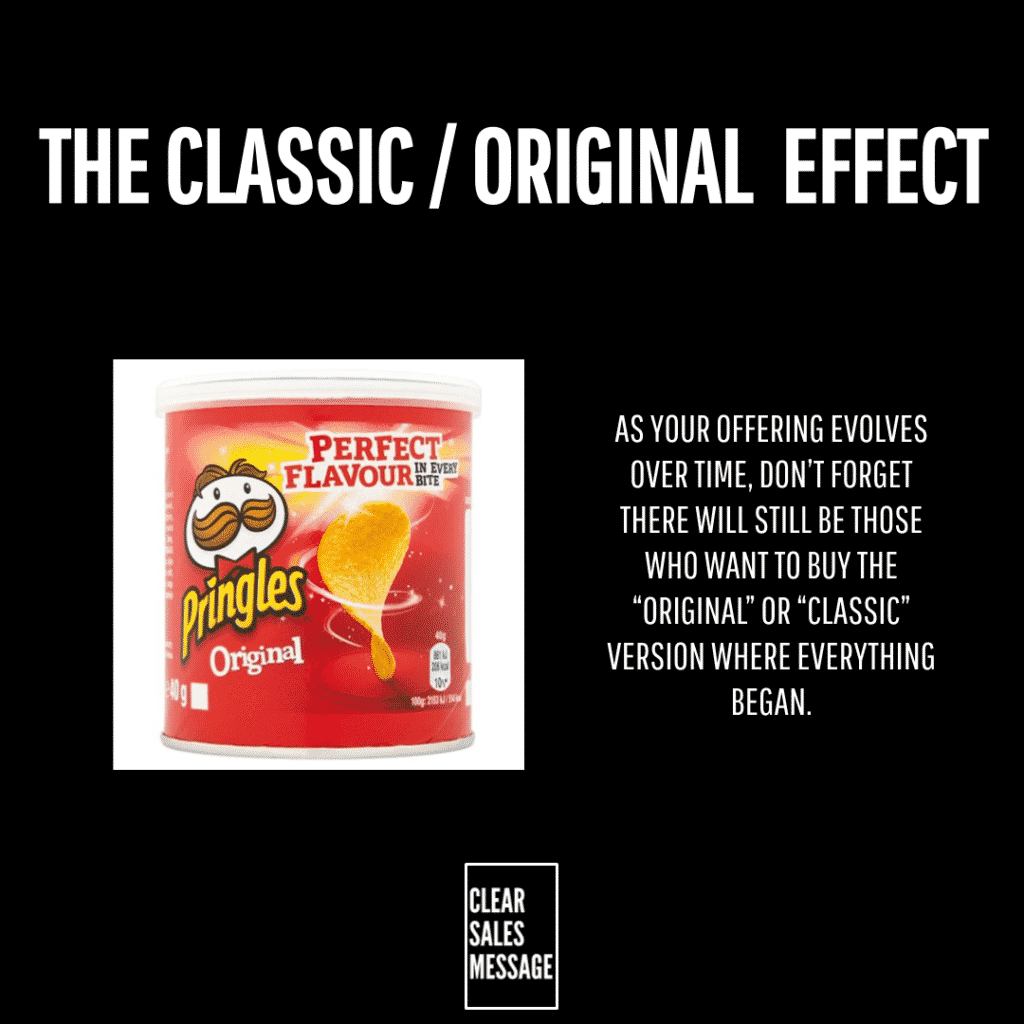
Practical Sales Training™ > How To Connect > The Classic / Original Effect
The Classic / Original Effect
Most businesses change over time. New products, new versions, new directions. That’s healthy. But it can also leave early buyers feeling forgotten.
The Classic / Original Effect protects against that. So no matter how far your offering evolves, the original version stays right where it started.
And that single decision keeps you connected to the people who backed you from the beginning.
What Is The Classic / Original Effect?
The Classic / Original Effect is all about focusing on the core things that you offer, ensuring that however your offering changes, your buyers can still access the original version where everything started.
It’s a deliberate choice to keep one thing constant, even while everything else around it evolves.
Why Does The Classic / Original Effect Work?
It works because, although offerings adapt over time to stay relevant in the marketplace, there will always be a need for the first thing you offered, the reason you’re in business at all.
Retaining a “classic” or “original” version of your offering ensures that as things change, you don’t alienate your core or early buyers by becoming irrelevant to them.
How Can You Use The Classic / Original Effect In Sales?
Go back to where it all began
Where did everything begin for you? What’s the actual reason your business, product, or service was created in the first place?
Make the original easy to find
If your offering has adapted over time, think about how to make sure buyers know the original thing you’re known for is still on offer, clearly labelled, not buried.
Lean into the history
By keeping a classic or original version, you can also tap into the history of your offering, or nostalgia more broadly, which adds emotional weight beyond the product itself.
When The Classic / Original Effect Works Best
It works best for brands with a genuine history and loyal early customers, since those are the people most likely to feel the pull of the original version.
It also works well when newer versions of your offer have drifted noticeably from where you started, because the contrast makes the original feel more meaningful by comparison.
When The Classic / Original Effect Becomes Dangerous
It becomes dangerous if keeping the original version holds your business back from genuinely necessary change, since nostalgia shouldn’t come at the cost of staying relevant.
It can also confuse buyers if the difference between “classic” and your newer offerings isn’t communicated clearly, leaving people unsure which one actually suits their needs.
Common Classic / Original Effect Mistakes
Quietly discontinuing the original
If you let your original offering fade away without saying so, loyal buyers can feel blindsided. So be upfront about any changes to it.
Not explaining the difference clearly
Buyers shouldn’t have to guess what makes the classic version different from your newer ones. So spell it out plainly.
Letting it hold the business back
Keeping a classic version shouldn’t mean avoiding necessary innovation elsewhere. So treat it as one option among several, not a reason to stand still.
The Classic / Original Effect – An Example
Coca-Cola Classic
Coca-Cola regularly releases its “Coca-Cola Classic” branding to remind buyers of the original formula, even though they’ve introduced countless variations like Coke Zero or Cherry Coke.
This appeals to customers who want the nostalgia and reliability of the first, iconic version, no matter how many new options sit on the shelf beside it.
See also