

Practical Sales Training™ > How To Convert > The Deposit Effect
The Deposit Effect
Someone wants what you sell. Then they see the price and pause.
A deposit fixes that pause fast. So your buyer can commit today, without paying it all right now.
What Is It?
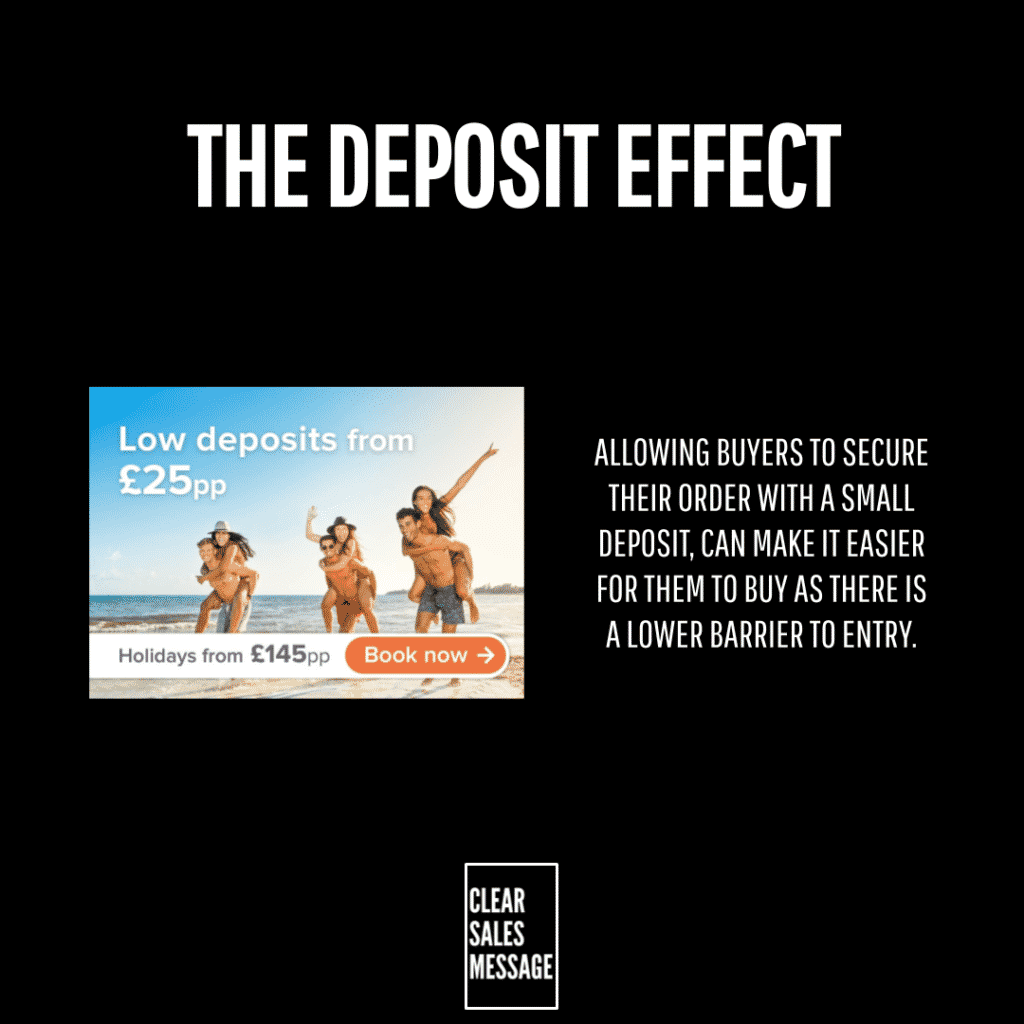
A Deposit Effect lets your buyer secure their order with just a deposit. They pay a portion now. So the rest comes later, once they’re ready or once you finish the work.
Why Does It Work?
Money stops people more than desire ever does. A deposit removes that block early.
Your buyer feels safe. They’ve locked in the deal, but they haven’t emptied their account to do it. That’s a fair trade for both sides.
How Can You Use It?
Look at where your buyers stall. If price is the block, a deposit option also helps.
Decide The Split
Set the deposit low enough to feel easy, but real enough to show commitment. A small deposit still works, as long as your buyer feels tied in.
Set The Timing
Decide when the rest is due. Tie it to a date, a milestone, or delivery. So your buyer knows exactly what happens next.
State The Terms Clearly
Spell out the deposit amount and the balance date up front. If your terms are vague, buyers hesitate. Clear terms build trust instead.
When It Works Best
A Deposit Effect works best when your price makes buyers pause. Your offer still needs to be strong enough to pull them in.
It also works well when there’s a gap between order and delivery. That gap is exactly where a deposit earns its keep.
When It Becomes Dangerous
A deposit can backfire if you price it too low to matter. So your buyer has little reason to follow through.
It also backfires if you never chase the balance after that. Unpaid deposits cost you time and stock for nothing.
Common Mistakes
Setting The Deposit Too Low
A token deposit signals a token commitment. Price it so your buyer actually feels the stake.
Being Vague About The Balance
If buyers don’t know what they owe, or when, trust slips. Put the balance date in writing every time.
Forgetting To Follow Up
A deposit only starts the job. So chase the balance the same way you chased the sale.
Other Ways To Structure Payment
A deposit is just one option. There are also five more ways to structure how buyers pay.
Pay Now Start Later
A Pay Now Start Later approach lets buyers secure something today. They don’t use it until they’re ready.
Pay On Results
A Pay On Results model pays you once you deliver. Your buyer only pays for the outcome they wanted.
Pay As You Go
A Pay As You Go setup lets buyers pay as they use it. There’s no big bill upfront.
Prepayment
A Prepayment plan lets buyers build up a credit balance. They draw it down over time.
Buy Now Pay Later
A Buy Now Pay Later option lets buyers take what they want today. They settle up further down the line.
Finance
Offering Finance or instalments eases the cashflow strain on your buyer. It can win you the sale outright.
The Deposit Effect – An Example
Securing A Wedding Booking
Say you run a photography business, and a wedding package costs £1,000. Instead of asking for it all upfront, you say this:
“Secure your date with just a £200 deposit. The rest isn’t due until two weeks before the big day.”
Now the offer feels accessible, even to cash conscious couples. Your buyer feels in control. You’ve locked in the booking early, with no pressure on either side.
See Also
180+ ways to improve conversion
140+ ways to be easier to buy from