
Practical Sales Training™ > How To Convert > The Points Effect

What is it?
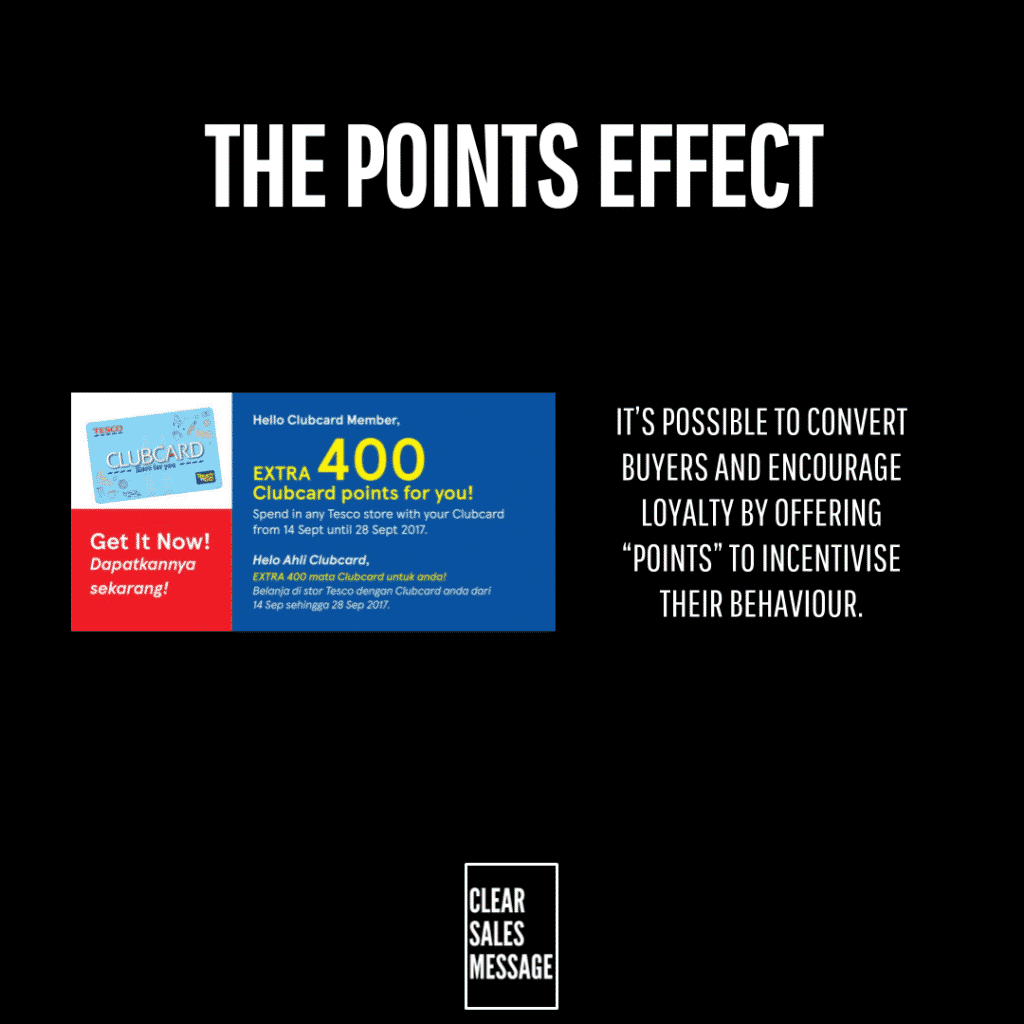
You can encourage buyers and maintain loyalty by offering points for each purchase. These points can then be exchanged for goods, cash or something else at a later date.
Why does it work?
It works because we are biased towards rewarded behaviour. It’s a form of gamification– even if the cash value of the points is 20p, using points to incentivise behaviour will be more effective than simply offering a 20p discount.
How can you use it?
Depending on your offering, think about how you could incentivise buyers to take certain actions such as buying, subscribing or making a repeat purchase by rewarding their behaviour with points that can then be redeemed for cash, discounts or other goods. What would be the lowest cost to you, but of the highest value to your client?
A great example of the Points Effect would be Tesco Clubcard in the UK where points can be used to buy vouchers for meals or days out.
Example:
A pet supply store introduces a “Paw Points” program:
-
Earn 1 point for every £1 spent
-
100 points = £5 off your next purchase
-
Bonus points for referrals, reviews, and birthday month purchases
They also partner with local dog groomers and cafés, allowing points to be exchanged for free treats or services.
Why it works:
-
Buyers feel rewarded for loyalty
-
Points feel like progress, encouraging repeat behaviour
-
It adds a fun, gamified layer to regular purchases
-
The perceived value of the points outweighs the actual cost to the business
Even better, it builds a relationship – not just a transaction.
See also