

Practical Sales Training™ > How to connect with your buyer > The Real Time Effect
The Real Time Effect
What Is It
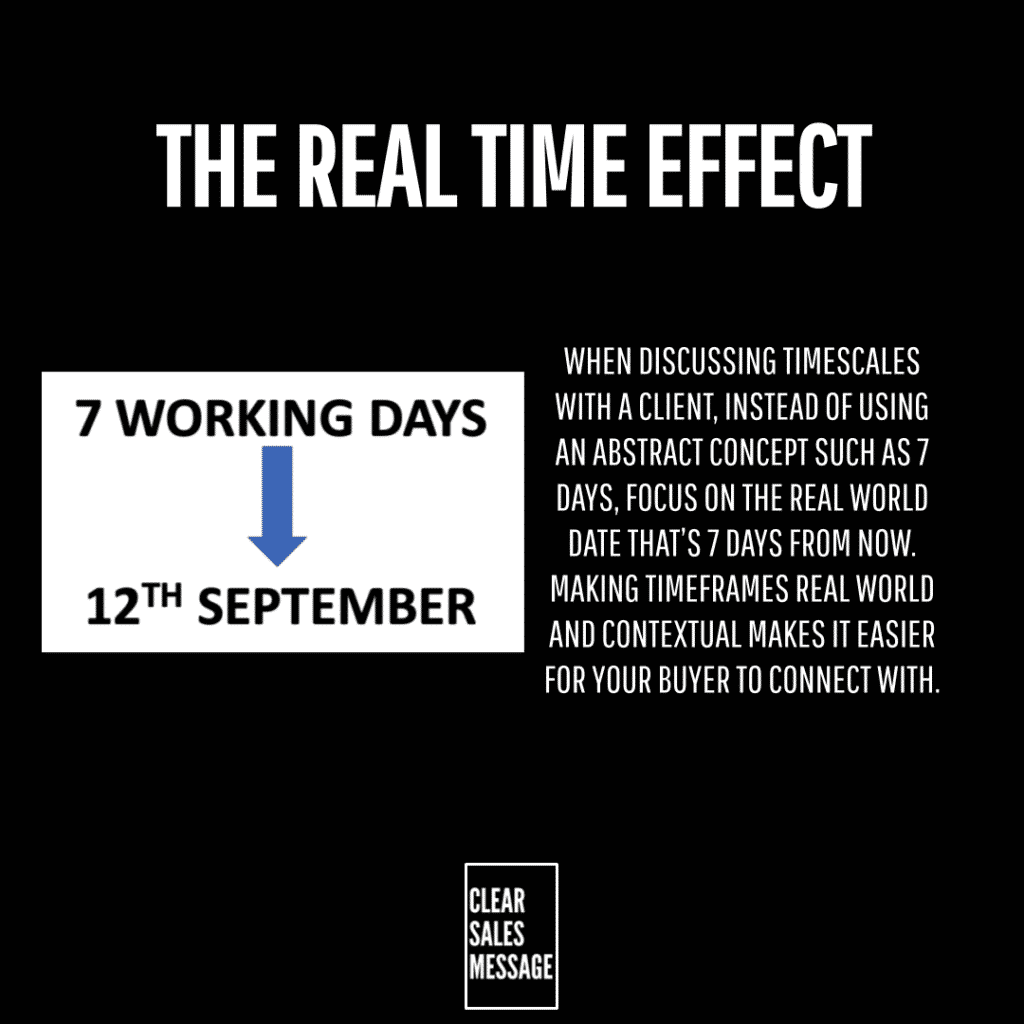
When speaking with clients about timescales, it’s more effective to use real world timings, like the 12th of September, rather than abstract concepts, like 7 working days.
Both statements might mean the same thing on a calendar. But they land completely differently in a buyer’s head.
One asks the buyer to do maths. The other just hands them the answer.
Why Does It Work
It works because it lets your buyer understand, in a real world and contextual way, precisely when they can expect your offering to arrive or deliver its result.
Making this small shift, from abstract to real world, takes your buyer a step closer to buying. They can imagine your offering in their world, on their terms, on a specific date.
An abstract timeframe stays in the buyer’s head as a number to calculate. So a real date becomes a moment they can actually picture, plan around, and look forward to.
How Can You Use It
Swap the countdown for a calendar date
Depending on your timescales, experiment with using real time instead of abstract concepts in your conversations and your proposals. If you have a website and sell from it, consider adding this to let visitors and buyers know precisely when to expect something, before they even order it.
Borrow the language the big retailers already use
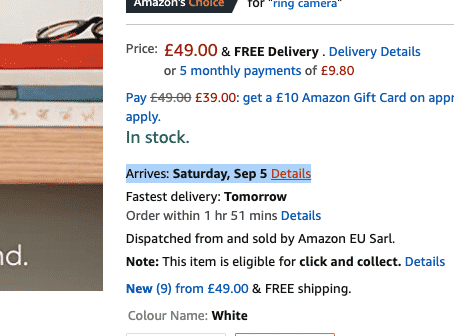
You’ll notice that Amazon already use this technique in their product listings, advising when an item arrives. The word “arrives” subtly implies you’ve already decided to buy, not that you’re still deciding.
Add a ticking clock behind the date
It also gives you a countdown timer to hit that delivery timescale, which adds a level of scarcity and urgency to the whole thing. The date does the reassuring. The countdown does the nudging.
When It Works Best
This works best on anything with a clear delivery or completion window, physical products, service start dates, project timelines.
It also works best when the date is genuinely reliable. A confident, specific promise only helps if you can actually keep it.
When It Becomes Dangerous
It backfires the moment the real date turns out wrong. A specific promise that gets missed damages trust far more than a vague one ever could, since there’s nowhere to hide behind ambiguity.
It also becomes risky if you use it to manufacture false urgency. A countdown timer that resets the moment someone refreshes the page teaches buyers not to trust your deadlines at all.
Overpromising the date just to close a sale faster causes its own damage too. The buyer remembers the broken date far longer than they remember the sale itself.
Common Mistakes
Giving a date with no real confidence behind it
A specific date only works if you can actually hit it. Guessing and hoping is far riskier than staying vague in the first place.
Mixing real dates with vague language elsewhere
A precise delivery date sitting next to “processing may take some time” undoes the clarity you just built. Keep the specificity consistent throughout.
Forgetting to update the date as time passes
A countdown or delivery date that’s clearly stale, still showing yesterday’s promise, reads as broken rather than exciting. Keep it live, or don’t use it at all.
The Real Time Effect – An Example
Amazon Delivery Dates
Retailers like Amazon and eBay will tell you exactly when you can get something delivered, if ordered within a certain timeframe.
The listing doesn’t just say “fast shipping available.” It names the actual day, and pairs it with a countdown showing how long you have left to order and still get it by then.
See also