
Practical Sales Training™ > How To Convert > The Recommended By Effect

The Recommended By Effect
What Is It
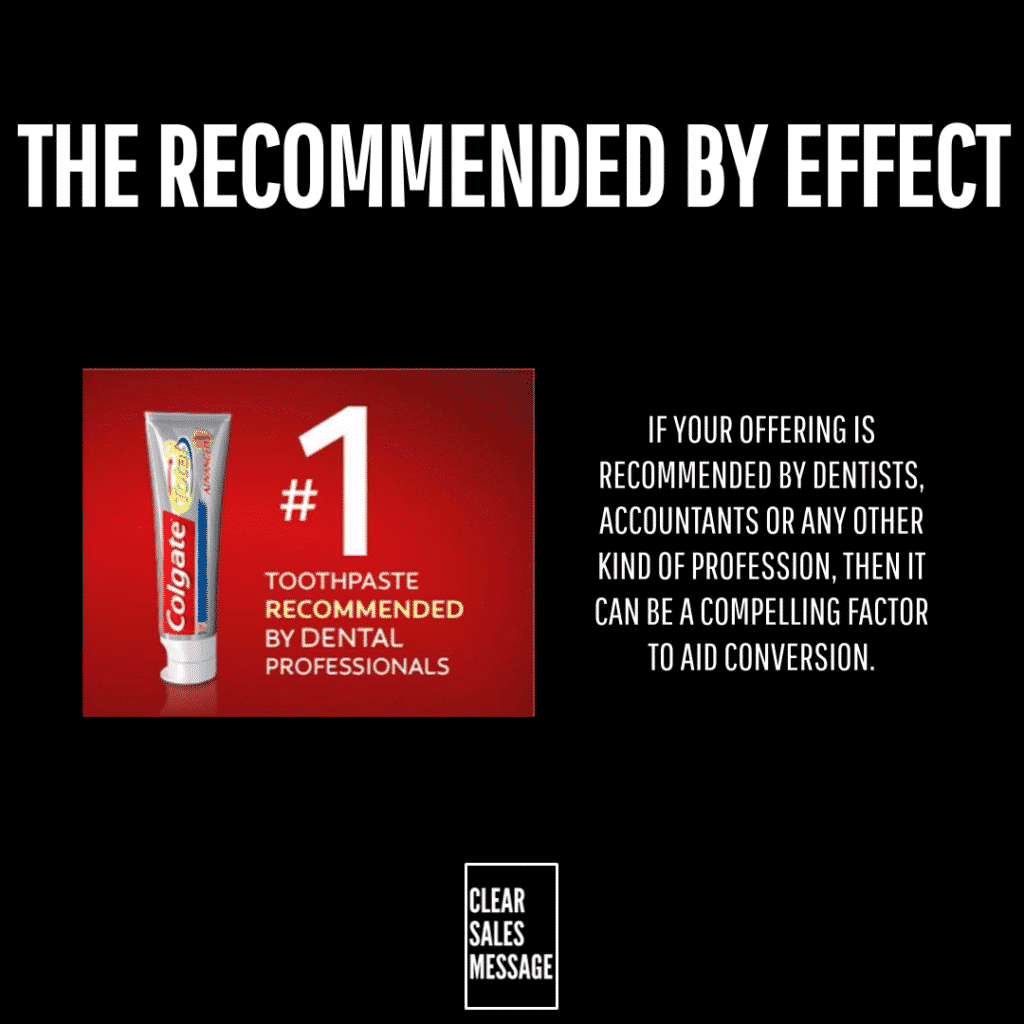
The Recommended By Effect is about promoting notable people or organisations who recommend your offering. Not just a review. An actual endorsement from someone worth listening to.
It’s a step beyond a testimonial. A testimonial says a customer liked it. A recommendation means an expert or authority will put their own name behind it.
That distinction changes how much weight it carries with a new buyer.
Why Does It Work
It works because it’s an example of social proof. Dentists recommending your toothpaste implies more than just “it works.” It implies it works well enough to be worth sharing with others.
Buyers are looking for the elimination of risk. So a recommendation from others implies your offering works so well that your own clients become advocates for it.
There’s a quiet transfer of judgement happening too. The buyer doesn’t have to trust you yet. They just have to trust whoever already vouched for you.
How Can You Use It
Actively seek out the right advocates
If you don’t already have advocates who recommend your offering, select notable and respected people or organisations instead. Reach out to associations, groups, businesses, and notable people. That outreach can lead to a genuine recommendation.
Treat the relationship as two way, not transactional
Reaching out doesn’t just help you get recommended. It can also improve your offering through valuable feedback. The people worth being recommended by usually know their audience better than you do.
Put the recommendation where the decision happens
A great recommendation buried in a blog post does little. Show it right where a buyer is deciding, on the product page, the pricing page, or the checkout itself.
When It Works Best
This works best when the recommending party is genuinely relevant to your buyer’s decision, not just famous in general. A specialist’s endorsement usually beats a celebrity’s.
It also works best when the buyer can verify it easily. A recommendation with a name, a face, or a real organisation lands far harder than a vague, unnamed one.
When It Becomes Dangerous
It backfires if someone passes off a paid endorsement as genuine. Buyers spot sponsored endorsements more and more easily. That discovery costs more trust than the boost ever gave.
It also becomes risky if the recommending party’s reputation later takes a hit. Your credibility now ties partly to theirs, for better or worse.
Overusing endorsements dilutes them too. A page covered in logos and quotes starts to look like it’s compensating for something, rather than genuinely well regarded.
Common Mistakes
Chasing fame instead of relevance
A recommendation from someone unrelated to your buyer’s world does far less. A smaller, but genuinely relevant, authority beats a bigger irrelevant one every time.
Hiding the recommendation instead of featuring it
Mentioning it once in a footer wastes most of its power. Put it somewhere a buyer sees it at the exact moment they’re weighing you up.
Letting it go stale
An outdated award, or an endorsement from years ago, can raise more questions than it answers. Keep your recommendations current, or explain the context clearly.
The Recommended By Effect – An Example
A Camping Power Bank
An industry relevant camping guide recommends this camping power bank. That relevance is the whole point. The recommendation comes from a source the exact buyer already trusts.
Alongside the recommendation sits a design award and a customer count, so the endorsement doesn’t stand alone. Together, they build a quick, layered case for choosing this product over an unfamiliar alternative.

See also