
Practical Sales Training™ > How to connect with your buyer > The Sold Out Effect

The Sold Out Effect
What Is It
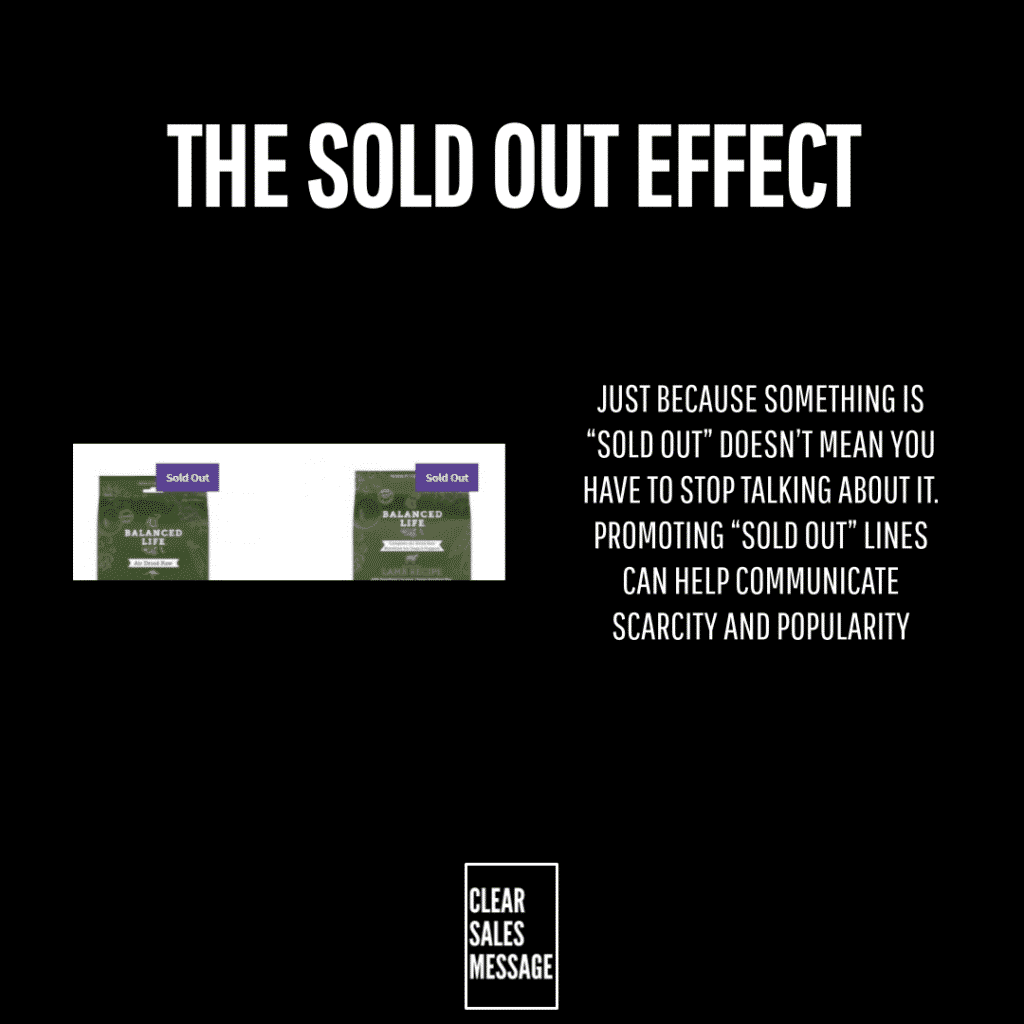
Just because something is no longer available for sale doesn’t mean you can’t use it to sell what you have left. A sold out sign isn’t the end of the conversation.
Most businesses treat sold out stock as old news, something to remove quietly. This effect treats it as proof instead.
It turns an absence into evidence that people wanted the thing badly enough to buy it all.
Why Does It Work
It works because when something is sold out, it communicates scarcity, implies real demand, and leads to FOMO. Your buyers may be disappointed the thing they want isn’t available right now, but it can encourage them to buy something else, or even join your waiting list.
Many businesses don’t talk about their sold out offerings, since they feel it’s not important. After all, if it’s sold out, why promote it?
But having sold out lines communicates so many positives about your business that it’s well worth doing. It quietly proves other people wanted what you sell.
How Can You Use It
Highlight it like you would a new arrival
This works for physical products that can actually sell out. Make graphics or images to highlight lines currently out of stock, the same way you’d highlight something new or on special offer.
Point buyers somewhere else, not just to a dead end
A sold out message with nowhere to go wastes the moment. A waitlist link, or a nudge toward a similar in-stock item, turns disappointment into a next step.
Reuse it across more than one channel
The main thing to understand is that just because something isn’t available, doesn’t mean it’s not worth talking about, on your site, on social media, and in your emails.
When It Works Best
This works best with physical, limited stock products, seasonal items, small batches, or anything with a genuine, real cap on supply.
It also works best when there’s a clear next step waiting, a waitlist, a similar product, or a next release date the buyer can actually act on.
When It Becomes Dangerous
It backfires if the sold out status isn’t genuine. A “sold out” label used purely for effect gets exposed quickly, and it damages every future scarcity claim you make.
It also becomes risky if it leaves buyers with nowhere to go. Highlighting scarcity without a waitlist or alternative just creates frustration instead of momentum.
Overusing the tactic dulls it too. If everything is constantly “almost sold out,” buyers stop believing any of it.
Common Mistakes
Removing sold out items instead of showcasing them
Deleting a sold out product from the site erases free proof of demand. Keep it visible, with a clear note that it sold out fast.
Not offering a next step
A sold out message with no waitlist or alternative wastes a buyer’s genuine interest. Always give them somewhere to go next.
Faking scarcity to create the effect
Marking something sold out when it isn’t gets discovered eventually, and it costs you trust across every genuine claim you make afterward.
The Sold Out Effect – An Example
An Artisan Candle Brand
Business Type: Artisan candle brand
Product: Limited-edition “Winter Spice” candle
How they use it:
On their homepage:
❌ Winter Spice – Sold Out (join the waitlist for next year)
On Instagram:
“You sold us out! 🕯 Winter Spice flew off the shelves. Missed it? Join the waitlist and be first in line next season.”
In their email footer:
“Last year’s top 3 scents – 2 sold out in under a week.”
Why it works: It highlights popularity and builds trust, since others clearly loved it. It drives urgency for other in-stock items, before they’re gone too, and collects leads through waitlists for future launches. Altogether, it reinforces the brand as desirable and genuinely in demand.
See also