
Practical Sales Training™ > How to connect with your buyer > The Should Effect

The Should Effect
What Is It
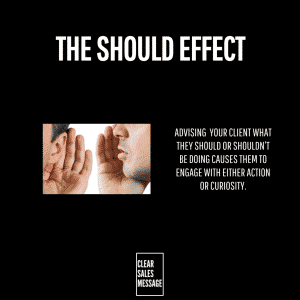
The Should Effect principally involves telling your client what they “should” or “shouldn’t” be doing in their current situation. Not a suggestion, a direct piece of guidance.
It works differently to most sales language. Instead of asking what a buyer wants, it tells them what they need, based on your expertise.
That directness only works because it’s backed by real authority, not just confidence alone.
Why Does It Work
It works because, as providers of products and services, we’re deemed to be knowledgeable authority figures. If a person of authority advises you that you “should” or “shouldn’t” be doing something, you’re more likely to take heed.
There’s weight in that word that a softer suggestion doesn’t carry. “You could consider” invites debate. “You should” states a conclusion.
People generally defer to expertise when they lack it themselves, and this effect leans directly into that instinct.
How Can You Use It
Confront both the action and the inaction
By confronting your clients with the ongoing effects of both action and inaction in their current situation, you can get them to understand and engage with your offering.
Let understanding do the persuading
Once a client understands why they should or shouldn’t do something, they’re more likely to buy. And if they don’t buy, the nagging feeling that they’ve gone against the advice of an authority figure may cause them to reconsider later.
Earn the authority before you use the word
This only works if the authority is genuine. Establish real expertise first, through credentials, experience, or evidence, before leaning on a directive tone.
When It Works Best
This works best when you’re speaking to someone who’s genuinely stuck, and can’t easily see their own situation clearly from the inside.
It also works best when your authority is already established. A stranger telling someone what they “should” do carries far less weight than an expert with a track record.
When It Becomes Dangerous
It backfires if it comes across as condescending rather than expert. Telling someone what they should do without earning the right to say it reads as presumptuous.
It also becomes risky if the advice turns out wrong. A confident “you should” that leads somewhere bad damages trust far more than a softer, hedged suggestion would have.
Overusing this tone flattens it too. If every sentence tells the buyer what they should do, it starts to feel like nagging rather than genuine guidance.
Common Mistakes
Using the tone before earning the authority
A directive “should” from someone with no established credibility sounds arrogant rather than helpful. Build the trust first.
Focusing only on the problem, not the path forward
Pointing out what someone should stop doing, without a clear next step, leaves them stuck rather than motivated to change.
Overusing “should” until it feels like nagging
One well placed “should” carries weight. Ten in a row starts to feel like a lecture instead of expert guidance.
The Should Effect – An Example
A Business Coach
A business coach is speaking to a potential client who’s overwhelmed with tasks and struggling to grow. Instead of just pitching their coaching program, they say:
“You shouldn’t still be doing your own bookkeeping, chasing unpaid invoices, and managing every client interaction personally. At this stage, you should be focused on strategy and growth. Every week you delay that shift is costing you time, energy, and revenue.”
Why it works: It positions the coach as a trusted authority, and clearly outlines both the mistake, inaction, and the ideal, action. It also subtly implies the buyer is currently acting against their own best interest, while offering a clear path to fix it.
See also
- The Because Effect
- The Also Bought Effect
- 150+ ways to connect with your buyer
- 100+ ways to get your buyer to take action