
Practical Sales Training™ > How to connect with your buyer > The Strength Effect

The Strength Effect
What Is It
The Strength Effect is about showing the strength of your offering, so your buyer knows both what to expect and if it suits their needs. Not a vague quality claim, an actual measure.
Most products stay silent on this. They call themselves “great” or “powerful” without ever saying how great, or how powerful.
A strength measure fills that gap with something a buyer can actually judge for themselves.
Why Does It Work
It works because it cuts down on real risks and unknowns, giving the buyer the information and opportunity they need to buy. If you know how “strong” something is before you buy it, you know if it’s enough for your needs, or too much, or too little.
Without that measure, a buyer has to guess. And a buyer who guesses wrong often just walks away rather than risk it.
A clear strength rating removes that guesswork entirely, and lets the buyer match the product to their own situation with confidence.
How Can You Use It
Find the right variable to measure
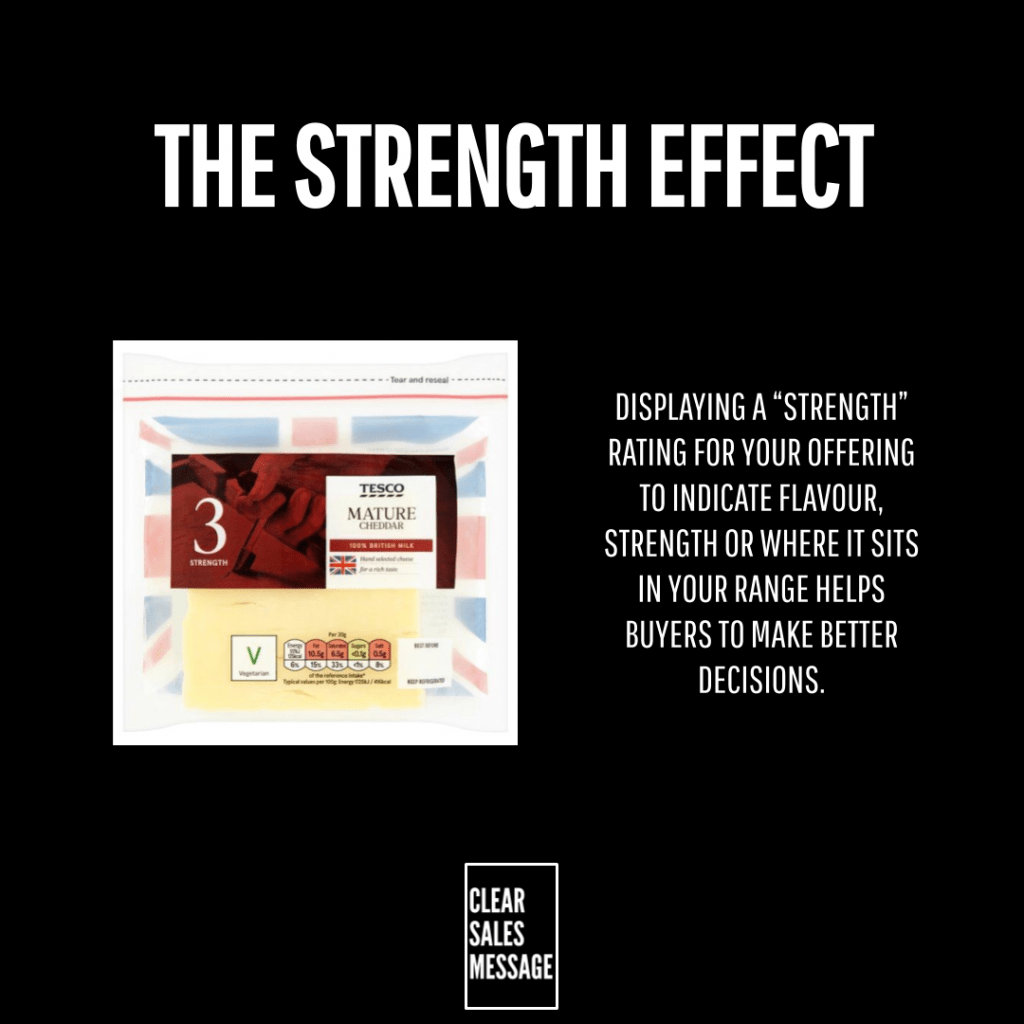
Depending on your offering, how could you show the strength of what you sell, and what that might mean for your buyer? Would the strength measure the time, output, or speed of your offering? Pick the variable that’s most relevant to your buyer, such as the strength of a cheese.
Make the number mean something to a beginner
A strength scale only helps if buyers understand it without needing an explanation. Use a familiar comparison wherever you can, one they already understand from everyday life.
Show what it replaces, not just its own scale
Comparing your product’s strength to the thing a buyer already uses gives them an instant reference point, far more useful than a number on its own.
When It Works Best
This works best where “strength” genuinely varies within your category, and a buyer would otherwise struggle to tell products apart.
It also works best when there’s a real risk in getting the wrong strength, too weak to work, or too strong for the buyer’s actual need.
When It Becomes Dangerous
It backfires if the stated strength doesn’t match reality. A buyer who trusts your number and gets a different result stops trusting your labels entirely.
It also becomes risky if the scale is confusing or inconsistent. A strength rating nobody understands does no better than no rating at all.
Overcomplicating the measure causes its own problem too. A scale with too many variables becomes harder to trust than a single, clear number.
Common Mistakes
Using vague strength language instead of a real scale
“Extra strong” tells a buyer nothing checkable. A number, a comparison, or a clear scale does far more work.
Choosing a variable buyers don’t actually care about
Measuring the wrong thing, however precisely, still leaves buyers confused. Pick the variable that matters to their actual decision.
Overstating the strength to sound impressive
Inflating a number to sound better invites disappointment, and disappointment costs you far more than an honest, modest claim ever would.
The Strength Effect – An Example
Wuka Period Pants
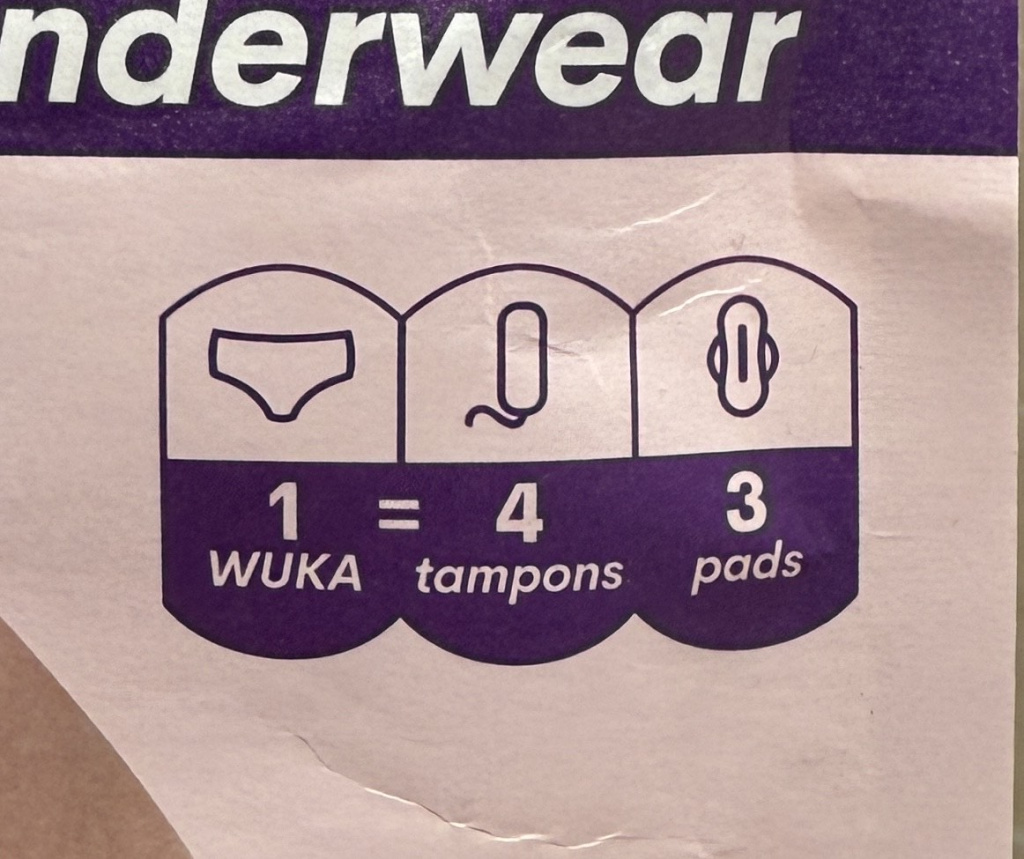
In this example, the strength of the product, Wuka period pants, gets compared to what it replaces.
Instead of an abstract absorbency rating, the comparison ties the product’s strength to something buyers already understand from daily life. That familiar reference point does more convincing than a number alone ever could.
See also